The deepening of scientific-technical cooperation in the SCO space seems to be a particularly important and promising area of the Organization's activities. Scientific-technical cooperation of the SCO Member States is primarily aimed at improving the well-being of people, increasing their standard of living.
 In this context, it is worth emphasizing the scientific-technical and innovative potential of the SCO Member States in increasing the volume of contributions to global science. For example, India is in third place in terms of the number of publications in prestigious international scientific journals. It is also among the top 50 innovative economies in the world. In turn, in 2021, China’s spending on R&D (research and development) amounted to 2 trillion 790 billion Chinese yuan, which is 2.4 percent of the country’s GDP. In the innovation ranking of the World Intellectual Property Organization, China, occupying the 14th position in the world, joined the ranks of innovative countries. Also, since 2010, Russia has been implementing the program of international cooperation of Russian universities and scientific organizations “Megagrant”. Since its launching, 315 laboratories have been created and are operating based on more than 130 scientific education institutions with the participation of leading scientists from 36 countries of the world.
Uzbekistan, being an important participant in the regional and international agenda in science and technology, supports the intensification of cooperation in science, technology and innovation in the space of the Shanghai Cooperation Organization.
At the Sixth Meeting of the Heads of Ministries and Agencies of Science and Technology of the SCO Member States, held on April 8 this year in Tashkent, Uzbekistan put forward several initiatives and proposals in support of the plans of the SCO Member States in science and technology for 2022-2025.
Thus, to transform the Aral Sea region from a zone of ecological and humanitarian crisis into a zone of ecological innovations and technologies, as well as the large-scale introduction of resource-saving, green and circular (waste-free, regenerative and efficient) modern innovative technologies, Uzbekistan offers cooperation in the development of the program “Innovations for the Aral Sea region”.
Uzbekistan, in turn, is taking the initiative to create a common collection of “Flora of the SCO Member States” based on the introduction of a new digital model for automatic recognition of all species of rare and endangered plants in remote regions of the Organization’s member states using artificial intelligence. This will serve not only to accelerate research, but also to save endangered plant species. In addition, Uzbekistan proposes the development and implementation of a joint scientific program “Green Energy” to combat climate change, especially to reduce the level of carbon dioxide (CO2) and other greenhouse gases in the atmosphere, holding the first Digital fair of innovative technologies of the SCO member states.
Initiatives to promote youth in science are supported by the leaders of the member states of the organization. Therefore, to support innovative activities and enhance participation in international scientific events of young scientists and specialists of the Organization's member states, Uzbekistan proposes to establish an award in science and technology, which will be awarded for a significant contribution to the development of science and technology to stimulate further research of candidates for this award, create favorable conditions for new scientific discoveries and innovative achievements.
It should be emphasized that President Shavkat Mirziyoyev pays great attention to supporting scientific and innovative activities.
We have adopted the Strategy of Innovative Development of Uzbekistan for 2019-2021, and after a five-year break, Uzbekistan is again included in the Global Innovation Index in 2020, in which the country ranked 86th in 2021. The adoption of the Laws of the Republic of Uzbekistan “On science and scientific activity” and “On innovation activity” became a significant event. Last year, the Concept of Science Development until 2030 was adopted, which defines the foundations of scientific and innovative development of the country in the medium and long term.
Currently, about 700 projects are being implemented for $85 million. Mechanisms of commercialization of scientific and innovative activities are also being introduced. Based on the developments, $12 million worth of high-tech products were produced. A system of financing startup projects based on initial support and readiness to enter the market has been implemented.
Further promotion of scientific-technical cooperation and interaction in the innovation, both in a multilateral format and by the participating countries, are identified as important priorities of Uzbekistan’s chairmanship in the SCO.
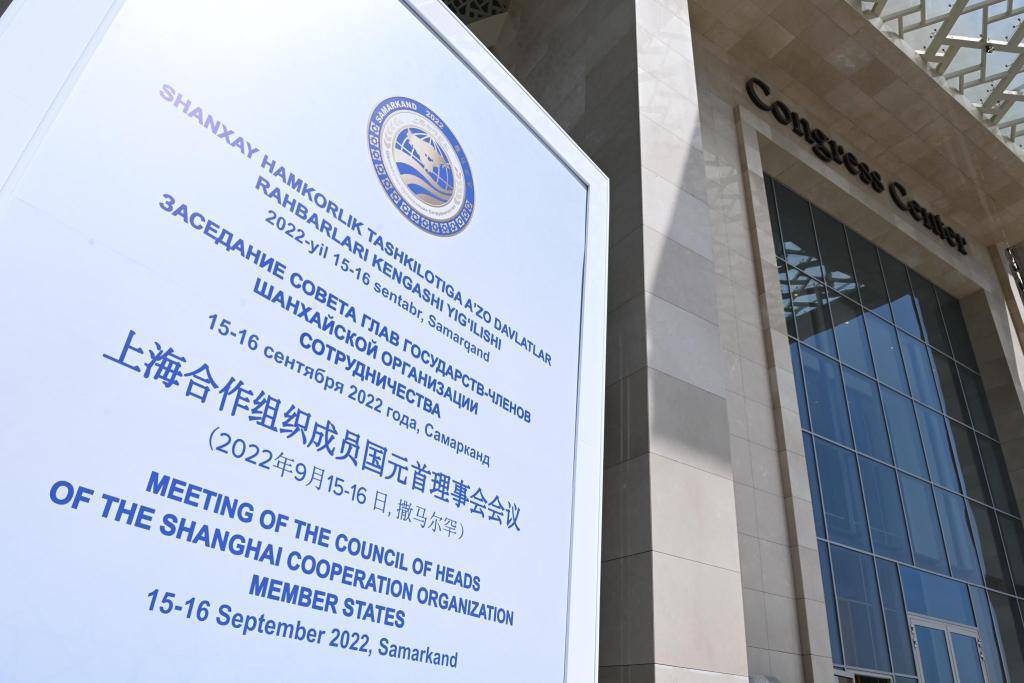
The coordination of the Action Plan for Scientific-Technical Cooperation in Priority Areas, submitted to the Samarkand Summit on September 15-16, is an important step in promoting multilateral cooperation.
Shakhlo Kamaladinova,
Leading Researcher at IFMR