
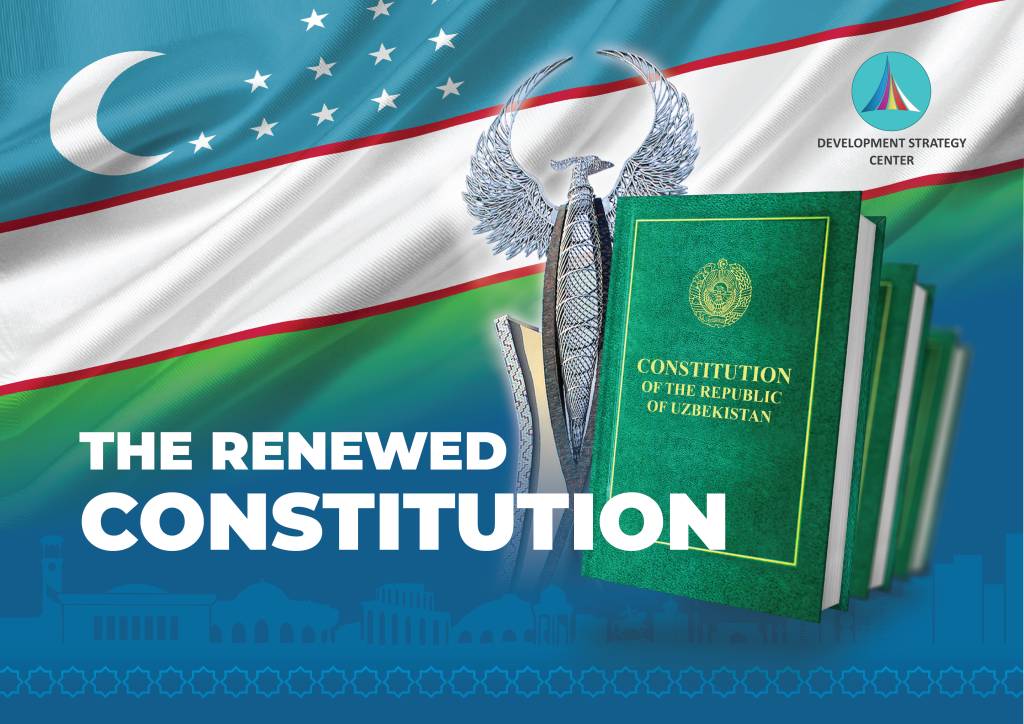
Uzbekistan is on the threshold of a historic renewal of the country’s Basic Law, designed to strengthen the protection of human rights and freedoms. The referendum scheduled for April 30 this year will become a new milestone in building a society and a state where human interests are above all.
I would like to emphasize that the constitutional reform being implemented in Uzbekistan today is the call of the voters and the demand of the time, and the renewed Constitution of the Republic of Uzbekistan has been developed taking into account the wishes of the broad strata of the country’s population. In particular, the voters initiated the issues of strengthening the constitutional and legal foundations for ensuring human dignity, rights and freedoms, protecting private property, increasing the role of civil society institutions, developing state youth and gender policy, innovative economy and knowledge economy, expanding investments in the socio-economic sphere.
The renewed Constitution will be adopted directly by the people for the first time in the history of Uzbekistan.
Its draft establishes such norms as:
ensuring human rights and freedoms is the highest goal of the State;
for the first time in history, it is recognized that international treaties, along with generally recognized principles and norms, are an integral part of the legal system of the Republic of Uzbekistan;
if an international treaty of the Republic of Uzbekistan establishes rules other than those provided for by law, then the rules of the international treaty shall apply;
human rights and freedoms are recognized and guaranteed in the Republic of Uzbekistan in accordance with generally recognized norms of international law and in accordance with this Constitution;
everyone has the right, by the legislation and international treaties of the Republic of Uzbekistan, to apply to international bodies for the protection of human rights and freedoms;
the State creates conditions for organizing the activities of national human rights institutions.
The Constitution is a manifestation of a social agreement – a consensus between a person, society, and the state. This is an agreement on the principles of organizing one’s life based on universal consent. These are the priority rules in force in the life and activities of the state, its political institutions and ordinary citizens. In this regard, the constitutional reform is designed to radically change the paradigm of thinking and principles of activity in the system of state and public administration, to put the postulate “person – society – state” instead of the principle “state – society – person” as the basis of relations in New Uzbekistan. More than half of the proposed norms in the renewed Constitution are aimed at strengthening guarantees and strengthening mechanisms for the protection of human rights and freedoms.
The Constitution has developed the signs of a social state, whose policy is aimed at affirming the principle of social justice and solidarity, achieving a decent quality and standard of living for citizens, providing assistance to those in need.
The norms aimed at supporting socially vulnerable categories of the population, smoothing social inequality in society, creating decent living conditions, strengthening the social responsibility of the state to citizens so that no one is left without attention are fixed.
The renewed Constitution declares Uzbekistan a social state. The norms concerning the social responsibilities of the State are increasing threefold. It is constitutionally stipulated that the provision and protection of the rights, freedoms and legitimate interests of the child, the creation of the best conditions for him are the responsibility of the state. It is established that the State protects the personal, political, economic, social, cultural, environmental rights of young people and creates conditions for the realization of their rights to education, health, housing, employment, and recreation. It is also determined that it is prohibited to refuse to hire women, dismiss them from work and reduce their wages for reasons related to pregnancy or having a child. The draft stipulates that the state, in accordance with the norms of international law, takes care of maintaining and developing ties with compatriots living abroad. It is constitutionally guaranteed that everyone has the right to fair remuneration for work without any discrimination and is not below the established minimum wage. The state also creates social, economic, legal and other conditions for the full development of the family.
In general, it can be noted that the renewed Constitution is based on the ideas of commitment to human rights and freedoms, national and universal values, principles of state sovereignty, building a democratic, legal, social and secular state with a republican form of government, an open and fair society in which the highest value is a person, his life, freedom, honor and dignity. Moreover, human dignity means ensuring a peaceful and safe life, fundamental rights and freedoms of citizens, step-by-step creation of decent living conditions and modern infrastructure, qualified medical care, quality education, social protection and a healthy ecological environment for every citizen of the country.
Nilufar Doniyorkhujayeva,
Department Head at the Development Strategy Center.
UzA