
New horizons for cooperation between two friendly countries
A remarkable transformation has been observed in relations between Uzbekistan and China in recent years. Interaction has become the embodiment of successful interstate collaboration.
Thanks to the active efforts of the leaders of the two states, these relations have reached a new, higher level with the establishment of a comprehensive strategic partnership.
One of the essential steps that contributed to enhancing economic ties and an increase in the volume of trade was the establishment of the most favored nation regime in mutual trade. This made it possible for the first time to reach the mark of $9 billion at the end of 2022, and over the 7 months of this year, China became the leading trading partner of Uzbekistan with a total trade of $6.9 billion, which represents an increase of 30.5%.
In recent years, much attention has been paid to strengthening investment ties. From 2017 to 2022, Chinese investors have shown a steady interest in Uzbekistan, investing heavily in agriculture and water management, electricity, textiles, mechanical engineering, and transport.
In this period, the total volume of investments from China amounted to about $11 billion. Notably, a significant share of this amount – $2.2 billion – was disbursed only in 2022.
There are 2,141 enterprises operating in Uzbekistan with the participation of Chinese investments, 275 of which were created in 2022. The largest among them are Huawei, ZTE, Wenzhou Jinsheng Trading, JV Peng Sheng, Sinotruk, and HengBang Textile Central Asia.
Such impressive progress opens even broader horizons for future cooperation for both countries.
Strengthening political, economic, and cultural interaction establishes strong fundamental principles for long-term partnership, contributing to prosperity and stability both in the region and beyond.
The continuation of successful cooperation can serve as an inspiring example for other states, showing how significant heights in the development of international relations can be achieved through mutual respect and joint efforts.
Today, there is a significant dynamic of cooperation between Uzbekistan and China in green energy. This implies collaboration in technologies contributing to environmental efficiency and sustainability, including innovative solutions and advanced technologies to achieve eco-goals.
Currently, China is experiencing strong growth in the renewable energy sector. This upward trend is projected to continue over the next ten years, mainly due to solar energy development.
Even though coal energy still plays a significant role in the country’s energy balance, experts say its share will gradually decrease in the coming years. This will be the result of a booming renewable energy sector.
According to the National Energy Administration of China (NEA), at the end of April this year, the country’s total power plant capacity was about 2.65 TW, an increase of 9.7% yearly.
The installed capacity of wind energy amounted to about 380 GW, an increase of 12.2% annually, and solar energy – about 440 GW (+36.6%). Over the past 4 months, solar power plants with more than 48 GW capacity have been installed in China.
China added 87.41 GW of solar capacity in 2022, up 60.3% from a year earlier, setting a record high. This year, the result seems to be surpassed.
Thus, the country added more than 125 GW of solar and wind power plants last year, and their total installed capacity reached 758 GW. This represents approximately 29.5% of the entire Chinese energy system.
According to the energy development roadmap, China intends to commission more than 160 GW of renewable energy generation by the end of 2023. At the same time, it is expected that about 97 GW will be provided by solar and another 65 GW by wind.
According to the China Photovoltaic Industry Association (CPIA), the net growth of solar photovoltaic power will grow to more than 1.7 TW in the next 10 years.
Experts attribute these growth dynamics to the commissioning of large-scale solar energy projects postponed due to the consequences of the pandemic, as well as to the continuous and rapid expansion of the solar equipment market sector, in which China currently dominates the world.
In 2022, global solar PV production capacity grew by almost 40%, to around 640 GW, with China accounting for 90% of the growth compared to 2021.
At the same time, according to the International Energy Agency (IEA) forecasts, China is actively investing in renewable energy and intends to increase investment to $271 billion by the end of 2023.
Almost the same amount is invested in renewable energy by the countries of the Organization for Economic Co-operation and Development (OECD). China plans to increase investment in renewable energy by 13%. OECD countries are investing $277 billion in this area.
Forecasts also show that China’s share in the global investment structure in renewable energy in 2023 will be 41%, and the share of OECD countries will be 42%. The IEA also notes that China’s share in the global power structure of wind generators under construction reached 31%, while the share of solar generators was 52%.
An essential factor in developing renewable energy in China is the availability of its raw material base. The country is one of the top three producers of polysilicon, silver, and copper, materials used to make solar panels. The PRC accounts for 85-97% of the world’s installed capacity at every stage of the supply chain.
It is noted that the share of China in the world production of polysilicon from 2010 to 2022 increased from 30% to 85%.
Thanks to this, in China, the unit costs for the construction of solar panels are lower than in most OECD countries: according to experts from the Global Energy Association, in the United States in 2021, they were $1,090 per kW of capacity, in the European Union – $810, and in China – $630.
At the same time, it is essential to highlight that China currently accounts for about 33% of the global volume of renewable generation and more than half of the energy storage capacity.
Today, the development of green technologies is considered in Uzbekistan as an important area for sustainable and environmental growth of the country’s green economy.
At the last summit of the Heads of State of Central Asia and China in Xi'an, Uzbekistan and China agreed to build 11 solar and wind power plants with a total capacity of 4.8 GW worth $4.4 billion, which in turn will give impetus to cooperation in this direction.
In February this year, Chinese companies expressed their readiness to invest $2 billion in the implementation of renewable energy projects with a capacity of 2 GW in Jizzakh and Tashkent regions. The launch of the first phases of these projects is scheduled for the end of 2023, bringing them to total capacity for 2024.
These power plants are expected to generate 5.2 billion kWh of electricity annually and save 1.3 billion cubic meters of natural gas.
Along with this, the Chinese side has begun to create a solar power plant with a capacity of 700 MW in Tashkent region.
It is important to note that our countries have also made significant progress in hydropower.
In particular, the Chinese side will participate in the preparation of a feasibility study for the projects “Construction of the cascade of the Norin hydroelectric power station in Namangan region” and “Construction of the cascade of the Aygain hydroelectric power station in Bostanlyk district of Tashkent region”.
This will be a practical implementation of the “Program for the transition to a green economy and ensuring green growth in the Republic of Uzbekistan until 2030”, approved in December 2022.
According to the Program, by 2030, it is planned to increase the production capacity of RES to 15 GW and bring their share in the total volume of electricity production to more than 30%.
Realizing China’s vast experience in this area, Uzbekistan finds it valuable to establish practical partnerships in green development through renewable energy sources such as solar and wind energy, efficient energy-saving technologies, and improved resource and waste management systems. These steps are vital to achieving environmental sustainability and preserving the natural heritage for future generations.
The path to sustainability and prosperity requires us to innovate, develop technologically, and cooperate based on trust and understanding. Uzbekistan and China, supporting each other, continue their path aimed at rapprochement, strengthening interaction to overcome challenges and build a future where prosperity and ecological harmony flourish.
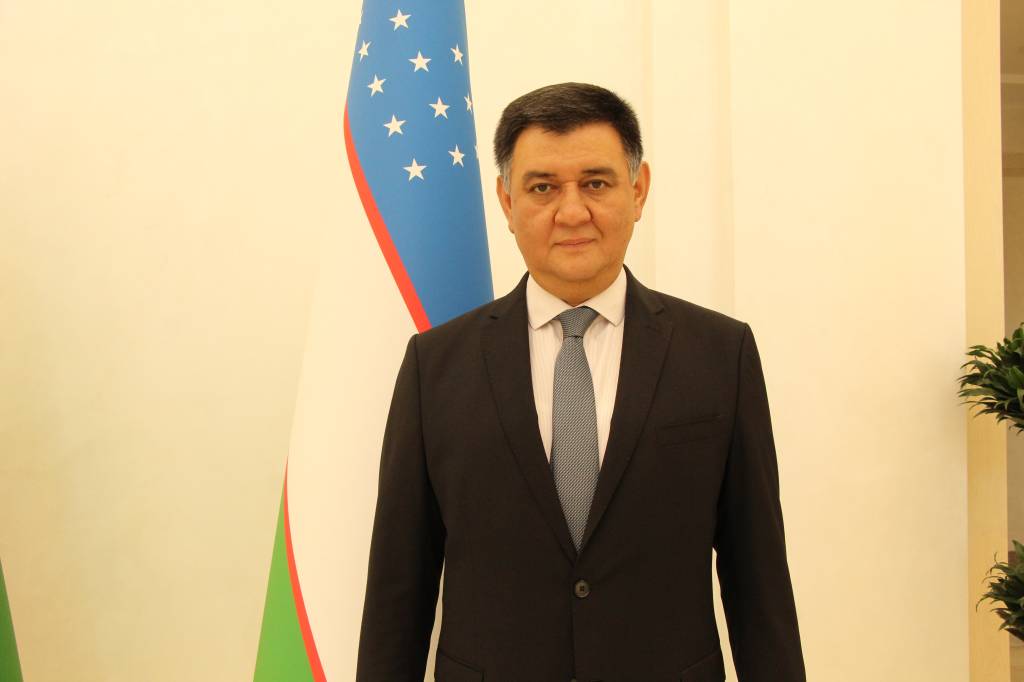
Zafar Nurmatov,
Head of the Economic Research Department of the International Institute for Central Asia.