
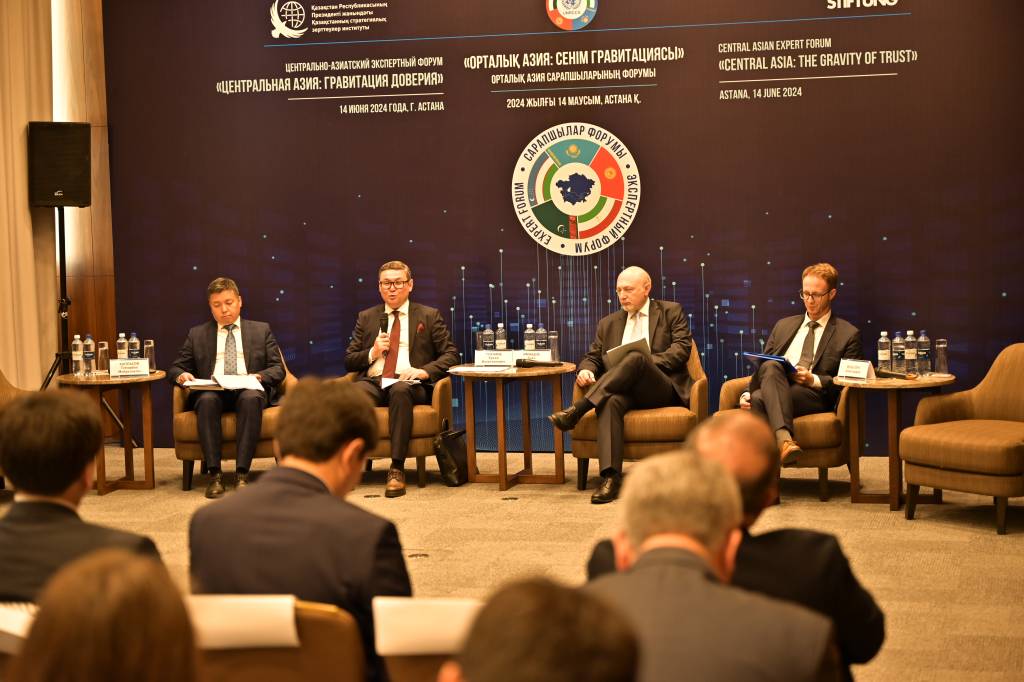
Astana hosted the 7th Central Asian Expert Forum “Central Asia: The Gravity of Trust”.
The event was organized by the Kazakhstan Institute for Strategic Studies under the President of the Republic of Kazakhstan (KazISS), the United Nations Regional Centre for Preventive Diplomacy for Central Asia, and the Friedrich Ebert Foundation.
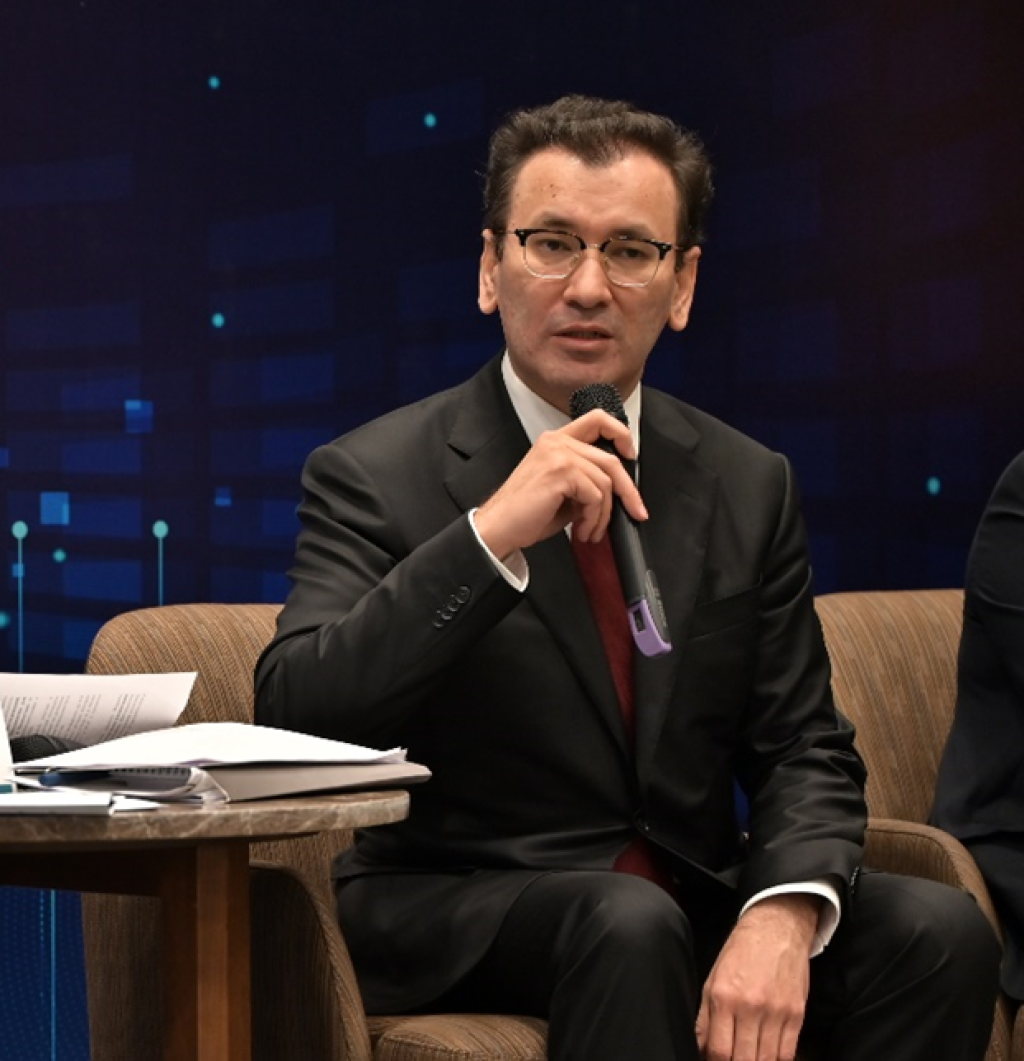
The Forum was attended by heads and experts of presidential centers for strategic studies in the Asian region, representatives of the UN, and the Friedrich Ebert Foundation.
The Uzbek side was represented by heads and experts of the International Institute for Central Asia (IICA) and the Institute for Strategic and Regional Studies under the President of the Republic of Uzbekistan (ISRS).
At the opening of the plenary session, IICA Director Javlon Vakhabov emphasized that the fundamental change in the political situation in the region and the new mechanisms for interaction between countries within the framework of the Consultative meetings of the heads of state of Central Asia have significantly contributed to the emergence of the region’s economies on the path of sustainable and stable development.
According to Mr. Vakhabov, this has become one of the factors in the noticeable increase in the combined GDP of the region’s countries, which exceeded $400 billion last year. Improving the business climate and strengthening political stability have played a key role in increasing the inflow of foreign direct investment into the region, the volume of which in 2023 amounted to more than $50 billion, twice as much as in 2016 ($26.7 billion). The total foreign trade turnover of the Central Asian countries reached $240 billion, almost doubling compared to 2017 ($126 billion). The volume of intraregional trade ($10 billion) has doubled.
The IICA Director also emphasized that the development of border trade zones between the region’s countries will contribute to the further growth of these indicators.
“Investment cooperation within Central Asia has grown 5.6 times. In Uzbekistan, the number of joint ventures with regional countries has grown 5 times in 6 years – from 312 to 1600. Joint projects have already been launched in the automotive industry, electrical engineering, agricultural sector, and textile industry. According to the Boston Consulting Group forecasts, Central Asia can attract up to $170 billion in investments by 2030, including $40-70 billion in non-resource industries”, Mr. Vakhabov noted.
At the same time, he also emphasized that, despite the indicated achievements, many problems remain that affect economic growth and social stability, including an acute shortage of regional cooperation and the region’s extremely unfavorable transport and logistics position.
“The Central Asian countries remain among the least interconnected economies in the world. According to the World Bank, the regional connectivity indicator averages less than 60% of access to global GDP”, Mr. Vakhabov concluded.
Continuing the session, the ISRS First Deputy Director Akramjon Nematov noted that Central Asia is much more united and resilient to the challenges of our time than ever before.
“Through joint efforts, we maintain peace and harmony in the region. Our countries are more willing to take responsibility for ensuring common and indivisible security and sustainable development in the region. This is also evidenced by the mechanism of meetings of the secretaries of the Security Councils of the Central Asian states launched last month, regular meetings of the heads of the Ministries of Emergency Situations, the heads of the Ministries of Internal Affairs of the Central Asian countries and other formats”, Mr. Nematov emphasized.
Following the conference, the participants presented several specific practical proposals for deepening ties between the countries of the region in the political and diplomatic, trade and economic, investment, and cultural and humanitarian spheres. These proposals will help identify new growth points and aim to increase the well-being of the people of Central Asia.
G. Khonnazarov, UzA