
On September 19, New York hosted the “Central Asia – United States” summit, which, for the first time since the creation of this dialogue platform in 2015, was held at the level of the leaders of the participating countries.
It should be noted that this event, becoming historical, launched a new stage in relations between the Central Asian countries and the United States. A qualitatively new level of cooperation should give impetus to further comprehensive and mutually beneficial interaction and strengthen the subjectivity of our region.
Giving a new status to this format indicates the growing demand for this platform for open and constructive dialogue and the importance of developing practical and comprehensive interaction between the Central Asian states and the United States.
At the same time, a characteristic feature of the current meeting is that if previously the political agenda prevailed in relations between the Central Asian countries and the United States, now considerable attention is paid to the issues of fully unlocking potential and increasing economic and investment cooperation.
Against the background of increasing independence and self-sufficiency of Central Asia, transformation into a space of cooperation and healthy competition, the United States is increasingly showing interest in expanding and deepening trade and economic ties with the region, actively integrating it into the global chain with high added value.
At the same time, a large Central Asian market is opening up for the United States with new opportunities for cooperation in economics, trade, investment, industrial cooperation, energy, agriculture, transport, and ICT, including the use of digital, green and smart technologies.
That is why the central place on the agenda of the meeting between the leaders of Central Asia and the United States was taken by the issues of strengthening trade and investment activities, promoting the green agenda, ensuring energy security, and introducing renewable energy sources.
Moreover, the fact that the parties began to take practical measures to form a progressive economic cooperation architecture in this format also attracts attention. In particular, Washington has taken the initiative to create a more favorable business environment for trade and investment by creating a private sector business platform, as well as holding a ministerial meeting on regional connectivity in the C5+1 format in Central Asia in October to discuss concrete actions, which will give a significant impetus to cooperation between Central Asia and the United States and will contribute to the sustainable economic development of the region.
Another evidence of the readiness of the Central Asian countries and the United States to actively develop economic cooperation with the widespread attraction of American investment in the region was the meetings of many leaders of the Central Asian countries with American business circles and business forums held on the eve of the summit.
In particular, the President of Uzbekistan held fruitful talks with representatives of the American-Uzbekistan Chamber of Commerce and heads of large American corporations GE HealthCare, Oppenheimer, Cerberus, CNH, and Cintana, during which specific plans of American business to expand activities in Uzbekistan were discussed. Agreements were reached on attracting investments into real sectors of the economy of Uzbekistan with the development of action plans to implement joint projects.
Another promising area of interaction is the launch of a dialogue on the extraction of mineral resources, primarily on the development of deposits of rare earth metals, the need for which in the era of transition to a green economy is significantly increasing globally. Of course, considering the large ore reserves available in Central Asia, their joint development will help attract significant investment, advanced technologies, and innovation to the region, ensuring regional economic integration and sustainability.
The high interest of the United States in developing trade and economic relations with the countries of Central Asia is also evidenced by the launch in the United States of the process of repealing the Jackson-Vanik Amendment and the early establishment of a permanent normal trade status for Uzbekistan, Kazakhstan, and Tajikistan.
In addition, during the summit, the parties demonstrated a solid commitment to further cooperation in the security field.
In particular, they comprehensively discussed ensuring regional security, combating terrorism and cross-border crime, and promoting a peaceful settlement in Afghanistan.
Without a doubt, the measures taken by Uzbekistan to quickly resolve the situation in Afghanistan and comprehensively facilitate this process within the framework of international efforts are of great interest to Washington. It is important to note here that U.S. representatives took an active part in the international conferences on Afghanistan held in Uzbekistan in 2018 and 2022, during which American participants outlined the importance of joint actions in ensuring stability and economic restoration of the Afghan state in the interests of all the people.
The development of interaction in these areas meets the interests of all parties. In turn, the emerging trend of increasing the level of dialogue and increased activity between Central Asia and the United States indicates Washington’s interest in the stable and sustainable development of the Central Asian region, where, thanks to the established atmosphere of good neighborliness and mutual trust, political and economic cooperation and connectivity are strengthening. This, in turn, increases the region’s role and significance in the international relations system.
It is no coincidence that the President of Uzbekistan Shavkat Mirziyoyev highly appreciated the strengthening of friendship, mutual understanding, and partnership in the Central Asian region, which create unique new opportunities for broad cooperation.
Of course, combining all the above aspects will contribute to further intensifying cooperation between Central Asia and the United States, bring together common economic interests, and build practical political and economic cooperation.
In conclusion, I would like to say that the “Central Asia – United States” summit demonstrated U.S. recognition and support for the joint efforts made by the Central Asian countries to develop the potential of the region, aimed at ensuring stability and sustainable development, building up multifaceted and mutually beneficial cooperation in the system of interregional and international relations.
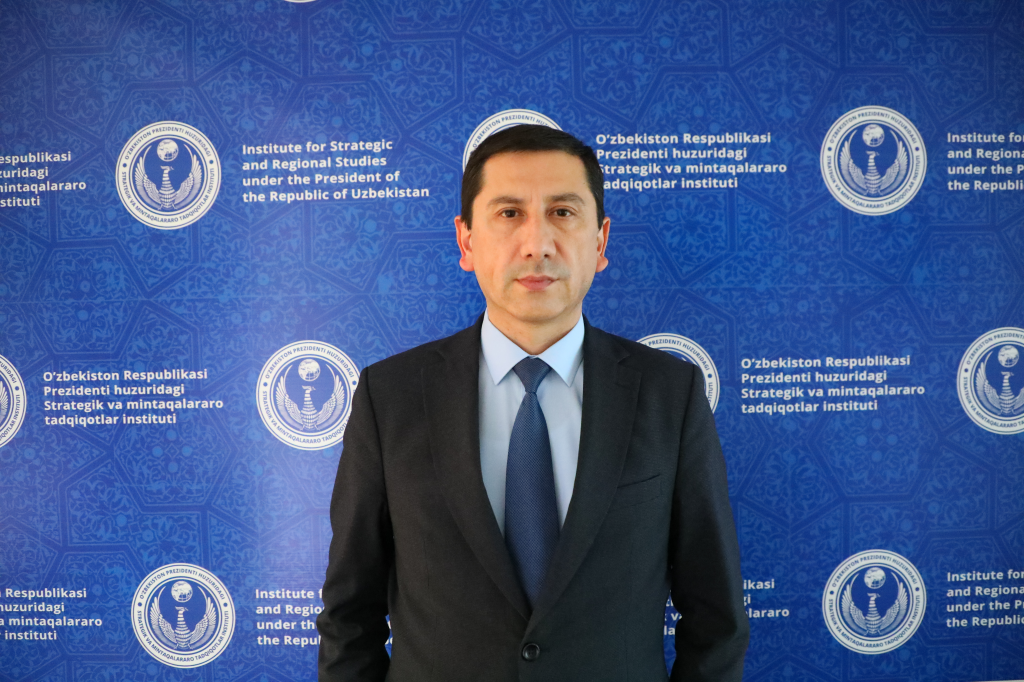
Murad Uzakov,
Head of the ISRS Center