
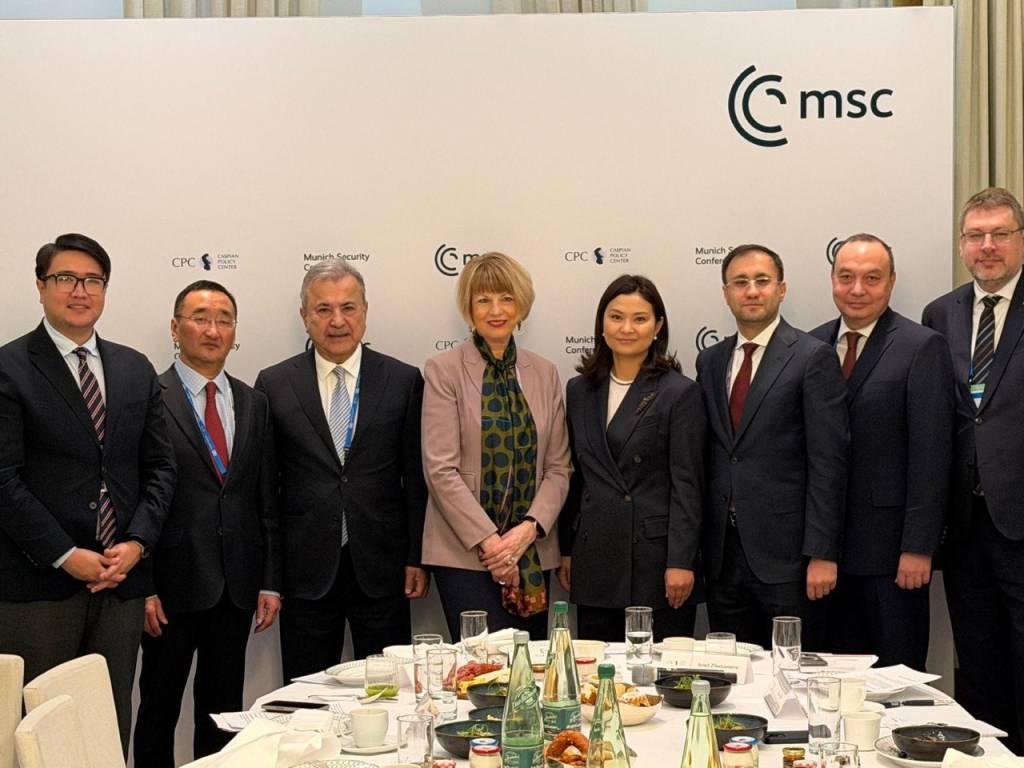
On 14-15 February this year, during the 62nd Munich Security Conference in Munich, Germany, Central Asia was represented for the first time in the forum’s history as an integrated region with its own model of peaceful transformation, sustainable development, and regional responsibility.
This perspective was presented in discussions held at events organized by the Nizami Ganjavi International Center (Azerbaijan) and the Caspian Policy Center (United States).
Key speakers and participants included Turki Al-Faisal bin Abdulaziz Al Saud, Chairman of the Board of the King Faisal Center for Research and Islamic Studies (KSA); UN Under-Secretary-General Miguel Ángel Moratinos; UNCTAD Secretary-General Rebeca Grynspan; former Austrian Federal Chancellor Sebastian Kurz; Helga Schmid, President of the European Institute of Peace; EU Special Representative for Central Asia Eduards Stiprais; and others.
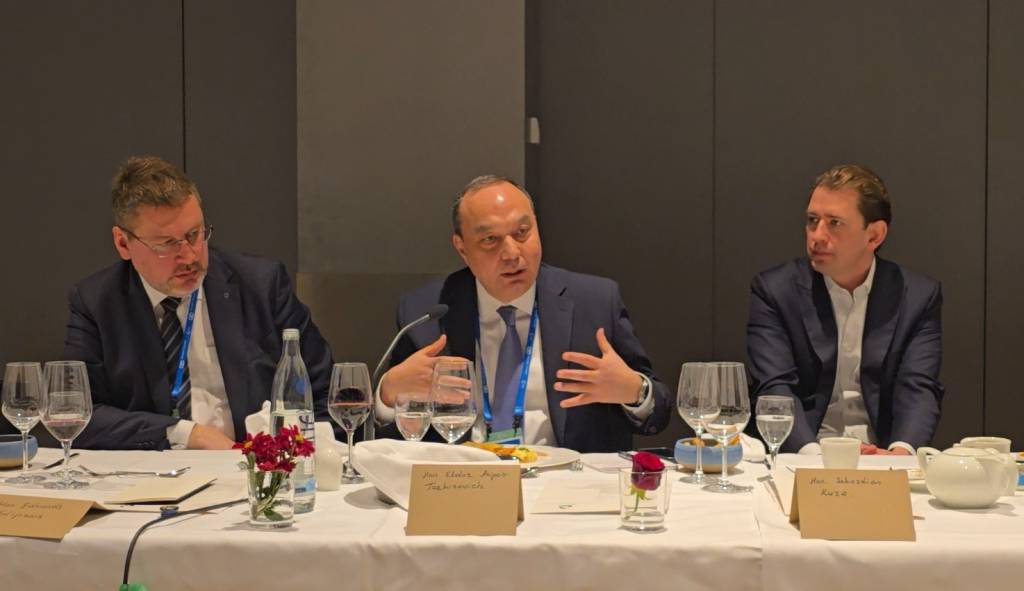
Uzbekistan was represented by Sodiq Safoyev, First Deputy Chairman of the Senate of the Oliy Majlis, and Eldor Aripov, Director of the Institute for Strategic and Regional Studies under the President. Their remarks set the conceptual framework for examining Central Asia as one of the few Eurasian regions that, over the last decade, has moved from conflict toward sustained cooperation.
Addressing the session hosted by the Nizami Ganjavi International Center, Eldor Aripov, Director of ISRS, stressed that the emergence of a dedicated, substantive discussion of Central Asia at the Munich Security Conference is critical.
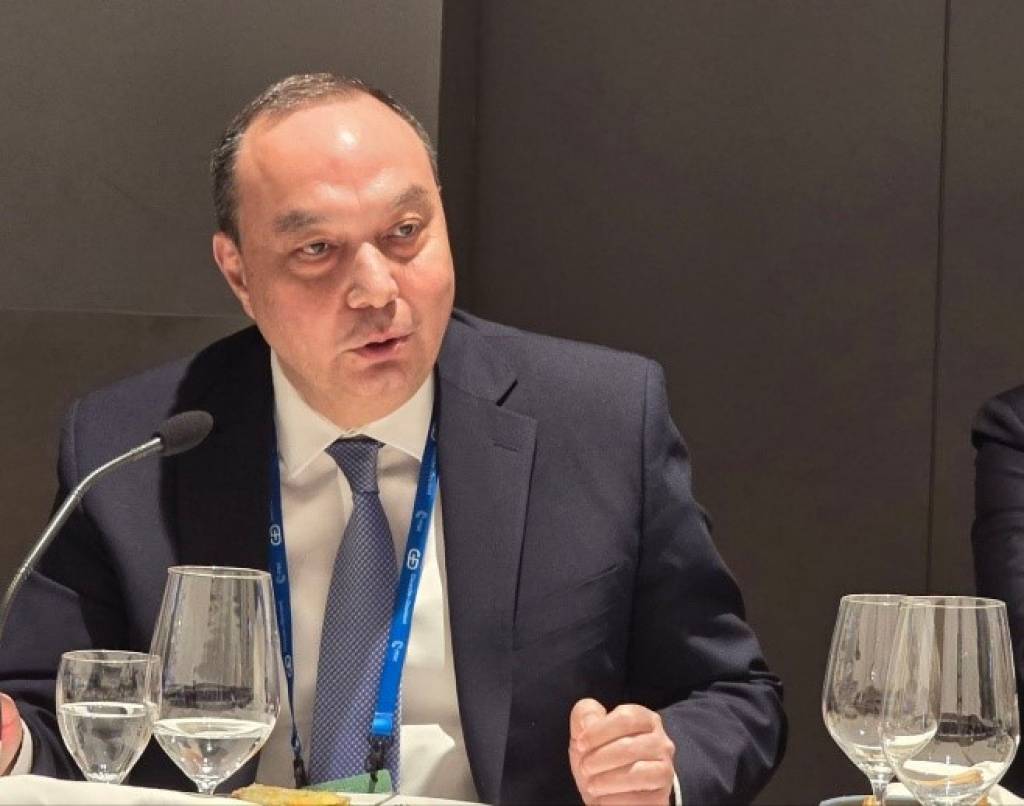
“Central Asia has long been outside the primary analytical and political spotlight. Available information about the region was fragmented and often outdated. Today, for the first time, we are discussing Central Asia as a region that has not only transformed itself but also has the capacity to contribute positively to the global security dialogue”, Mr. Aripov stated.
He highlighted that the region’s transformation is particularly notable against the backdrop of global tensions and divisions. While instability is growing in many parts of the world, Central Asia is taking a different path, focusing on dialogue and pragmatism and moving away from a zero-sum approach.
The ISRS Director recalled that just ten years ago, the region was defined by closed borders, unresolved territorial and water disputes, occasional armed clashes, and mined border areas-all of which affected millions of people.
Today, the situation is fundamentally different.
Trade between Central Asian states has more than doubled, mutual investment flows have grown almost five times, and cross-border population mobility has returned to levels unseen in the region for decades. Significantly, even amid the COVID-19 pandemic, the countries maintained open borders for critical supplies, demonstrating collective resilience and confidence.
“The key lesson from Central Asia is that what has changed is not the geography, but the political mindset. Political will at the highest level has been crucial. The President of Uzbekistan deliberately opted for stability and development over confrontation, putting forward a framework accepted by all regional leaders: sustainable development can only be achieved through mutual benefit”, emphasized the ISRS Director.
Mr. Aripov emphasized that regional security is no longer approached purely from a military perspective; it is now understood to stem from development, social stability, and economic interconnectedness.
Particular attention in the presentations was given to the role of local communities. According to him, the sustainability of peace in Central Asia is ensured not only through intergovernmental agreements but also by making peace tangible for ordinary people – through trade, tourism, and cross-border cooperation.
This approach formed the foundation of the Fergana Peace Forum, which the President of Uzbekistan initiated in October of last year.
Eldor Aripov highlighted that the Fergana Dialogue serves as a platform bringing together governments, international organizations, experts, and local communities. Its purpose is not only to record the changes that have taken place but also to make Central Asia a source of practical lessons in conflict prevention and confidence-building for other regions.
Following the forum, a decision was made to institutionalize it as a permanent platform for dialogue, focused on the region’s long-term sustainability and the dissemination of its experience internationally.
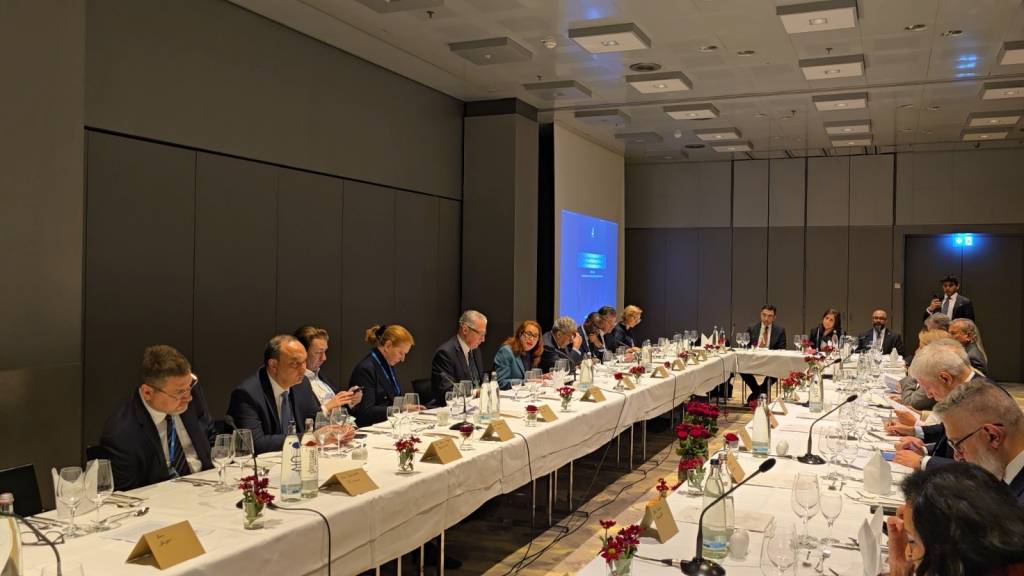
The discussion hosted by the Caspian Policy Center served as a natural extension of this theme, addressing the growing connectivity between Central Asia and the South Caucasus within the Middle Corridor framework.
Mr. Aripov highlighted that the growing links between the two regions indicate a deep structural shift across Eurasia.
“This is not about forming new blocs or formal alliances, but about functional interdependence grounded in practical interests such as transport, trade, energy transition, and supply chain resilience”, he noted.
It was noted that the President of Uzbekistan was among the first to recognize this new strategic dimension, proposing to include Azerbaijan within the framework of Central Asian regional cooperation. This initiative, according to the discussion participants, reflects a new reality in which economic interconnectedness increases the cost of instability and thus serves to prevent conflicts.
The speeches by Uzbek representatives in Munich demonstrated that Central Asia is increasingly perceived as part of the solution, rather than the source of the problem. The development of a space of cooperation from Central Asia through the South Caucasus to the Black Sea could create an extended zone of stability across Eurasia.
The interest and active discussion generated by the Uzbek delegation’s statements underscored the relevance of the Central Asian experience amid increasing global uncertainty. As Eldor Aripov noted, regions where security is built on trust, economic interdependence, and pragmatic political decisions should occupy a stable position within the global security architecture.
In this context, the peace initiatives consistently advanced and institutionalized by Uzbekistan acquire strategic significance: they create a dense network of economic, transport, and institutional linkages. Consequently, any attempts at escalation incur direct costs – disruption of transit, breakdowns in supply chains, loss of investment, and a decline in regional connectivity – that objectively restrain conflict dynamics and promote long-term stability.
As part of its participation in the conference, separate meetings were held with the heads of leading European institutions in the fields of security and preventive diplomacy: Helga Schmid, President of the European Institute of Peace and Vice-President of the Foundation Council of the Munich Security Conference; Kris Köhler, Executive Director of the Berghof Foundation; Kate Fearon, Director of the Conflict Prevention Centre and Deputy Head of the OSCE Secretariat; Thomas Greminger, Executive Director of the Geneva Centre for Security Policy; and Eduards Stiprais, European Union Special Representative for Central Asia.
The discussions focused on opportunities to enhance expert and institutional engagement, including joint research initiatives, sharing of analytical outputs, and deeper cooperation on issues of regional resilience and preventive diplomacy.
Special emphasis was placed on increasing Central Asia’s visibility in international forums.
In this context, an agreement was reached to organize a dedicated, large-scale event at the Munich Security Conference next year, in cooperation with Central Asian partners, to ensure full representation of the region’s voice and perspectives on international development issues.
The Munich Security Conference is one of the most influential international platforms for discussing pressing issues of global security. In 2026, the conference brought together over one thousand participants from more than 115 countries, including over 60 heads of state and government.
Nizami Ganjavi International Center – a leading Azerbaijani think tank specializing in international relations, regional security, and intercivilizational dialogue.
Caspian Policy Center – a U.S.-based think tank focused on energy security, regional integration, and the geopolitics of the Caspian region and Central Asia.
Middle Corridor – a transport route connecting Asia and Europe via the Caspian Sea, the South Caucasus, and Turkiye; considered a key alternative to northern routes amid geopolitical turbulence.
UzA