
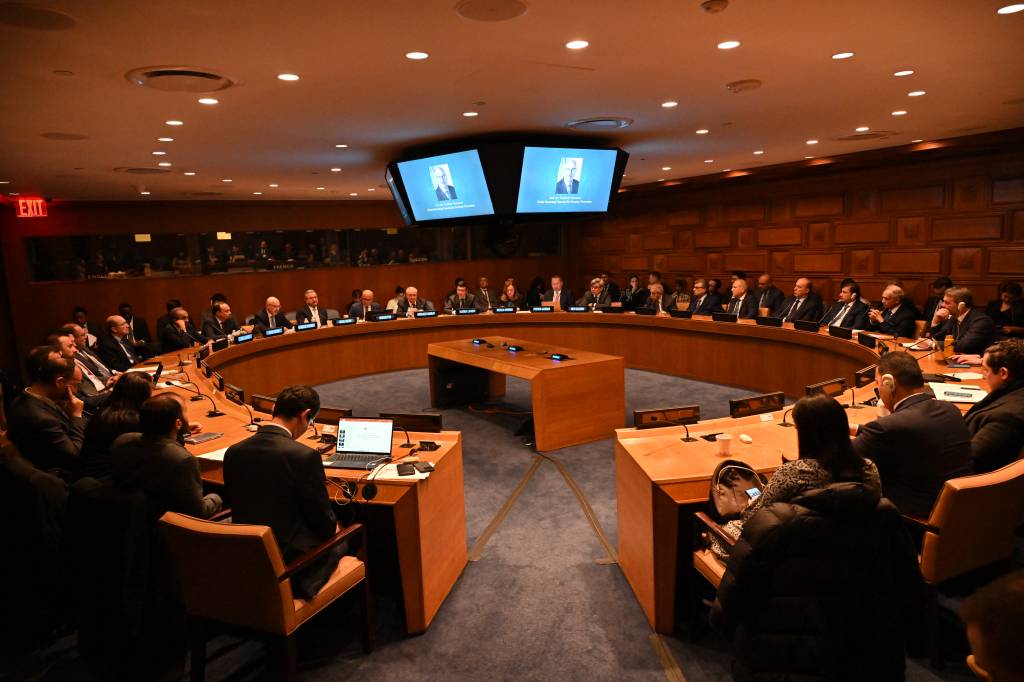
UN Headquarters hosted a briefing on “Current issues of the global and regional agenda: the view of Uzbekistan”, dedicated to the speech and initiatives of the President of Uzbekistan, voiced during the 78th session of the UN General Assembly held in September.
As part of the briefing, an exchange of views took place, and several important global and regional initiatives voiced in the speech of the President of Uzbekistan at the September session of the General Assembly were also considered.
It was noted that the speech of the Leader of Uzbekistan Shavkat Mirziyoyev at the 78th session of the UN General Assembly in many ways, became historical.
The relevance in the modern international political situation of the call voiced by the Leader of Uzbekistan on the need to preserve the spirit of harmony and practical cooperation, to unite countries based on common interests, which should be higher than existing contradictions, was emphasized.
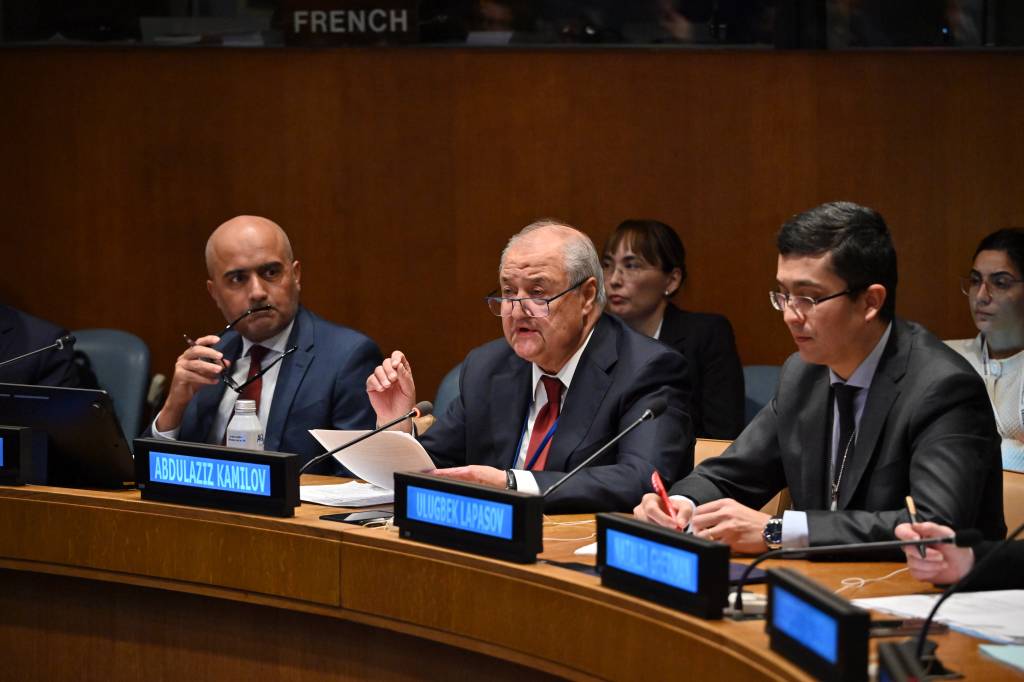
In this regard, the Executive Director of the UN Counter-Terrorism Executive Directorate Natalia Gherman noted that the proposed Samarkand Solidarity Initiative for the sake of common security and prosperity is considered an essential contribution to the process of strengthening global dialogue and constructive international cooperation promoted by the UN.
According to the speakers, President Shavkat Mirziyoyev confirmed that he is a guarantor of the irreversibility of the large-scale course of reforms in the country to build a New Uzbekistan.
Special attention was paid to the renewed Constitution, which, according to the speakers, received a genuinely nationwide character. The adoption on its basis of the Uzbekistan Development Strategy 2030, reflecting the UN SDGs, was especially welcomed.
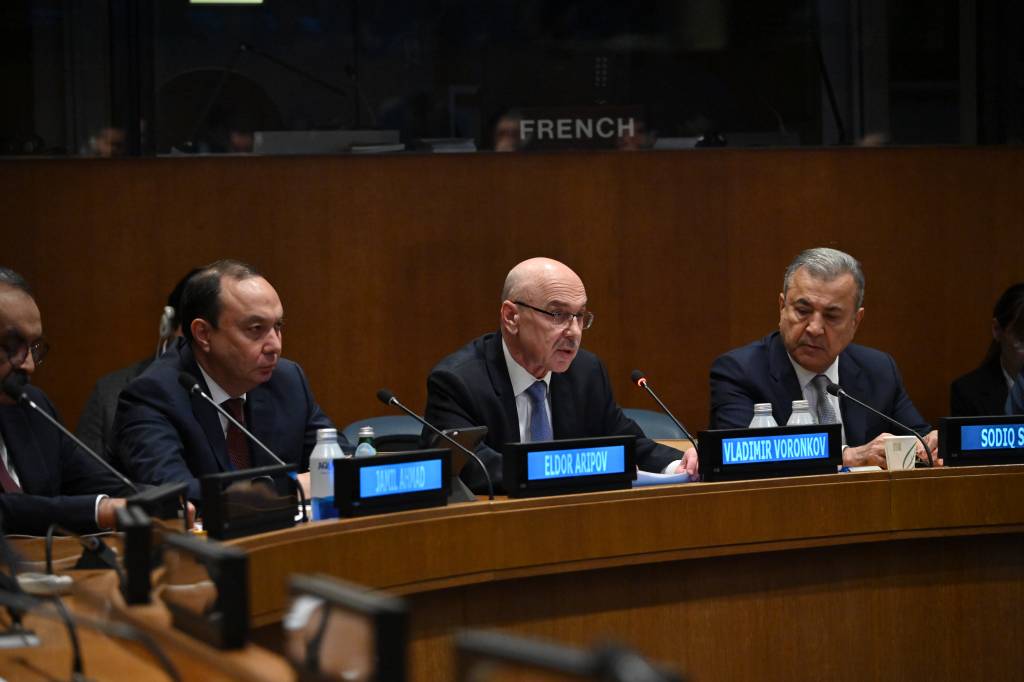
At the briefing, the results of reforms carried out based on the principle “in the name of human honor and dignity” were also highly praised.
The speakers agreed that President Shavkat Mirziyoyev, in his speech, essentially presented a conceptual vision of the further consolidation of Central Asia based on the principles of openness and constructive cooperation. Such an approach is seen as an essential condition for ensuring sustainable development and stability in Central Asia.
Drawing attention to climate change issues in Central Asia were emphasized, confirming that Uzbekistan’s leadership has a vision for the future and a keen sense of global and regional development trends.
UN representatives also actively welcomed the readiness expressed by President Shavkat Mirziyoyev to enhance collaboration with UN Women and to hold the Asian Women’s Forum in Uzbekistan next year as a joint initiative.
In general, the assessments and opinions voiced by the briefing participants reaffirmed that the initiatives proposed by Uzbekistan could significantly contribute to resolving many problematic issues at both the regional and global levels.
UzA