
The Trilateral Summit held in Ashgabat on August 4 with the participation of the heads of state of Turkmenistan, Tajikistan, and Uzbekistan became another essential practical step towards further enhancing regional cooperation, including in the water and energy, transport, and logistics sectors.
One of the key topics during the talks was the development of the energy sector, particularly cooperation in the supply of natural gas, oil, and oil products, as well as electricity.
According to expert estimates, the annual unrealized benefits in the energy complex of Central Asia amount to 0.9% of the region’s total GDP.
In this regard, the heads of state initiated the joint implementation of hydro and thermal energy projects. An agreement was reached to hold negotiations at the level of heads of energy departments in the second half of this year to promote joint activities in these areas.
During the summit, the parties substantively discussed effectively managing transboundary water resources in the Amudarya River Basin, essential for ensuring the entire region’s food, energy, and water security.
In May this year, experts recorded an acute water shortage in the lower reaches of the Amudarya caused by heat and low rainfall. In March-April, the excess water consumption in the river exceeded the usual figure by 50%.
In the context of the growing negative impact of climate change – drought, reduction of water resources, taking into account the planned course for the intensive development of agriculture, industry, and urbanization, the countries of the region “checked the clock” on the positions and work being carried out within the framework of regional cooperation in this sphere.
In this context, the President of Uzbekistan proposed to intensify cooperation in such areas as the introduction of advanced water-saving technologies and the modernization of irrigation systems, the digitalization of water management processes, the joint development of infrastructure for the collection and storage of mudflow and flood waters. The task of using the full potential of the International Fund for Saving the Aral Sea, as well as cooperation through partner organizations and structures, such as the World Bank and the Asian Infrastructure Investment Bank, has been updated.
It should be noted that in recent years, water-saving technologies have been expanding in Uzbekistan. They cover about 25% of irrigated lands. Due to this, in 2022, 3 billion cubic meters of water were saved, which was used to irrigate 830,000 hectares of re-sown areas.
Signed on April 3, 2023, by the President of the Republic of Uzbekistan, the resolution “On urgent measures to improve the efficiency of the use of water resources” is essential for determining aspects of work for sustainable irrigation of agricultural sown areas in conditions of water shortage, which is also observed in the current summer season.
At the meeting in Ashgabat, special attention was also paid to uniting efforts to create an integrated transport infrastructure that will make it possible to maximize the use of the potential of the region’s countries in the transport and logistics sector, including the formation of priority trade and transit corridors.
In this context, the President of Uzbekistan expressed the opinion that the development of the international transport corridor Uzbekistan – Turkmenistan – Iran, the active use of the potential of the Trans-Caspian route will increase the attractiveness of Central Asia as a transit center for international East-West and North-South corridors. The President of Uzbekistan proposed jointly creating favorable conditions for international carriers, accelerating digitalization, and increasing the throughput of checkpoints.
It should be noted that the launch of the Uzbekistan – Turkmenistan – Iran corridor using the ports of Bandar Abbas and Chabahar is of strategic importance for the development of the entire Central Asia, as it will reduce the delivery time for export-import cargo and will also help increase trade and investment, create favorable conditions for further development of international economic relations and expansion of the transport and logistics network in the region.
This will diversify and strengthen transit corridors, providing faster and more reliable access to international markets. In addition, cooperation in transport will increase the volume of trade between the countries, enhancing the scope of economic relations.
Today, Uzbekistan gives priority to the development and diversification of international transport corridors, expanding their capacity, digitalization of logistics chains, including the process of passing goods and vehicles through border points, optimizing transport and other costs in the cost of export products, and increasing the speed of delivery of goods.
More than 2.4 thousand km of new railways have been built and put into operation in Uzbekistan, more than 3 thousand km have been electrified, and more than 1.1 thousand km of railways have been rehabilitated. 6.4% of Uzbekistan’s GDP comes from transport services. Transport accounts for 7.4% of total investment and 29.5% of the service sector. By 2030, the country plans to increase the capacity of its transit potential by about 2 times – up to 20 million tons, as well as increase the share of investments in the transport sector concerning the country’s GDP to $46.7 billion.
In general, the issues discussed during the talks in Ashgabat directly intersected with the tasks and prospects of regional development. It can be said with confidence that the last summit has become an essential constructive part of the five-sided interaction within the framework of the Consultative Meetings of the Heads of State of Central Asia, supplementing this format of cooperation with new practical content.
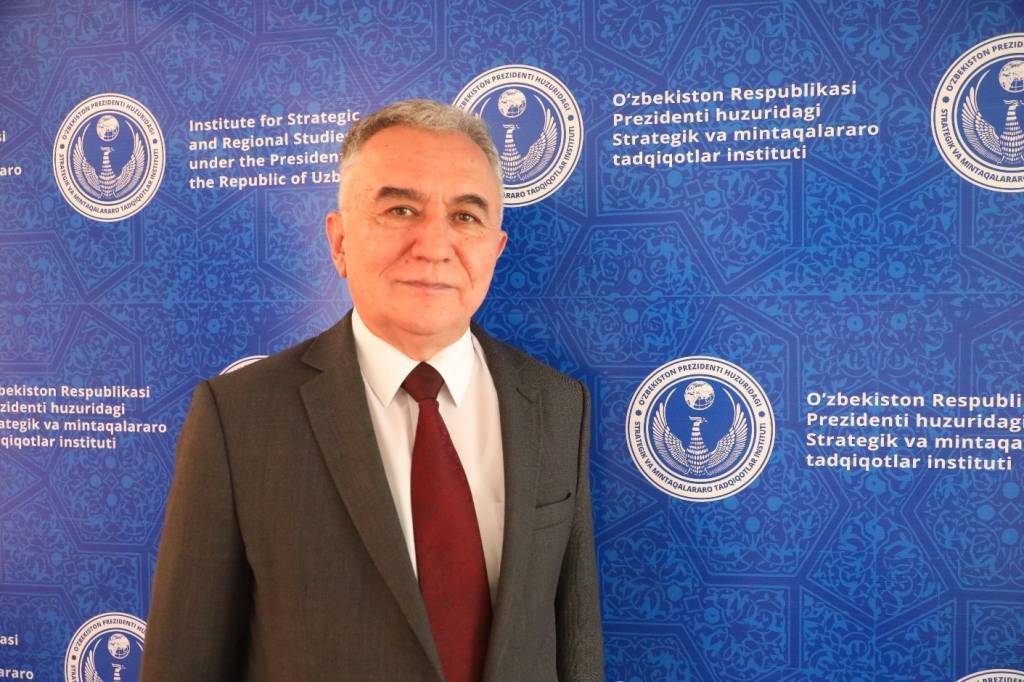
Abror Fatkhullayev,
Department Head at ISRR under the President of the Republic of Uzbekistan