
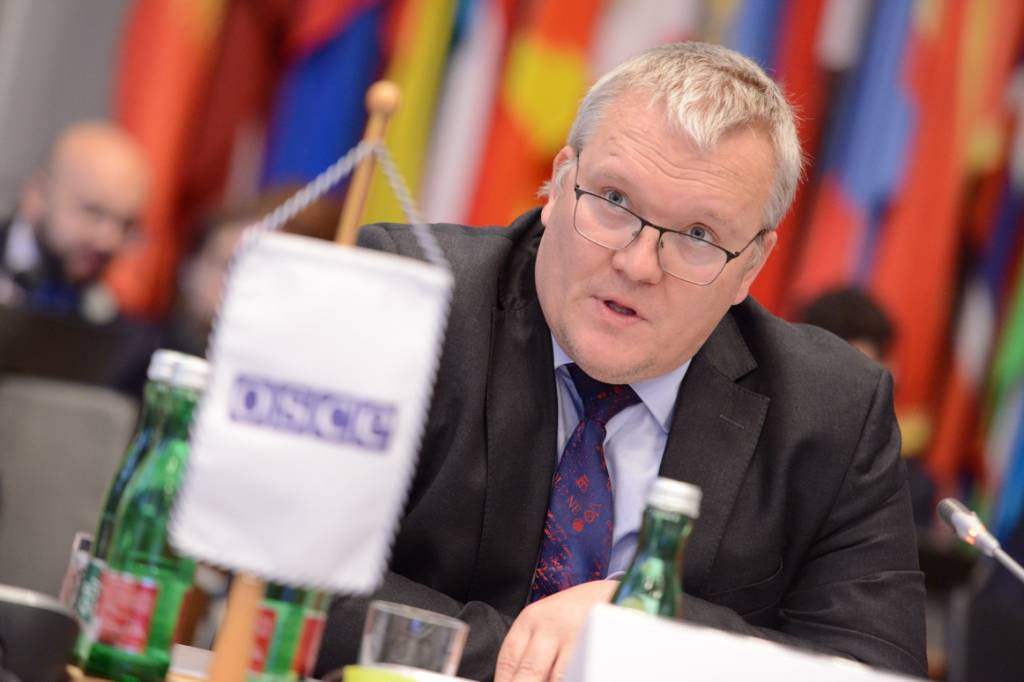
Today, December 8, the Republic of Uzbekistan celebrates Constitution Day, the country’s fundamental law. On this occasion, the OSCE Project Co-ordinator in Uzbekistan, Ambassador Antti Karttunen, gave an interview to an UzA correspondent, in which he shared his views on the significance of the Constitution in the context of ongoing reforms and the prospects for cooperation between Uzbekistan and the OSCE.
– Mr. Ambassador, how do you assess the significance of the Constitution of Uzbekistan in the context of the ongoing reforms and the strengthening of democratic institutions in the country?
– The Constitution of the Republic of Uzbekistan, renewed in 2023, marked an important milestone for the country. Using this opportunity, I would like to extend congratulations to the Constitutional Court on its 30th anniversary for upholding three decades of the Constitution, interpretation of laws, and protection of citizens’ rights. I want to specially note that the Court plays a main role in ensuring the steady application of the principles of the Constitution, something so crucial in moving the reforms forward and strengthening democratic institutions.
During my almost two years as OSCE Project Co-ordinator in Uzbekistan, I have followed attentively the Government’s commitment to reform and the pivotal role that the Constitutional Court is playing in these processes. Let me just mention that, through our cooperation, we have actively supported the Constitutional Court and legal professionals through workshops and trainings on constitutional review and international human rights standards. For instance, in May 2024, a three-day training on “Access to the Constitutional Court: Features of Judicial Argumentation in Constitutional Proceedings” was organized, alongside sessions on European standards of constitutional review.
This renewed Constitution of Uzbekistan, in my view, provides a sound basis for accountable governance, judicial independence, access to justice, gender equality, and citizen engagement.
– Which areas of cooperation between Uzbekistan and the OSCE do you consider the most promising in the field of the rule of law and human rights?
– We see many promising areas for deeper cooperation. Judicial and legal reforms, improving access to justice, strengthening public administration, and advancing gender equality all demonstrate Uzbekistan’s ongoing reform progress. Uzbekistan’s full accession to the Aarhus Convention is another major milestone toward more open, participatory, and transparent environmental governance. I believe it is now of utmost importance to ensure public awareness of the Convention. The OSCE Project Coordinator stands ready to support the implementation of the Convention.
We are continuing our close partnership with the Government and non-governmental organisations. After 30 years of working side by side, we deeply value the trust we have built with national institutions and remain fully committed to helping Uzbekistan advance its ambitious reform agenda.
– If we view the Constitution as a kind of “roadmap for the future”, what new pathways for Uzbekistan’s development do you believe it opens, and how can the OSCE help the country navigate them most effectively?
– I am convinced that the new Constitution of 2023 opens several important new paths for the development of Uzbekistan. It provides a good foundation for strengthening the rule of law and independence of the judiciary, promoting more active citizens’ engagement and transparency, advancing gender equality and human rights, improving public administration, and deepening regional and international cooperation.
The OSCE can particularly support by providing expertise and lessons learned from other OSCE participating States as well as OSCE Institutions. In this context, I would like to mention particularly the Office for the Democratic Institutions and Human Rights (ODIHR). This can be achieved by providing targeted trainings, strengthening institutional capacity, and sharing best practices from other participating States. I have already emphasized partnership – all solutions and outcomes are adjusted to the Uzbekistan context and needs together with our Uzbekistan partners. When talking about “best practices” in other participating States, they can never be “imported” as such to another participating State.
Interviewed by Aziza Alimova, UzA