
Today, the world is experiencing significant changes and growing geopolitical tensions. In such a context, strengthening connectivity among nations, expanding cooperation, and establishing reliable dialogue are key factors in ensuring sustainable development and security.
In this regard, enhanced cooperation between Central and South Asian countries is essential for achieving prosperity in the region and across the broader Eurasian space.
It is crucial to highlight the role and potential of Afghanistan, which serves as a central link in this process.
Yesterday, the first session of the Termez Dialogue on Connectivity between Central and South Asia began under the theme “Building a Common Space of Peace, Friendship and Prosperity”.
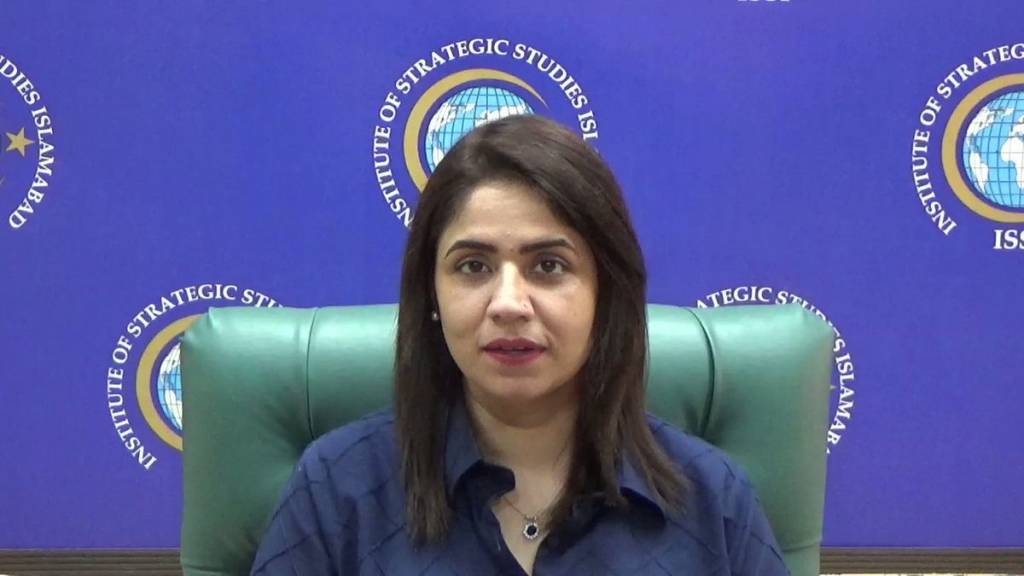
UzA correspondent spoke with Amina Khan, Director of the Centre for Afghanistan, Middle East and Africa (CAMEA) at the Institute of Strategic Studies Islamabad (ISSI), who participated in the event.
– Many experts believe that in times of global crisis, connectivity, cooperation, and trust between regions become the foundation for security and stability. From this perspective, how important is it today to strengthen the partnership between Central and South Asia?
– Indeed, strengthening ties between Central and South Asia is significant in such a challenging time. In this context, the Afghan issue is especially relevant. The country has the potential to serve as a regional hub and a transport corridor connecting the regions.
Today, the need to deepen bilateral and multilateral ties is growing in light of the region’s challenges – from internal economic difficulties to the energy crisis. Strengthening dialogue between countries and developing mutual trade by establishing an economic value chain is essential. Such connections, acting as a stabilizing force, reduce the likelihood of conflict and contribute to the establishment of long-term peace and prosperity.
Close cooperation will enhance the capacity of Central and South Asian countries to address global and regional challenges jointly.
– What is Afghanistan’s role in developing cooperation between Central and South Asia?
– Afghanistan, located at the crossroads of Central and South Asia, can significantly contribute to strengthening economic integration.
Another critical point is that under China’s Belt and Road Initiative, Afghanistan has the potential to become a key transit hub for two major routes – the China – Pakistan Economic Corridor (CPEC) and the China – Central Asia – West Asia Corridor.
Undoubtedly, these projects will stimulate regional trade and contribute to large-scale economic development.
It is noteworthy that Afghanistan’s role extends beyond regional trade. Through bilateral and multilateral initiatives such as the Trans-Afghan Railway, linking Pakistan and Uzbekistan, and the Turkmenistan – Afghanistan – Pakistan – India (TAPI) gas pipeline, the country is creating broad opportunities for advancing and implementing energy and infrastructure projects that support regional prosperity.
In our view, the time has come to unite around the region’s shared interests, to stimulate integration processes, and to prioritize the development of specialized economic and trade corridors.
Afghanistan’s strategic location, connecting all interested parties, is decisive.
The holding of the Termez Dialogue is especially relevant against the backdrop of escalating global challenges and growing instability. In this context, the forum is an effective and unique platform for strengthening existing ties, ensuring sustainable economic growth, security, and regional stability.
Interviewed by Utkir Alimov, UzA