
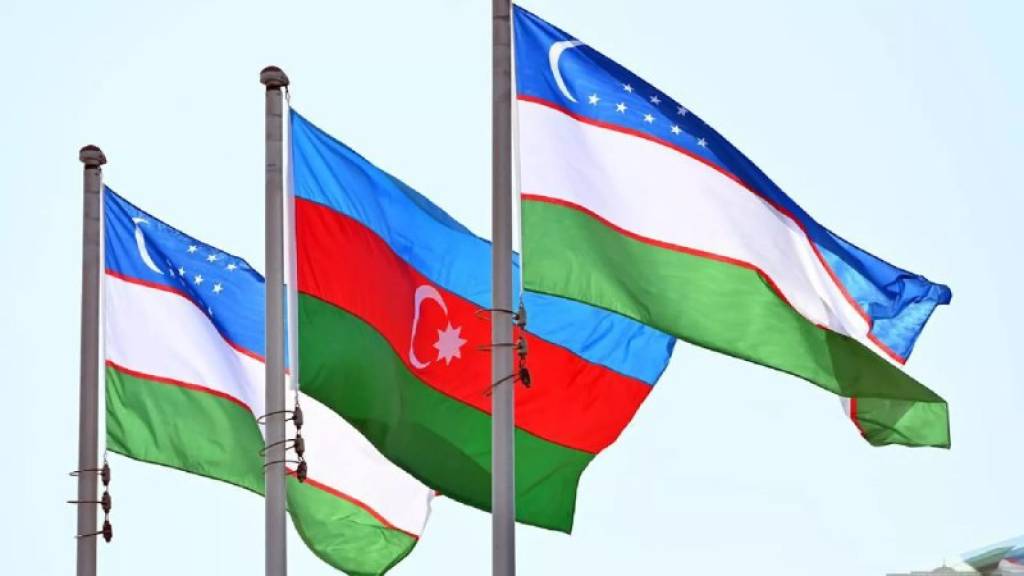
In recent years, Uzbekistan and Azerbaijan have been experiencing a revival and strengthening of their centuries-old historical and cultural ties. These ties have formed a partnership that covers the political, economic, energy, and cultural spheres.
Since the Great Silk Road, both countries have been important centers of trade and knowledge exchange, actively interacting with each other. Common religious traditions and Turkic linguistic heritage have played a significant role in strengthening cooperation. In the 9th-10th centuries, during the heyday of the Khorezmshakhs and Shirvanshakhs, Uzbeks and Azerbaijanis maintained close contacts, which continued during the reign of Amir Temur (14th-15th centuries), when cultural exchange and dynastic marriages contributed to strengthening political ties.
The works of outstanding literary figures of that time, such as Alisher Navoi and Nizami Ganjavi, are typical examples of the mutual influence of the cultures of the two peoples. For example, Nizami’s poem “Khusrav and Shirin” includes descriptions of the architecture, scenes, and images typical of Central Asia, namely the cities of Samarkand and Bukhara. The interpenetration of cultures was not limited to literature and architecture, but also extended to musical traditions and folk dances, which retain similar elements today.
One of the most significant events of recent years was the signing of an agreement on the establishment of the Supreme Interstate Council between the Republic of Uzbekistan and the Republic of Azerbaijan during the visit of the President of Uzbekistan Shavkat Mirziyoyev to Azerbaijan on August 22-23, 2023. This council will become an essential platform for further strengthening the allied relations between the two countries. During the visit, 15 documents were signed, including a roadmap for deepening the comprehensive strategic partnership for 2023-2024, agreements on cooperation in energy, youth policy, and sports, memorandums on collaboration in cybersecurity, and others.
Economic Cooperation
The economic partnership between Uzbekistan and Azerbaijan has demonstrated steady growth, covering both traditional areas of trade and strategic investment projects. In 2022, a joint investment fund worth $500 million was established to strengthen industrial cooperation between the two countries. This fund has become an essential catalyst for implementing joint projects in key economic sectors, including energy and agriculture.
The most important area of cooperation is Uzbekistan’s participation in developing the Shah Deniz gas condensate field on the Azerbaijani shelf of the Caspian Sea. The gas reserves in this field are estimated at 1.2 trillion cubic meters, and including Uzbekneftegaz in this project opens up new opportunities for deepening energy partnerships. This is especially important against the backdrop of declining gas production in Uzbekistan caused by the depletion of existing fields.
Trade turnover between Uzbekistan and Azerbaijan also shows positive dynamics. In the first half of 2024, the trade volume between the two countries reached $90.986 million, confirming the stability and prospects of bilateral economic relations. Agriculture plays a vital role in this process. The parties actively cooperate in crop production, horticulture, and sericulture.
At the meeting of the Deputy Ministers of Agriculture of Uzbekistan and Azerbaijan, issues of expanding cooperation in the agricultural sector and the development of agricultural education and research were discussed.
Green Energy and Transport Infrastructure
One of the key agenda items for Azerbaijan and Uzbekistan is the development of green energy and the strengthening of transport corridors linking Central Asia and Europe.
In May 2024, Kazakhstan, Uzbekistan, and Azerbaijan signed a memorandum on laying an energy cable along the bottom of the Caspian Sea, which will allow the transmission of electricity generated from renewable sources to the European Union. This project, part of a broader strategy to diversify energy supplies, has received support at the highest level.
The Deputy Minister of Energy of Azerbaijan emphasized that this and other export corridors passing through Azerbaijan open up broad prospects for transferring green energy from Central Asian countries to Europe.
A series of high-level events dedicated to the transition to green energy are planned to be held within the framework of the UN Climate Change Conference (COP29), which will be held in November 2024 in Baku. An Investment Energy Forum will be organized jointly with the International Renewable Energy Agency (IRENA), which will bring together the heads of state of Central Asia and Azerbaijan to discuss the prospects for the development of green energy in the region.
The Central Asian countries continue to work together to improve transport routes. Uzbekistan, Azerbaijan, and Tajikistan discussed the possibility of increasing cargo transportation along the Middle Corridor, which connects the Central Asian region and Europe via the Caucasus. The signing of a memorandum on expanding cooperation in this area was an essential step towards integrating the region’s transport systems and ensuring their sustainable development.
Interaction on Afghanistan
In February 2024, Azerbaijan opened its diplomatic mission in Kabul and appointed the first ambassador to Afghanistan in modern history. This event demonstrates Azerbaijan’s intention to strengthen its position in the region and develop mutually beneficial ties with neighboring countries.
Uzbekistan and Azerbaijan's joint efforts in Afghanistan include active participation in trade and investment projects. During the delegations’ visits to Kabul, five trade and investment agreements and protocols for strengthening cooperation in the financial sector, agriculture, and mining were signed.
Uzbekistan and Azerbaijan view Afghanistan as an important partner with whom they are ready to develop long-term economic relations and support its integration into regional economic processes.
Interregional Dialogue
On May 21, 2024, Guba hosted the Second Interregional Forum Azerbaijan – Uzbekistan, which became a platform for discussing new trade, economic, cultural, and humanitarian initiatives.
As part of the event, memorandums of understanding and cooperation were signed between the cities of Gulistan and Fuzuli, Namangan and Mingachevir, Termez, and Bilasuvar. These memorandums, concluded investment agreements, and trade contracts in the agriculture and textile industry indicate a growing interest in expanding interregional cooperation.
During the forum, a threefold increase in the volume of Uzbekistan – Azerbaijan trade turnover over the past five years was emphasized, and by another 15 percent since the beginning of 2024. The countries are confidently moving towards reaching the $1 billion mark in trade turnover, which is expected soon.
Particular attention was paid to plans to implement joint projects in areas such as the automotive industry, metallurgy, energy, agriculture, and tourism, which aimed to strengthen economic ties and create new jobs.
Educational and Cultural Initiatives
One of the significant educational projects was the construction of a modern school named after Mirzo Ulugbek in Azerbaijan’s city of Fuzuli, on the initiative of Uzbekistan, designed for 960 students. This underlines the importance of cultural and educational exchange between the two countries. It is also worth noting the holding of Uzbek Culture Days in Azerbaijan in 2023, including the presentation of Abdulla Qodiriy’s novel “Days Gone By” in the Azerbaijani language and the opening of a street in Tashkent named after Heydar Aliyev, with a park and a memorial bas-relief. These initiatives demonstrate a mutual commitment to strengthening cultural ties.
In conclusion, it should be noted that today, Uzbekistan and Azerbaijan, supporting each other at international venues such as the UN and the Organization of Turkic States, strive for rapprochement and partnership, which opens up broad opportunities for progress and peaceful coexistence in the region.
Abduaziz Khidirov, UzA