

The Asian Development Bank held a presentation dedicated to Uzbekistan, in Tashkent.
ADB’s Country Director for Uzbekistan Kanokpan Lao-Araya, Rector of the Central Asian University for the Study of Environment and Climate Change (Green University) Jasur Solikhov and others spoke about the reforms being carried out in the country to ensure economic growth.
Economic growth in Uzbekistan is expected to decrease in 2024 due to the impact of higher prices on household disposable income, according to a new flagship report from the Asian Development Bank (ADB).
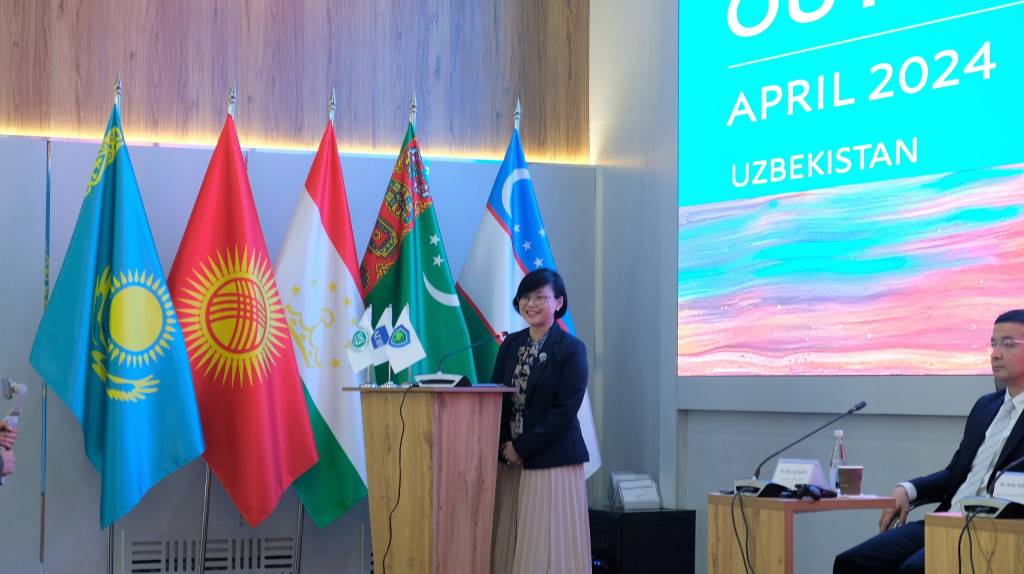
In its Asian Development Outlook (ADO) April 2024, ADB projects gross domestic product (GDP) growth for Uzbekistan to be 5.5% in 2024, followed by a slight uptick to 5.6% in 2025. Growth is projected to slow down due to the impact of increased administered prices on household income, which could lead to reduced consumer demand.
“Uzbekistan saw a commendable uptick in economic growth last year, thanks to the robust performance in the industrial and agricultural sectors”, said Kanokpan Lao-Araya, ADB’s Country Director for Uzbekistan. “This surge was backed by a strong investment climate and a strategic tax exemption policy for essential foods, which, in tandem with a tight monetary stance, has contributed to a notable deceleration in inflation”.
Despite the projected slowdown in 2024, the economic outlook remains cautiously optimistic. The services and agricultural sectors are expected to see slower growth, while private consumption and investment are also projected to lose some momentum. Inflation rates are forecast to hold steady as the effects of ongoing structural energy reforms and monetary tightening balance.
Issues related to fiscal policy, revenues, and budget deficits were analyzed at the event. It was noted that a slowdown in growth rates in services and agriculture is expected. Inflation rates are projected to remain stable due to the balancing effect of structural reforms in the energy sector and tightening monetary policy.
Nasiba Ziyodullayeva, UzA