
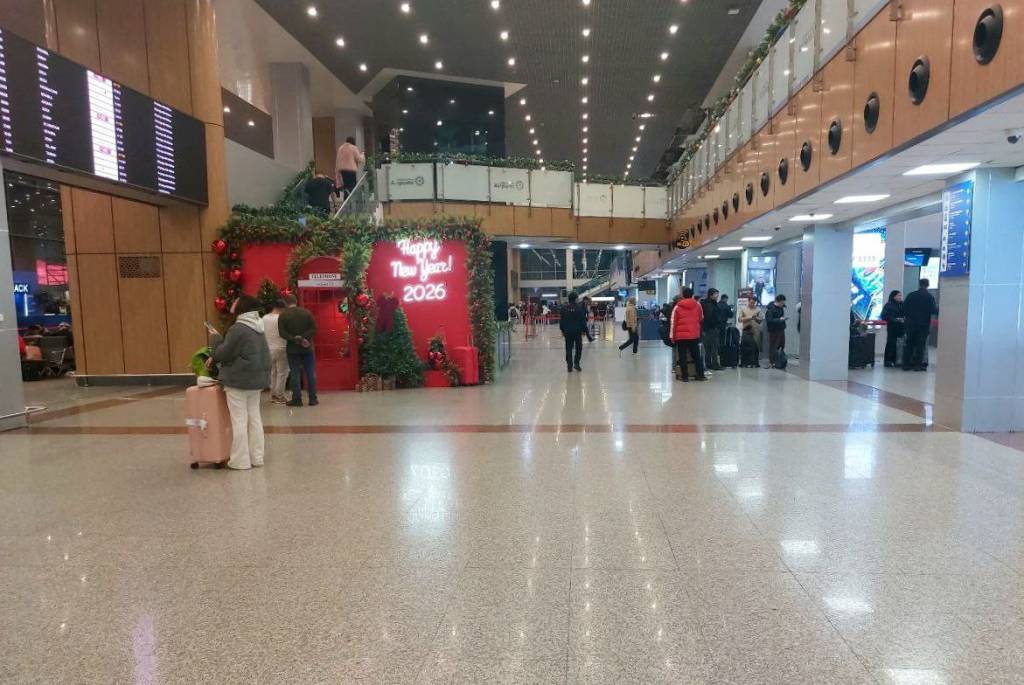
For Tashkent International Airport, 2025 became not just another line in statistics, but a true confirmation of its role as the country’s central air hub.
The airport firmly consolidated its status as Uzbekistan’s key air gateway, demonstrating noticeable growth across all major indicators.
According to year-end results, the airport handled 40,153 flights and 9,964,602 passengers. These figures speak for themselves: the airport came close to the 10-million-passenger mark, which only a few years ago seemed ambitious.
For clarity, it is worth looking at the dynamics. In 2024, the airport served 8,725,521 passengers and operated 34,789 flights. Just one year later, passenger traffic increased by 14 percent, while the number of operated flights grew by 15 percent. Such a surge reflects not a random spike, but a sustained trend toward the development and expansion of aviation capabilities.
A key driver of this growth has traditionally been international routes. Throughout 2025, Tashkent International Airport maintained robust air connectivity to cities across Europe, Asia, the Middle East, and the CIS. At the same time, domestic flights also maintained stable demand, remaining an essential part of the country’s transport system and regional connectivity.
Behind the dry statistical figures lies a whole set of factors. The expansion of the route network, increased flight frequencies, and overall growth in passenger mobility underpinned the positive dynamics. More people are choosing air travel as a fast, convenient mode of transportation – both for business and leisure.
Thus, 2025 can confidently be called a year of growth and records for Tashkent International Airport. The achieved indicators not only sum up a successful period but also set a high benchmark for further development, strengthening the airport’s position on the region’s aviation map.
Roman Bondarchuk, UzA