
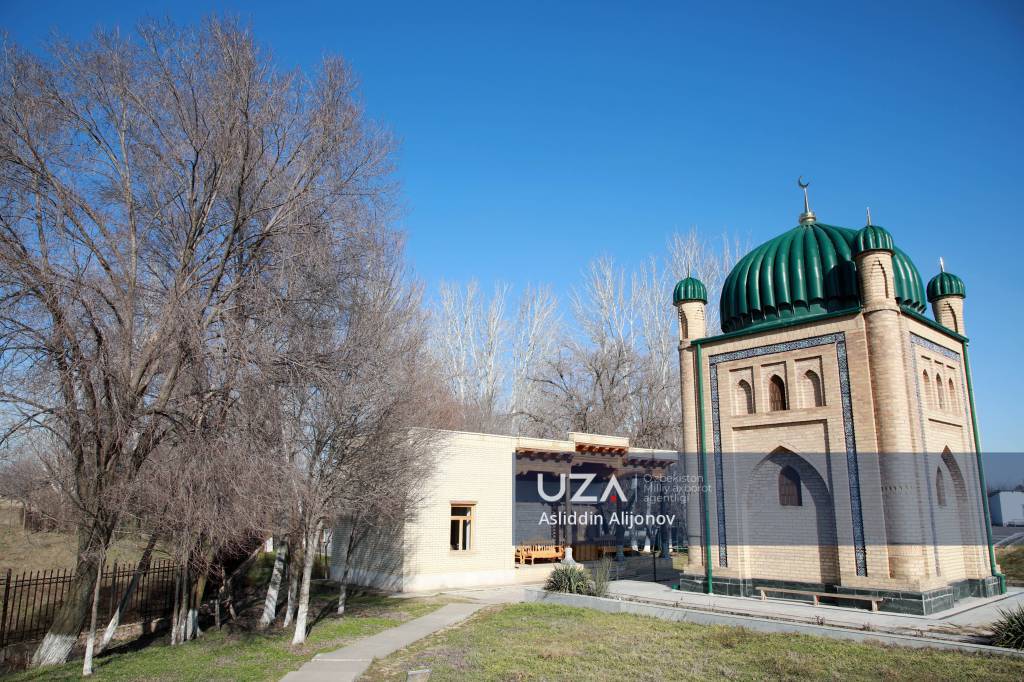
Archaeological materials and ancient manuscripts contain numerous fascinating facts about a site located 25 kilometers from the center of Akkurgan district, on the banks of the Syrdarya River.
According to historical sources, when Amir Temur was preparing for his campaign against Tokhtamysh Khan, he assembled the right wing of his army between Samarkand and Tashkent. Upon inquiring about the location, he was told that it was the ruins of the city of Banokent. Recognizing its strategic significance in Central Asia, Amir Temur quickly ordered the city to be rebuilt.
Between 1386 and 1389, the city was reconstructed and named Shahrukhia in honor of Temur’s youngest son. Records indicate that Mirzo Ulugbek visited this place before his pilgrimage to Makkah in 1449. Over the centuries, this historically significant site has been known by different names. In the same area, there is a sacred site called Shomirqori Avliyo, which attracts numerous pilgrims from Uzbekistan and abroad yearly.
According to legend, three brothers set out on camels from Bukhara to establish a city in this region. It was decided that whoever’s camel sat down first would build a town at that spot. A giant fish suddenly leaped from the water as they approached the area where the Syrdarya flows through the Banokat district. The brothers began crossing the river, and as their camels moved toward the shore, the white camel ridden by Shomirqori got stuck in the mud near the riverbank. From that moment on, people started calling this place “the place where the white camel sat”.
This location was once a vast marketplace renowned for selling the sweetest melons and watermelons in the world. However, in 1219, when Genghis Khan invaded these lands, thousands of defenders were killed, and the bazaar was buried under sand. Two of the brothers left the area and went on to establish the cities of Khujand and Sayram. Shomirqori, however, remained where his camel had settled and began healing people using red roses. Many patients were cured, and the red rose symbolized Sufi healing.
In academic circles, Shomirqori was known as Sayyid Nematilla Valiy. Many events in the history of Shahrukhia aimed at establishing peace were initiated through his efforts. According to the caretaker of this sacred site, Tokhir Kurbanov, the descendants of Saint Shomirqori still live in various parts of the country. They regularly visit the graves of their ancestors in the Shahrukhia area and reflect on the past.
Today, a mausoleum stands at the site of Saint Shomirqori’s grave. It was built in 2003 through community effort (hashar). Along the pathway leading to the mausoleum, red roses have been planted, symbolizing the healing legacy of Shomirqori.
In recent years, the administrations of Tashkent region and Akkurgan district have emphasized improving this sacred site. Plans are also in place to establish rest areas, food service points, and additional amenities for tourists visiting the shrine.
During the years of independence, the area where the historic settlement of Shahrukhia once stood was divided into the CAM Khosildor and Navbahor. Today, more than 8,000 people reside in this area.
[gallery-21690]
A. Musayev, photos by A. Alijonov, UzA