
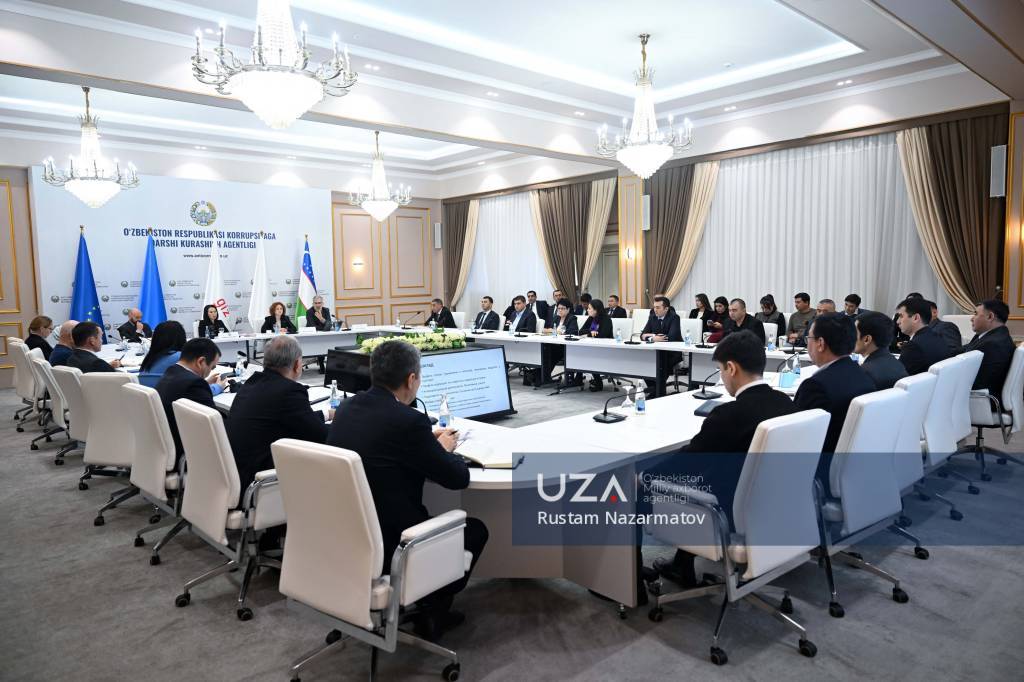
The Anti-Corruption Agency hosted an event devoted to presenting and discussing the Draft National Integrity System (NIS).
As noted, the National Integrity System (NIS) methodology was developed by Transparency International and is aimed at assessing the effectiveness and reliability of public institutions in preventing and combating corruption.
The NIS covers the activities of management institutions responsible for combating corruption and several key sectors that play a significant role in this area and provide an integrated approach to preventing corruption. The system analyzes not only each institution or sector individually, but also their relationship.
Transparency International has implemented this methodology in more than 100 countries since 1990.
The general methodology of the NIS, adapted for Uzbekistan, was presented at the event. It is being implemented as part of the project planned for 2024 “Improving Public Administration in Uzbekistan: an inclusive approach to preventing corruption”, funded by the European Union and the Federal Ministry for Economic Cooperation and Development of Germany. The United Nations Development Programme experts were also involved in implementing the NIS.
The methodology includes 15 priority areas, such as state institutions of power (legislative, executive, judicial, electoral system), law enforcement agencies, and other institutions (Prosecutor General’s Office, Ministry of Internal Affairs, State Security Service, Ombudsman, anti-corruption bodies), as well as the primary social forces operating in the management sphere (political parties, media, civil society and business representatives). Enterprises with state participation in the economy are also included.
At the event, new general provisions, additions, and changes to the NIS applicable to the conditions of Uzbekistan were considered, and issues of their improvement were discussed.
[gallery-20803]
Norgul Abduraimova, UzA