
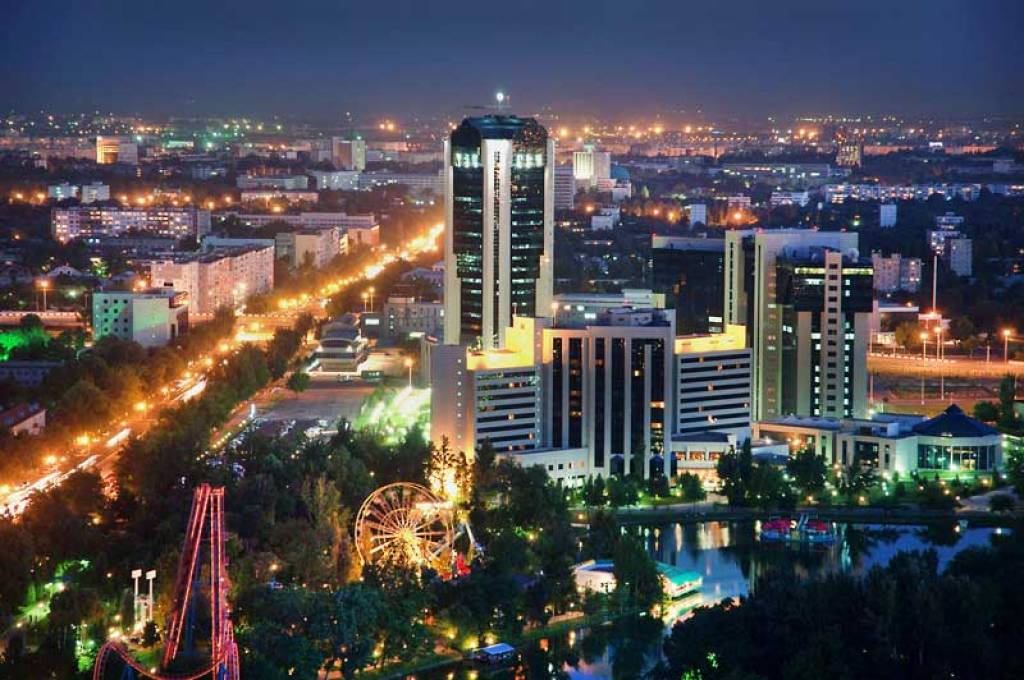
The history of Tashkent is more than 2000 years. During this period, the appearance of Tashkent underwent great changes, new fortifications were built, residential areas and neighborhoods were formed. Probably, every inquisitive resident of the capital would like to find out what was located at the place of his residence, at least 100-200 years ago.
Until the XIX century, the city of Tashkent was surrounded by a powerful fortress wall, divided by 12 gates, the National PR-Centre writes.
The fortress wall protected the city from enemy attacks and other external threats. At first, the fortress of Binkent (the former name of Tashkent) had 7 gates, at the beginning of the XIX century – 8, and with the expansion of the city by 1864, the number of fortress gates reached 12.
Tashkent was the only city in the whole world with such a number of gates.
In the Middle Ages, Tashkent was divided into four administrative-territorial divisions of "daha": Sheikhantaur, Beshagach, Kukcha and Sebzar.
Each daha reflected the four cardinal directions and the four seasons. After the capture of Tashkent by Russian troops, the city began to expand, the population of the new city dismantled the walls for construction materials. In 1890, the last gate was demolished, but some areas of the city have retained the names of the gates to this day.
Unfortunately, not a single gate has been preserved in modern Tashkent, but you can see some historical sites from the times of medieval Tashkent. Among them are Sheikhantaur architectural ensemble, Kukeldash Madrasah, Hazrati Imam ensemble, Khoja Ahror Vali Mosque and other ancient objects.
In accordance with the State Program for the implementation of the Actions Strategy for Five Priority Areas of development of the Republic of Uzbekistan in 2017-2021, the Tashkent city administration was instructed to restore 12 ancient city gates and add them to the tourist route. The project to restore the historical location of the 12 gates of Tashkent was taken up by the Department of Digital Development under the Tashkent City Administration.
According to the state program, the installation sites of the restored gates must be historically reliable.
The difficulty of establishing the exact location of the gate was that earlier their location was judged by maps of 1890 – then most of the wall and gate had already been destroyed. However, thanks to the unique archival materials, the department managed to determine their historical location.