Strategic partnership between Central Asia and Japan in new conditions
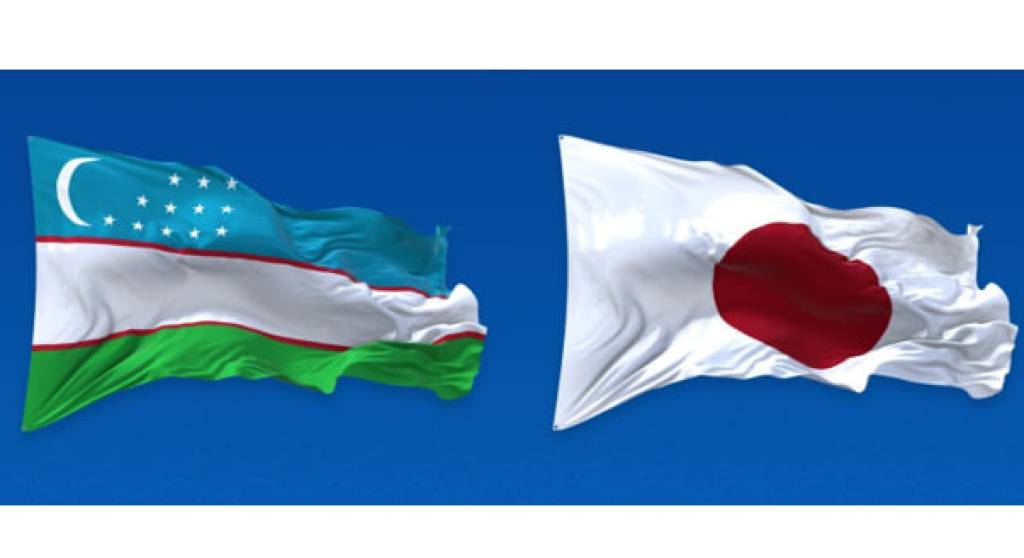
On December 18-20, 2025, a landmark event in the history of relations between Central Asia and Japan will take place in Tokyo – the first summit of heads of state in the “Central Asia + Japan” format.
This meeting will mark a significant milestone, opening a new chapter in the strategic partnership and providing powerful impetus for multifaceted cooperation between the region and one of the world’s leading economies. It should be noted that the upcoming summit coincides with the 20th anniversary of the “Central Asia + Japan” dialogue, established in 2004.
Today, Japan prioritizes the comprehensive and mutually beneficial development of relations with CA states. The recognition of the region’s strategic significance is also reflected in Japan’s 2023 “Diplomatic Bluebook”, which designates Central Asia as one of the most important foreign policy priorities.
This development is driven by the constructive foreign policy course of the President of Uzbekistan, Shavkat Mirziyoyev, which initiated a qualitatively new stage of consolidation in Central Asia. This pragmatic political line has not only strengthened the region’s role as an independent actor on the international stage but also created favorable conditions for systemic collective work to neutralize regional threats.
Contemporary Central Asia is a region for implementing major interstate projects (trade, transport, energy) characterized by a dynamic influx of foreign investment and active engagement with global institutions. Consequently, we are witnessing a manifold increase in the region’s geopolitical significance, attracting close attention from world powers.
For their part, Central Asian states view Japan as a strategically significant partner whose substantial participation is critically important for strengthening regional stability and ensuring sustainable economic development. Several key factors underpin this position:
First, since the early days of Central Asian countries' independence, Japan has supported their economic development through infrastructure projects and practical cooperation within international organizations and financial institutions such as the OECD, EBRD, ADB, and CAREC, as well as through large-scale infrastructure initiatives. Japanese participation has covered virtually all key sectors – from water supply and sewage systems to airports, thermal power stations, and railways. Assistance was also extended to school reconstruction, hospital equipment, and training specialists in business and agriculture.
Second, a key distinction of Japanese policy in the region is that Tokyo relies on principles of equality, mutual respect, and consideration of partners’ interests, without imposing unsubstantiated political conditions. This approach has created an atmosphere of trust toward Japan as a “distant neighbor without hidden intentions”, whose participation is perceived not as a pursuit of dominance, but as a sincere desire to facilitate the region’s sovereign development.
Third, Japan’s scientific and technological base, arguably one of the leading in the world, has particular value in today’s environment. Given the reforms underway in Central Asian countries to modernize their economies and transition to an innovative model, the Japanese experience and technologies are of paramount importance. This involves not only technology transfer but also a comprehensive knowledge transfer, including personnel training, the creation of an institutional environment, and the formation of an innovation culture. In this context, it is essential to note that Japan is the largest provider of Official Development Assistance (ODA) in Central Asia, directing its efforts toward modernizing state institutions, developing infrastructure, and creating a favorable business environment. Over the years of cooperation, Japan has implemented numerous projects focused on promoting a market economy, strengthening democratic governance, and improving education and healthcare systems. However, the most impressive aspect of the Japanese approach is the emphasis on human resources as the foundation of long-term development. Training programs at Japanese centers in Uzbekistan, Kyrgyzstan, and Kazakhstan have covered topics ranging from business fundamentals to Japanese management. As of 2024, under the Young Leaders Program, 911 specialists have undergone training at Japanese universities. Today, these graduates contribute to deepening ties between Japan and the CA countries, ensuring the continuity of the strategic course.
Fourth, Japan became the first significant power to recognize Central Asia as a space requiring a comprehensive approach. Back in 2004, Tokyo launched the initiative to create the “Central Asia plus Japan” dialogue format, facilitating regional cooperation and the independent development of CA. The foresight of this approach lay in its intentional flexibility; each meeting was oriented toward solving specific issues – from border management and water resources to ensuring economic diversification and regional security. All this took place without cumbersome obligations or rigid treaty structures. This model proved so effective that it was subsequently adopted by other global players, including the European Union, South Korea, the USA, China, and Russia. The success of the Japanese initiative confirms the effectiveness of the chosen strategy, which aims to deliver practical solutions to specific tasks while respecting the sovereignty of the region’s states.
Based on the foregoing, prospective directions for the further development of interaction between Central Asian countries and Japan may include:
First, advancing common interests and initiatives within international organizations. Over the years of cooperation, a solid practice of mutual support within the UN has been established. Specifically, Uzbekistan has supported Japan’s candidacy for membership in various UN structures more than 40 times. In turn, Tokyo supported Uzbekistan’s candidacy for election to the UN Human Rights Council for 2021-2023, as well as Samarkand as the venue for the 25th session of the UNWTO General Assembly in 2023. Moreover, the Japanese side joined as a co-sponsor of 5 UN General Assembly resolutions initiated by Uzbekistan regarding regional issues (“Nuclear-Weapon-Free Zone in Central Asia”, “Strengthening regional and international cooperation to ensure peace, stability and sustainable development in the Central Asian region”, “Declaring the Aral Sea region a zone of ecological innovations and technologies”, “Strengthening the role of parliaments in accelerating the achievement of the Sustainable Development Goals”). Japan also supports the implementation of regional initiatives led by the UN Office on Drugs and Crime. In particular, projects on cross-border cooperation to combat drug trafficking and transnational organized crime, and to strengthen cooperation in border control, have been implemented with its participation. Attracting Japan’s advanced knowledge, technical potential, and financial resources to the activities of the UN Multi-Partner Human Security Trust Fund for the Aral Sea region is also of interest. Incidentally, Japan took an active part in the development of this initiative.
Second, transport connectivity. Central Asia’s geostrategic location at the junction of Europe and Asia makes the region attractive for transport and logistics capabilities. Interaction in developing an extensive transport and communication system will enable the full realization of Central Asia’s transit potential, given that, by 2050, global freight demand is estimated by the UN to triple. This trend is a direct challenge for the landlocked countries of Central Asia, exacerbated by the fact that maritime logistics has remained a key element of world trade for centuries. According to statistics, naval transport accounts for over 80% of global trade volume. Moreover, transport costs in Central Asian states account for up to 50% of the final price of goods, nearly 5 times the global average of 11%. Against this background, close interaction between CA countries and Japan in the construction and modernization of railways and highways, the digitalization of customs points, and the creation of logistics centers is especially relevant and will enable the most complete disclosure of Central Asia's transport and transit potential.
Third, cooperation on critical mineral resources. CA concentrates 39% of the world’s manganese ore reserves, 31% of chromium, 20% of lead, 13% of zinc, and 9% of titanium. Close cooperation with CA countries will enable Japan to diversify its mineral resource sources and mitigate supply chain disruptions. According to open sources, in 2022 alone, Japan imported rare earth metals valued at $628 million. Accordingly, attracting quality investments and modern Japanese technologies into the deep processing of the resource base with the creation of a complete value-added chain will become an essential criterion for ensuring the accelerated development of CA.
Fourth, combating climate change. Central Asia is among the regions most vulnerable to the negative consequences of climate change. Specifically, according to World Bank estimates, if the average global temperature rises by 4 degrees Celsius by the end of the 21st century at current rates, the rise in CA will be 7 degrees. As a result, prerequisites are being created to compromise the integrity of the natural dams of 300 high-mountain lakes. According to specialists’ calculations, a 2-4-degree rise in average annual temperature could reduce the volume of mountain glaciers in the region by up to 78%. Given the above, the provision of Japanese technologies in energy efficiency, water conservation, and renewable energy will strengthen CA’s resilience. Japan is already actively investing in the clean and renewable energy sector, recognizing the critical role the region’s natural resources play in the global supply chain for green technologies. Of particular interest is the Japanese experience developing applications using radar satellites for disaster monitoring, as well as strict earthquake-resistant construction standards, which are critical for this seismically active region. These technologies can save thousands of lives and prevent colossal economic damage.
Fifth, establishing cooperation on poverty reduction. Today, Central Asia is one of the fastest-growing regions in the world. According to UN data, the region’s population is projected to reach 100 million by 2030, underscoring its significance as a consumer market. In this context, the need to create new jobs is evident, necessitating the continuation of the “One Village, One Product” program, initiated in 2017 in Central Asian countries with JICA’s assistance.
As political and social stability in Central Asia strengthens, the nature of Japanese participation shifts from traditional development aid to more complex, technology-focused projects. The role of JICA, the primary instrument for promoting Japanese cooperation, is gradually being complemented by the participation of institutions such as the Japan Bank for International Cooperation (JBIC), which supports larger-scale commercial projects. An example of this new dynamic in relations is the Memorandum of Understanding between JBIC and the Ministry of Transport of Uzbekistan, as well as the growing cooperation of companies like Sojitz Corporation in high-tech sectors. Such a transformation of aid illustrates a transition to a more advanced and mutually beneficial partnership, where Japanese companies not only assist but also become full-fledged participants in the region's economic development.
In general, the qualitatively new stage of regional cooperation observed in Central Asia has served as a powerful catalyst for activating the Central Asian vector of Japan’s foreign policy. Under these conditions, the region continues to demonstrate openness to equal, mutually beneficial partnerships, and Japan is ready to expand its participation in its development. Central Asia today is a key focus of international relations, capable of shaping its own agenda and selecting partners based on national interests. Undoubtedly, the upcoming summit on December 19-20 this year in Tokyo will serve as a platform to define “untouched” horizons of cooperation and create the prerequisites for opening a new chapter in the strategic partnership between Central Asia and Japan in modern conditions.
Bakhtiyor Mustafayev,
Deputy Director,
Institute for Strategic and Regional Studies under the President of the Republic of Uzbekistan
Bakhromjon Sotiboldiev,
Head of Department,
Institute for Strategic and Regional Studies under the President of the Republic of Uzbekistan