
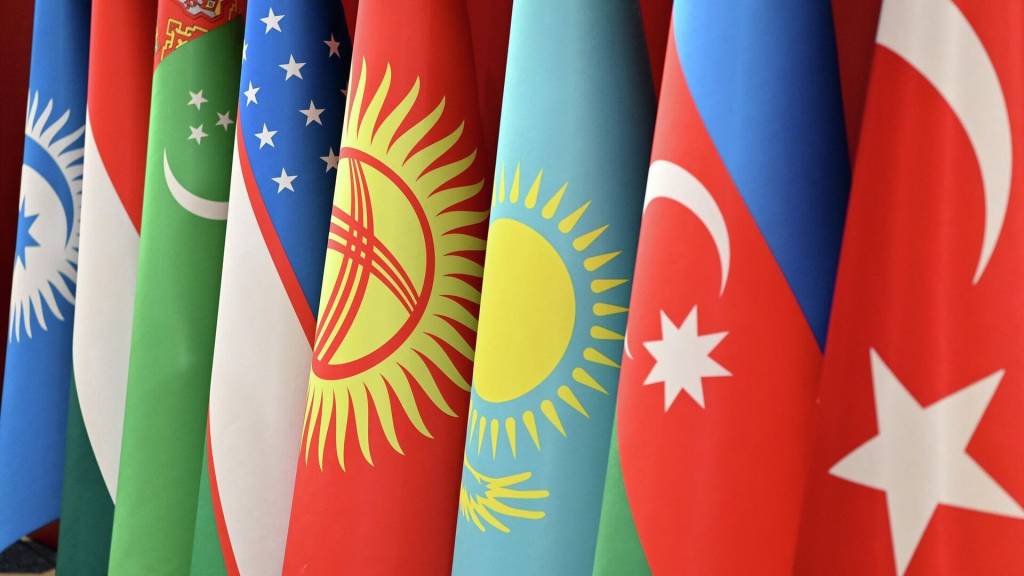
On October 6-7, at the invitation of the President of the Republic of Azerbaijan Ilham Aliyev, the President of the Republic of Uzbekistan Shavkat Mirziyoyev will pay a working visit to Azerbaijan and take part in the 12th Summit of the Organization of Turkic States (OTS), which will be held in Qabala under the motto “Regional Peace and Security”.

The agenda is practical in nature, encompassing a range of initiatives from enhancing mutual trade and investment to synchronizing logistics, energy projects, and humanitarian programs. At its core lies the transformation of high-level agreements into concrete mechanisms with clear timelines and designated implementers. A series of coordinated decisions and documents aimed at strengthening cooperation among member states is expected to be adopted.

Visit Context: From Protocol to Projects

The format of the visit combines two dimensions: the bilateral track (Tashkent – Baku) and the multilateral one (OTS). On October 6-7, the President of Uzbekistan will participate in the 12th Summit of the Organization of Turkic States in Qabala, where the key theme is defined as “Regional Peace and Security”. This sets the framework not for ceremony, but for the implementation of already agreed areas of cooperation: the unification of procedures within transit corridors, the alignment of financing mechanisms for joint industrial and energy projects, and the institutionalization of humanitarian initiatives. In other words, the agenda focuses on reconciling existing roadmaps and launching new initiatives that will turn political will into measurable results – from increased trade turnover and localization of production to the sustainability of transport routes and academic mobility programs. In this context, Qabala is not merely the geographic venue of the summit but a platform where multilateral agreements acquire concrete timelines, KPIs, and responsible parties.

The Organization of Turkic States includes Azerbaijan, Kazakhstan, Kyrgyzstan, Türkiye, and Uzbekistan as full members, with Turkmenistan, Hungary, and the Turkish Republic of Northern Cyprus (TRNC) holding observer status. The member states together have a population of around 160 million and a combined GDP exceeding $1.5 trillion.

Economy of the OTS: How the “Turkic Track” Benefits Uzbekistan

For Uzbekistan, the OTS format represents not only the diplomacy of symbols but also an infrastructure for growth. In recent years, trade between Uzbekistan and its partners within the Organization has accelerated: according to sectoral data, the country’s total trade turnover with OTS member states in 2023 approached $10 billion (an increase of about 25 percent year-on-year), and the upward trend has continued in 2025. Between January and August 2025 alone, trade with Türkiye reached $1.91 billion – reaffirming Ankara’s status as one of Tashkent’s key economic partners. This trajectory aligns with Uzbekistan’s overall expansion in foreign trade, which totaled $37 billion in the first half of 2025 – a 26 percent increase compared to the same period in 2024.

A significant new engine of cooperation is the Turkic Investment Fund, established by the Samarkand – Ankara summit decisions and entering into force on 24 February 2024. The Fund is designed to finance joint projects of SMEs, startups, and industrial cooperatives, reducing the cost of capital across the “Turkic track”. Its authorized capital stands at $600 million, with an initial subscribed amount of $500 million. For Uzbekistan, this opens access to long-term financing for industrial, logistics, and energy projects with neighboring states.

In parallel, the OTS is developing the soft infrastructure of trade, including harmonized frameworks that simplify procedures, enhance transport connectivity, and improve customs coordination (outlined in the Samarkand Declaration and relevant sectoral programs), all of which directly reduce logistics costs. At the Qabala Summit, the economic agenda is expected to focus on practical outcomes – including specific timelines, pilot projects along the Trans-Caspian corridor, and cross-financing mechanisms. The emphasis is not on declarations but on actionable instruments that help deliver goods to markets faster and bring investment projects to completion – particularly in the fields of energy and industrial cooperation.

The Azerbaijani Vector: Trade, Investment, and Allied Projects

The Tashkent – Baku partnership remains the fastest channel for practical cooperation. According to Azerbaijani statistics, in 2024, bilateral trade turnover exceeded $252 million, a 41 percent increase compared to the previous year. This is a stable trend confirmed by multiple reports based on official data.

The target benchmark – cautious yet ambitious – is to reach a trade volume of $1 billion by 2030. This goal underpins the documents approved on July 2, 2025, within the framework of the High-Level Intergovernmental Format: the “Action Plan for increasing bilateral trade to $1 billion by 2030” and the Industrial Cooperation Program. Both establish a roadmap with concrete measures and responsible implementers.

The investment case agenda is being shaped across four clusters:

Textiles. Uzbekistan companies are launching cotton and textile clusters in Azerbaijan. In the Imishli district, about 5,000 hectares have been allocated for the TST Textile project (a subsidiary of Tuqimachi Sanoat Tekstil). The next stage involves the commissioning of production facilities in Mingachevir. This is not an isolated initiative but a model of localization: bringing raw materials, primary processing, and finished production closer to consumer markets.

Construction Materials. In Uzbekistan, with the participation of Azerbaijan’s Matanat-A, a project is being developed for the production of gypsum and dry construction mixtures with a total budget of around $100 million. This marks a transition from trade to industrial cooperation and technology transfer.

Automotive Industry. The joint UzAuto – Azermash plant in Hajigabul has already launched assembly lines (for Damas, Labo, and other models) and is preparing to deepen localization – moving from large-unit assembly to higher stages of production. For the Uzbek side, this provides access to the South Caucasus market. For Azerbaijan, this means importing industrial expertise and creating new jobs.

Development and Tourism. Projects such as The Ritz-Carlton Tashkent (with an investment of around $200 million) and the large-scale Sea Breeze Uzbekistan megaproject on Charvak, approved in August 2025 (covering 577 hectares with investments of up to $5 billion), exemplify long-term capital in tourism and related infrastructure. For Baku, this represents the export of managerial and development expertise. For Tashkent, it catalyzes growth in the tourism and service clusters.

Connectivity and Corridors: From the Middle Route to Rail Logistics

The Qabala Summit logically focuses on operational connectivity: the synchronization of tariffs and procedures, the digitalization of border crossings, and the acceleration of multimodal transport schemes. Within the Organization of Turkic States, the Agreement on a Simplified Customs Corridor (signed at the Samarkand Summit on November 11, 2022, and in force since November 29, 2024) has already taken effect. In addition, the e-Permit project in international road transport is being advanced, with pilot programs carried out involving Uzbekistan and Türkiye. These initiatives directly reduce transit times and transaction costs.

Azerbaijan remains a key hub of the Middle (Trans-Caspian) Corridor. The Port of Baku and its railway network serve as a vital transportation bridge across the Caucasus and Türkiye to Europe. In 2024, the port’s cargo turnover increased to 7.6 million tons, with the fastest growth observed in container traffic. Along the Trans-Caspian International Transport Route (TITR), delivery times have decreased to 19-23 days, with a target of 15 days for block trains. For Uzbekistan, this represents the shortest route to the markets of the Black Sea and the Mediterranean.

The practical impact of connectivity is already measurable. According to open data, Uzbek cargo volumes passing through the Port of Baku exceeded 1 million tons in 2024, confirming sustained demand for the Trans-Caspian route. At the same time, the transit of oil and petroleum products along the Caspian-Caucasus corridor is growing, enhancing the network effect of the route.

What to expect in logistics outcomes after Qabala: pilot initiatives on tariff and procedure harmonization at key junctions of the corridor, expansion of the e-Permit system’s coverage, and specific KPIs for transit times along critical sections. For Uzbek businesses, this means fewer days and lower costs, more predictable schedules, and, consequently, increased investment appeal for export-oriented projects (from agro-processing to mechanical engineering). On the map, this translates into a continuous “arrow” – Fergana → Tashkent → Caspian → Baku → Kars → Europe – where every link is supported by data and regulation, not just political will.

Energy and the Green Agenda

Two complementary tracks can be observed in the energy sphere. The first concerns hydrocarbons. On July 24, 2025, the Ministry of Energy of the Republic of Uzbekistan, SOCAR, and Uzbekneftegaz signed a production sharing agreement (PSA) for the Ustyurt oil and gas region. SOCAR will serve as the operator during the exploration phase, with plans for 3D seismic surveys covering at least 1,000 square kilometers and the drilling of an exploration well within the first five years. The project comprises six investment blocks, spanning from Boyterak to Kulboy. This marks the first joint upstream project of such scale between Baku and Tashkent, serving as an essential channel for technological transfer in exploration and production.

The second track focuses on green electricity and interconnectivity. From May 2 to 6, 2024, Azerbaijan, Kazakhstan, and Uzbekistan signed a memorandum on the integration of their power systems, which includes an assessment of laying a high-voltage cable along the Caspian seabed to export surplus renewable energy to Europe through Azerbaijan’s network and further via the green Caspian – Black Sea corridor. According to the parties, the feasibility study for the Caspian – Europe Green Corridor reached its final stage by mid-2025. For Uzbekistan, this represents not only a market for green megawatts but also access to integration standards that enhance grid flexibility and supply reliability during peak demand hours.

At the Qabala Summit, the expected format of discussions in the energy segment will focus on precise adjustment: coordination of the interconnection stages (route, cable parameters, reverse-flow regulations) and alignment of financial instruments – including the potential involvement of the Turkic Investment Fund – for wind, solar, and flexible generation projects. For Uzbekistan, the gains are significant: access to long-term, relatively low-cost financing for generation and grid modernization, the adoption of Caspian and Anatolian balancing practices, and ultimately a more resilient power system capable of handling seasonal and daily load peaks.

Security and Resilience: Why the OTS Needs a Mutual Assistance System

The summit’s theme – “Regional Peace and Security” – reflects a pragmatic link between economic development and infrastructure protection. Since 2022, the Organization of Turkic States has been building a framework for joint response – from the Samarkand Declaration on Security Coordination to the launch of the OTS Civil Protection Mechanism. In 2024-2025, member countries agreed upon and signed an accord on the Civil Protection Mechanism, which covers search and rescue operations, medical assistance, emergency monitoring, temporary accommodation, and humanitarian support. The mechanism operates upon request from the affected party and ensures coordination among relevant agencies.

The logic is straightforward: sustainable trade and transport corridors are impossible without minimizing natural, technological, and cyber risks. On a practical level, this is reinforced by digital tools that reduce transaction and operational risks in logistics. The Agreement on a Simplified Customs Corridor (entered into force on November 29, 2024) and the scaling up of the e-Permit project in international road transport help accelerate cargo movement and enhance the predictability of supply chains.

For Uzbekistan’s economy, the mutual assistance system within the Organization of Turkic States serves as an insurance mechanism for the corridors stretching from Fergana to Kars, resulting in fewer border delays, faster post-emergency recovery, and stronger cyber resilience of critical infrastructure. Allied formats with Azerbaijan complement this framework by reducing regulatory uncertainty at the intersection of transit, energy, and industrial cooperation, factors that directly influence investor confidence and the cost of capital.

Qabala represents a transition from the politics of intent to the mechanics of implementation. The summit consolidates the connectivity axis of the Turkic space and turns agreements into operational tools: the unification of corridor procedures, access to long-term capital through dedicated funds, and technological partnerships in energy and industrial cooperation. The strategic focus is on horizontal industrialization – when building value chains not within a single country, but across the entire OTS perimeter.

For Uzbekistan, the practical outcomes are tangible: diversification of export routes (including the Trans-Caspian and related corridors), reduced logistics costs through digital and tariff harmonization, new cooperation in textiles, mechanical engineering, construction materials, and tourism, as well as longer-term and smarter capital investment directed toward renewable energy and grid flexibility. In the humanitarian dimension, this means strengthening the soft infrastructure of trust – academic mobility, joint training programs, and cultural initiatives that sustain cooperation beyond political cycles.

The success criterion is clear: how well the agreements are formalized into a system – financing + timelines + accountability + public KPIs. Where calendar plans, pilot projects along real corridor segments, and regular reporting are in place, the economic impact will be fast and tangible. This approach will transform political will into sustainable growth and solidify Uzbekistan’s role as a key moderator of connectivity in the Turkic region.

Abduaziz Khidirov, UzA

Oʻzbek
Chinese
Turkish
Tajik
Kyrgyz
Turkmen
Japanese
Arabic
English
French
Spanish
Русский
German
Ўзбек
Oʻzbek
Қазақ
Qabala: How the “Turkic Track” Strengthens Uzbekistan’s Connectivity and Opens New Markets

On October 6-7, at the invitation of the President of the Republic of Azerbaijan Ilham Aliyev, the President of the Republic of Uzbekistan Shavkat Mirziyoyev will pay a working visit to Azerbaijan and take part in the 12th Summit of the Organization of Turkic States (OTS), which will be held in Qabala under the motto “Regional Peace and Security”.

The agenda is practical in nature, encompassing a range of initiatives from enhancing mutual trade and investment to synchronizing logistics, energy projects, and humanitarian programs. At its core lies the transformation of high-level agreements into concrete mechanisms with clear timelines and designated implementers. A series of coordinated decisions and documents aimed at strengthening cooperation among member states is expected to be adopted.

Visit Context: From Protocol to Projects

The format of the visit combines two dimensions: the bilateral track (Tashkent – Baku) and the multilateral one (OTS). On October 6-7, the President of Uzbekistan will participate in the 12th Summit of the Organization of Turkic States in Qabala, where the key theme is defined as “Regional Peace and Security”. This sets the framework not for ceremony, but for the implementation of already agreed areas of cooperation: the unification of procedures within transit corridors, the alignment of financing mechanisms for joint industrial and energy projects, and the institutionalization of humanitarian initiatives. In other words, the agenda focuses on reconciling existing roadmaps and launching new initiatives that will turn political will into measurable results – from increased trade turnover and localization of production to the sustainability of transport routes and academic mobility programs. In this context, Qabala is not merely the geographic venue of the summit but a platform where multilateral agreements acquire concrete timelines, KPIs, and responsible parties.

The Organization of Turkic States includes Azerbaijan, Kazakhstan, Kyrgyzstan, Türkiye, and Uzbekistan as full members, with Turkmenistan, Hungary, and the Turkish Republic of Northern Cyprus (TRNC) holding observer status. The member states together have a population of around 160 million and a combined GDP exceeding $1.5 trillion.

Economy of the OTS: How the “Turkic Track” Benefits Uzbekistan

For Uzbekistan, the OTS format represents not only the diplomacy of symbols but also an infrastructure for growth. In recent years, trade between Uzbekistan and its partners within the Organization has accelerated: according to sectoral data, the country’s total trade turnover with OTS member states in 2023 approached $10 billion (an increase of about 25 percent year-on-year), and the upward trend has continued in 2025. Between January and August 2025 alone, trade with Türkiye reached $1.91 billion – reaffirming Ankara’s status as one of Tashkent’s key economic partners. This trajectory aligns with Uzbekistan’s overall expansion in foreign trade, which totaled $37 billion in the first half of 2025 – a 26 percent increase compared to the same period in 2024.

A significant new engine of cooperation is the Turkic Investment Fund, established by the Samarkand – Ankara summit decisions and entering into force on 24 February 2024. The Fund is designed to finance joint projects of SMEs, startups, and industrial cooperatives, reducing the cost of capital across the “Turkic track”. Its authorized capital stands at $600 million, with an initial subscribed amount of $500 million. For Uzbekistan, this opens access to long-term financing for industrial, logistics, and energy projects with neighboring states.

In parallel, the OTS is developing the soft infrastructure of trade, including harmonized frameworks that simplify procedures, enhance transport connectivity, and improve customs coordination (outlined in the Samarkand Declaration and relevant sectoral programs), all of which directly reduce logistics costs. At the Qabala Summit, the economic agenda is expected to focus on practical outcomes – including specific timelines, pilot projects along the Trans-Caspian corridor, and cross-financing mechanisms. The emphasis is not on declarations but on actionable instruments that help deliver goods to markets faster and bring investment projects to completion – particularly in the fields of energy and industrial cooperation.

The Azerbaijani Vector: Trade, Investment, and Allied Projects

The Tashkent – Baku partnership remains the fastest channel for practical cooperation. According to Azerbaijani statistics, in 2024, bilateral trade turnover exceeded $252 million, a 41 percent increase compared to the previous year. This is a stable trend confirmed by multiple reports based on official data.

The target benchmark – cautious yet ambitious – is to reach a trade volume of $1 billion by 2030. This goal underpins the documents approved on July 2, 2025, within the framework of the High-Level Intergovernmental Format: the “Action Plan for increasing bilateral trade to $1 billion by 2030” and the Industrial Cooperation Program. Both establish a roadmap with concrete measures and responsible implementers.

The investment case agenda is being shaped across four clusters:

Textiles. Uzbekistan companies are launching cotton and textile clusters in Azerbaijan. In the Imishli district, about 5,000 hectares have been allocated for the TST Textile project (a subsidiary of Tuqimachi Sanoat Tekstil). The next stage involves the commissioning of production facilities in Mingachevir. This is not an isolated initiative but a model of localization: bringing raw materials, primary processing, and finished production closer to consumer markets.

Construction Materials. In Uzbekistan, with the participation of Azerbaijan’s Matanat-A, a project is being developed for the production of gypsum and dry construction mixtures with a total budget of around $100 million. This marks a transition from trade to industrial cooperation and technology transfer.

Automotive Industry. The joint UzAuto – Azermash plant in Hajigabul has already launched assembly lines (for Damas, Labo, and other models) and is preparing to deepen localization – moving from large-unit assembly to higher stages of production. For the Uzbek side, this provides access to the South Caucasus market. For Azerbaijan, this means importing industrial expertise and creating new jobs.

Development and Tourism. Projects such as The Ritz-Carlton Tashkent (with an investment of around $200 million) and the large-scale Sea Breeze Uzbekistan megaproject on Charvak, approved in August 2025 (covering 577 hectares with investments of up to $5 billion), exemplify long-term capital in tourism and related infrastructure. For Baku, this represents the export of managerial and development expertise. For Tashkent, it catalyzes growth in the tourism and service clusters.

Connectivity and Corridors: From the Middle Route to Rail Logistics

The Qabala Summit logically focuses on operational connectivity: the synchronization of tariffs and procedures, the digitalization of border crossings, and the acceleration of multimodal transport schemes. Within the Organization of Turkic States, the Agreement on a Simplified Customs Corridor (signed at the Samarkand Summit on November 11, 2022, and in force since November 29, 2024) has already taken effect. In addition, the e-Permit project in international road transport is being advanced, with pilot programs carried out involving Uzbekistan and Türkiye. These initiatives directly reduce transit times and transaction costs.

Azerbaijan remains a key hub of the Middle (Trans-Caspian) Corridor. The Port of Baku and its railway network serve as a vital transportation bridge across the Caucasus and Türkiye to Europe. In 2024, the port’s cargo turnover increased to 7.6 million tons, with the fastest growth observed in container traffic. Along the Trans-Caspian International Transport Route (TITR), delivery times have decreased to 19-23 days, with a target of 15 days for block trains. For Uzbekistan, this represents the shortest route to the markets of the Black Sea and the Mediterranean.

The practical impact of connectivity is already measurable. According to open data, Uzbek cargo volumes passing through the Port of Baku exceeded 1 million tons in 2024, confirming sustained demand for the Trans-Caspian route. At the same time, the transit of oil and petroleum products along the Caspian-Caucasus corridor is growing, enhancing the network effect of the route.

What to expect in logistics outcomes after Qabala: pilot initiatives on tariff and procedure harmonization at key junctions of the corridor, expansion of the e-Permit system’s coverage, and specific KPIs for transit times along critical sections. For Uzbek businesses, this means fewer days and lower costs, more predictable schedules, and, consequently, increased investment appeal for export-oriented projects (from agro-processing to mechanical engineering). On the map, this translates into a continuous “arrow” – Fergana → Tashkent → Caspian → Baku → Kars → Europe – where every link is supported by data and regulation, not just political will.

Energy and the Green Agenda

Two complementary tracks can be observed in the energy sphere. The first concerns hydrocarbons. On July 24, 2025, the Ministry of Energy of the Republic of Uzbekistan, SOCAR, and Uzbekneftegaz signed a production sharing agreement (PSA) for the Ustyurt oil and gas region. SOCAR will serve as the operator during the exploration phase, with plans for 3D seismic surveys covering at least 1,000 square kilometers and the drilling of an exploration well within the first five years. The project comprises six investment blocks, spanning from Boyterak to Kulboy. This marks the first joint upstream project of such scale between Baku and Tashkent, serving as an essential channel for technological transfer in exploration and production.

The second track focuses on green electricity and interconnectivity. From May 2 to 6, 2024, Azerbaijan, Kazakhstan, and Uzbekistan signed a memorandum on the integration of their power systems, which includes an assessment of laying a high-voltage cable along the Caspian seabed to export surplus renewable energy to Europe through Azerbaijan’s network and further via the green Caspian – Black Sea corridor. According to the parties, the feasibility study for the Caspian – Europe Green Corridor reached its final stage by mid-2025. For Uzbekistan, this represents not only a market for green megawatts but also access to integration standards that enhance grid flexibility and supply reliability during peak demand hours.

At the Qabala Summit, the expected format of discussions in the energy segment will focus on precise adjustment: coordination of the interconnection stages (route, cable parameters, reverse-flow regulations) and alignment of financial instruments – including the potential involvement of the Turkic Investment Fund – for wind, solar, and flexible generation projects. For Uzbekistan, the gains are significant: access to long-term, relatively low-cost financing for generation and grid modernization, the adoption of Caspian and Anatolian balancing practices, and ultimately a more resilient power system capable of handling seasonal and daily load peaks.

Security and Resilience: Why the OTS Needs a Mutual Assistance System

The summit’s theme – “Regional Peace and Security” – reflects a pragmatic link between economic development and infrastructure protection. Since 2022, the Organization of Turkic States has been building a framework for joint response – from the Samarkand Declaration on Security Coordination to the launch of the OTS Civil Protection Mechanism. In 2024-2025, member countries agreed upon and signed an accord on the Civil Protection Mechanism, which covers search and rescue operations, medical assistance, emergency monitoring, temporary accommodation, and humanitarian support. The mechanism operates upon request from the affected party and ensures coordination among relevant agencies.

The logic is straightforward: sustainable trade and transport corridors are impossible without minimizing natural, technological, and cyber risks. On a practical level, this is reinforced by digital tools that reduce transaction and operational risks in logistics. The Agreement on a Simplified Customs Corridor (entered into force on November 29, 2024) and the scaling up of the e-Permit project in international road transport help accelerate cargo movement and enhance the predictability of supply chains.

For Uzbekistan’s economy, the mutual assistance system within the Organization of Turkic States serves as an insurance mechanism for the corridors stretching from Fergana to Kars, resulting in fewer border delays, faster post-emergency recovery, and stronger cyber resilience of critical infrastructure. Allied formats with Azerbaijan complement this framework by reducing regulatory uncertainty at the intersection of transit, energy, and industrial cooperation, factors that directly influence investor confidence and the cost of capital.

Qabala represents a transition from the politics of intent to the mechanics of implementation. The summit consolidates the connectivity axis of the Turkic space and turns agreements into operational tools: the unification of corridor procedures, access to long-term capital through dedicated funds, and technological partnerships in energy and industrial cooperation. The strategic focus is on horizontal industrialization – when building value chains not within a single country, but across the entire OTS perimeter.

For Uzbekistan, the practical outcomes are tangible: diversification of export routes (including the Trans-Caspian and related corridors), reduced logistics costs through digital and tariff harmonization, new cooperation in textiles, mechanical engineering, construction materials, and tourism, as well as longer-term and smarter capital investment directed toward renewable energy and grid flexibility. In the humanitarian dimension, this means strengthening the soft infrastructure of trust – academic mobility, joint training programs, and cultural initiatives that sustain cooperation beyond political cycles.

The success criterion is clear: how well the agreements are formalized into a system – financing + timelines + accountability + public KPIs. Where calendar plans, pilot projects along real corridor segments, and regular reporting are in place, the economic impact will be fast and tangible. This approach will transform political will into sustainable growth and solidify Uzbekistan’s role as a key moderator of connectivity in the Turkic region.

Abduaziz Khidirov, UzA