

In recent years, Uzbekistan has witnessed a substantial increase in the number and scale of development projects and programs implemented across all key sectors, aimed at advancing the country’s socio-economic, technological, infrastructural, and material development, as well as comprehensively improving the well-being of its population.
Undoubtedly, an essential role in this process is played by the growing pace of cooperation with leading international financial institutions. The notable expansion of partnerships with such institutions since 2017 reflects both the government’s commitment to strengthening engagement with prestigious international organizations and the increasing interest of major financial entities in Uzbekistan. This, in turn, contributes to enhancing the country’s position on the global stage.
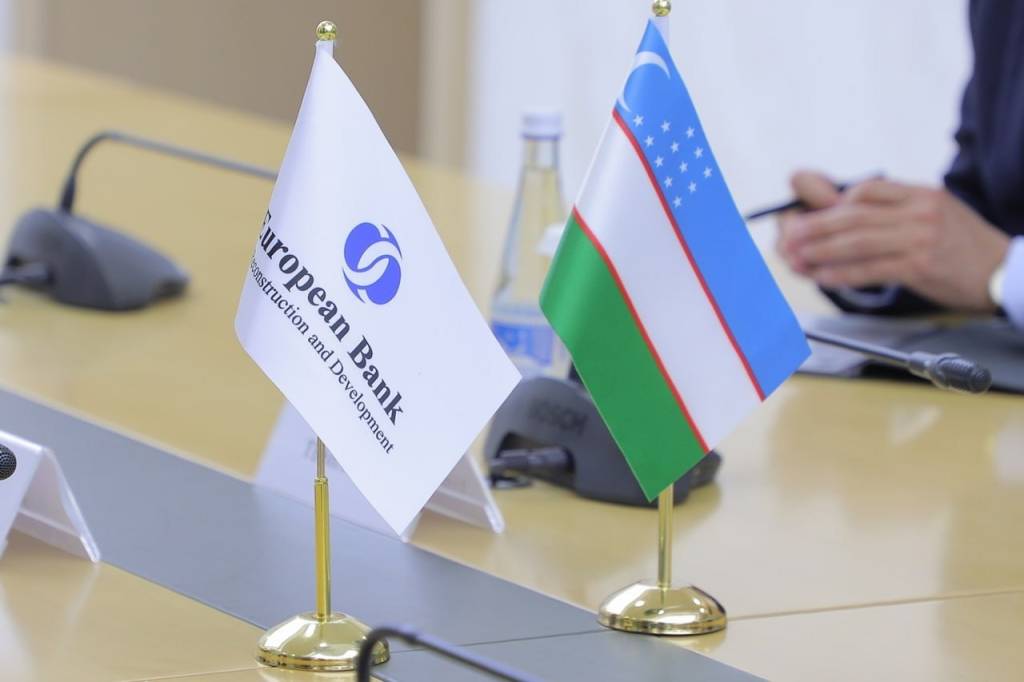
The European Bank for Reconstruction and Development (EBRD) and the European Investment Bank are among Uzbekistan’s largest European partners. In this context, the prioritization of cooperation with these institutions is reflected in the Uzbekistan 2030 Strategy, which sets out objectives for the development of trade, economic, financial, investment, and technological cooperation with the European Union (EU) member states. In particular, as part of deepening political and diplomatic engagement, the first “Central Asia – European Union” summit was held at the highest level in Samarkand on 3-4 April 2025, during which the parties agreed to elevate relations between the two regions to the level of a strategic partnership.
The resumption of relations with the EBRD in 2017 marked the beginning of a new stage in Uzbekistan’s partnership with this international financial institution. As is well known, in the same year, the Bank’s representative office was opened in Uzbekistan. Being one of the country’s major partners, the EBRD has, to date, implemented 180 projects with a total value of USD 5.22 billion, while the number of projects currently in active implementation stands at 98, amounting to USD 2.8 billion.
It is important to emphasize that the Bank’s activities in implementing projects in Uzbekistan are guided by the Country Strategy approved by the EBRD’s Board of Directors. It should be noted that the effectiveness of the EBRD’s operations in Uzbekistan is assessed based on the results achieved under this Strategy. Over the past eight years, the 2018-2023 Strategy has been implemented, and in 2024, the corresponding document for 2024-2029 was adopted. The prospects and opportunities for the EBRD to undertake new large-scale projects and initiatives are founded on the experience gained, including the practical outcomes of implementing the 2018-2023 Strategy.
In particular, the following key results were achieved under the main priorities of Uzbekistan’s Country Strategy for 2018-2023:
As part of efforts to enhance competitiveness by strengthening the private sector’s role in the economy, which encompassed support for small and medium-sized enterprises (SMEs), promotion of local capital market development, and reinforcement of financial institutions, the EBRD provided credit lines totaling EUR 380 million for SME development, thereby improving access to finance for 2,000 SMEs.
In the course of implementing the priority area of promoting green energy and resource solutions across sectors which included support for infrastructure development, promotion of green investments, and the advancement of renewable energy sources (RES) – the Bank commissioned RES facilities with a total capacity of 1.7 GW, achieved annual savings of 27.9 million GJ of primary energy and 110.6 million m³ of water, and reduced CO₂ emissions by 3,300 tons per year.
During the implementation of measures to support increased regional and international cooperation and integration, which included facilitating the modernization of transport infrastructure and its integration into regional networks, active use was made of the Trade Facilitation Programme, through which more than 1,100 transactions totaling EUR 690 million were carried out.
Thus, the EBRD’s activities under the 2018-2023 Country Strategy resulted in the establishment of a sustainable mechanism for supporting SMEs, the commissioning of renewable energy facilities that contributed to energy savings and reductions in carbon dioxide emissions, as well as the effective implementation of the Trade Facilitation Programme. In this context, during a meeting between the President of the Republic of Uzbekistan, Shavkat Mirziyoyev, and the President of the EBRD, Odile Renaud-Basso, held on the sidelines of the 4th Tashkent International Investment Forum, the successful implementation of the Strategy was also highlighted.
As noted above, in 2024, the EBRD adopted Uzbekistan’s Country Strategy for 2024-2029, whose priority areas include supporting decarbonization, the development of green cities, improving water efficiency, and transitioning to cleaner energy; developing private sector development and fostering employment, skills, inclusion, and digital transition; as well as promoting economic governance and business climate improvements, and enhance infrastructural connectivity.
It can be assumed that the effective implementation of Uzbekistan’s 2018-2023 Country Strategy provides a solid foundation for achieving the objectives of the new Strategy, particularly in light of the Bank’s enhanced operations informed by the lessons learned during the previous strategic period.
In turn, these measures envisage the continuation of active consultations with the government on improving corporate governance and privatization, deepening cooperation with other international financial institutions in the implementation of infrastructure investment projects, optimizing public-private partnership legislation to enhance the regulatory framework, and supporting the development of financial markets and the capital market.
Meanwhile, Uzbekistan’s cooperation with the European Investment Bank has been developing at a steady pace since the signing of the first Framework Agreement in 2017. At present, the Bank is implementing projects in the field of transport and logistics. In particular, it is providing co-financing of nearly EUR 1.5 billion as part of a joint initiative by European and international financial institutions to invest EUR 10 billion in the development of the Trans-Caspian Transport Corridor.
In 2023, the European Investment Bank also extended a loan of USD 83.6 million for the construction of three solar power plants, implemented by the UAE company Masdar in the Samarkand, Jizzakh, and Surkhandarya regions. The Bank also participated in the co-financing of a project by the French company Total Eren for the construction of a 100 MW solar power plant in Samarkand region.
It is worth noting that a new milestone in Uzbekistan’s bilateral cooperation with the Bank will be marked by the Agreement on the establishment of the European Investment Bank’s regional office in Tashkent, signed on the sidelines of the first “Central Asia – European Union” summit in the presence of the President of Uzbekistan, Shavkat Mirziyoyev, the President of the European Council, António Costa, and the President of the European Commission, Ursula von der Leyen.
Given the increasing momentum of the partnership between Uzbekistan and the European Investment Bank, there is reason to believe that this may contribute to creating conditions for the expansion of mutually beneficial cooperation and the attraction of additional investments in the development of the green economy, advanced industry, and modern infrastructure, both in Uzbekistan and in Central Asia as a whole.
Overall, the growing pace of Uzbekistan’s partnership with the EBRD and the European Investment Bank is one of the key factors in the implementation of significant projects that contribute to the development of the social, energy, transport, scientific and technological, financial, and other sectors. At the same time, the effective implementation of Uzbekistan’s Country Strategy and large-scale investment initiatives carried out in cooperation with these institutions not only creates the conditions for the modernization of key sectors of the economy, but also establishes a solid foundation for further sustainable growth, deeper international integration, and the attraction of additional investment into the green economy, innovative development, and the strengthening of infrastructural connectivity both in the country and across the region as a whole.
Fotikhjon Kodirov,
Chief Specialist at the Project Department,
Development Strategy Center of Uzbekistan
UzA