


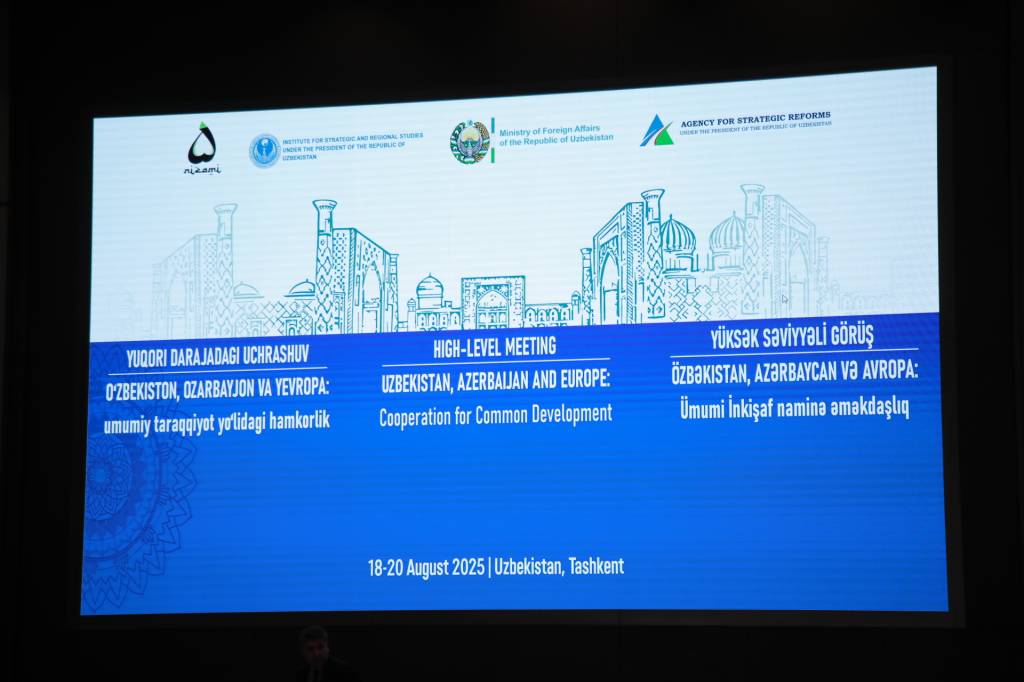
The high-level meeting “Uzbekistan, Azerbaijan and Europe – Cooperation for Common Development” continues in Tashkent. Heads of state and government, heads of international structures, and representatives of the expert community are taking part in the event.
Addressing the forum, María Fernanda Espinosa, President of the 73rd Session of the UN General Assembly, former Minister of Foreign Affairs and National Defense of Ecuador, noted that Tashkent, “a city at the crossroads of civilizations and increasingly active global cooperation”, has become a platform for substantive dialogue between Central Asia, the South Caucasus, Azerbaijan and Europe. “We are gathered here at a time when our interconnected world is facing both unprecedented challenges and extraordinary opportunities”, she stressed.
According to María Fernanda Espinosa, the scale of the global agenda requires consolidation of efforts. Referring to a recent assessment of the implementation of the 2030 Agenda for Sustainable Development, she highlighted three key points.
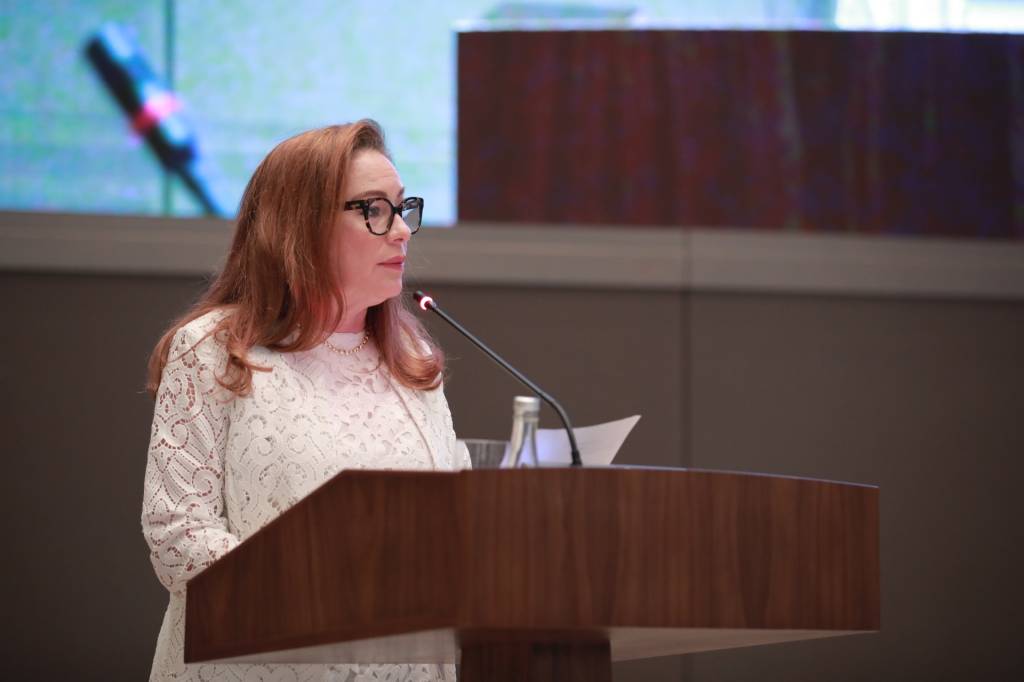
The first is a global development emergency. According to her, only a part of the Sustainable Development Goals is moving in the right direction, a significant proportion is moving too slowly, and regression is observed in several positions. “More than 800 million people remain trapped in extreme poverty and hunger; 2024 was the hottest year on record; over 120 million people had to leave their homes, mainly due to climate change”, the speaker stressed. Record debt service costs in low- and middle-income countries are creating additional pressure, which is “crowding out the resources needed for sustainable development”.
The second is the need for regional and multilateral cooperation. According to María Fernanda Espinosa, no country or institution can single-handedly respond to a set of challenges. “It is at the regional level that trust is built, partnership is rooted and solutions are developed that are adapted to local realities, but significant for global progress”, she stressed, highly appreciating the potential of the Tashkent site as a tool for coordinating practical steps.
The third is the emerging leadership of Uzbekistan as a bridge of transformation in Eurasia. The expert said that under the leadership of President Shavkat Mirziyoyev, the country is “increasingly acting as a link between cultures and states”, showing how national reforms, strategic vision, and international cooperation can combine for long-term effect.
The Middle Corridor initiative is cited as an example, which “changes the paradigm of connectivity, increases energy security, diversifies trade and opens up new opportunities for millions of people in the region”. According to her, over the past two years, this agenda has received support from the European Union and international institutions, including the attraction of significant resources for the development of sustainable connectivity.
According to the agenda of the meeting, thematic discussions in Tashkent focused on the following practical areas: linking transport and logistics routes in Central Asia, the South Caucasus, and Europe, climate sustainability (water, energy security, sustainable agriculture), as well as digital transformation and the introduction of artificial intelligence technologies. As the participants noted, these blocks directly echo those voiced by María Fernanda Espinosa’s priorities, which range from building regional trust and policy coordination to launching applied projects that bring measurable results.
– These figures are not just alarming statistics. This is an urgent call to action: solidarity, pragmatic partnership, and urgent collective efforts that will turn dangerous trends around and fulfill the promises of the 2030 Agenda”, she concluded.
According to experts, the high-level meeting in Tashkent sets the working vector of cooperation for the coming years, strengthening the role of Central Asia as a strategic transport, logistics, and energy hub between East and West and opening up new opportunities for partnership between Uzbekistan, Azerbaijan, and Europe.
Abduaziz Khidirov, UzA