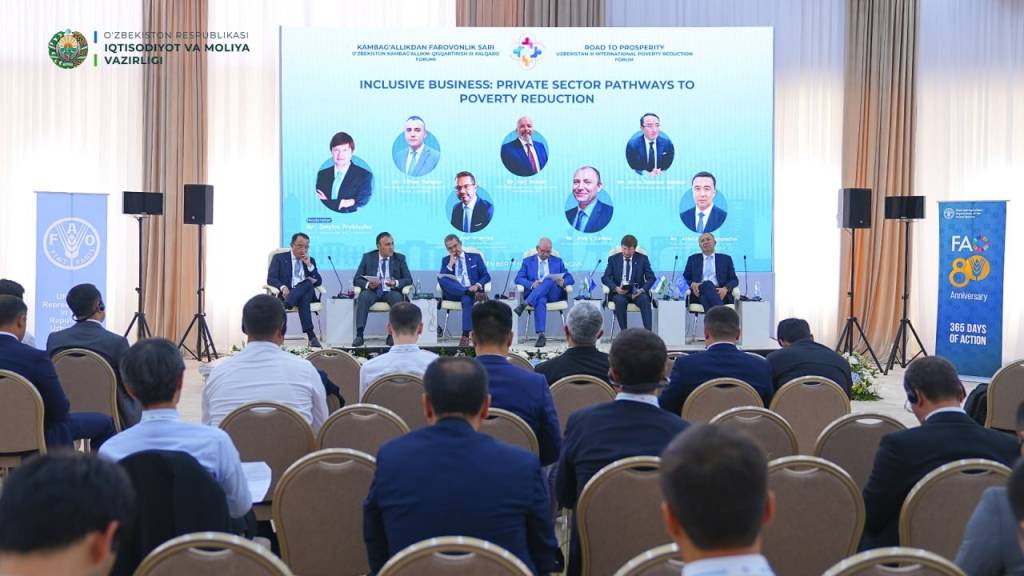
The International Forum “Road to Prosperity”, which has been held in Namangan, brought together more than 500 participants from around the world, including senior government officials, representatives of international organizations, development partners, researchers, and private sector leaders.

Over the course of two days, the forum served as a key platform for dialogue on innovative policies and practical solutions aimed at reducing poverty, promoting inclusive growth, and ensuring sustainable livelihoods.

With 15 sessions and 45 high-level speakers, the event addresses strategies to empower vulnerable groups, expand economic opportunities, and strengthen cooperation at local, national, and global levels.

The Food and Agriculture Organization of the United Nations (FAO) actively participated in the forum, contributing its global expertise in inclusive business and investment for poverty reduction. One of the most anticipated sessions was the panel “Inclusive Business: Private Sector Pathways to Poverty Reduction (FAO, IFC)”, moderated by Mr. Dmytro Prykhodko, Senior Economist at the FAO Investment Centre.

Panelists included Mr. Ilkhom Norqulov, First Deputy Minister of Economy and Finance of Uzbekistan; Mr. Neil McKain, Country Manager for Uzbekistan and Turkmenistan, IFC; Mr. Andi Aranitasi, Head of Uzbekistan Office at the European Bank for Reconstruction and Development; Mr. Andriy Yarmak, Economist, FAO Investment Centre; Mr. Mirzo Iskandar Gulamov, Country Operations Head, ADB; and Mr. Abboskhan Makhamatov, Executive Director, Company for the Development of Entrepreneurship JSC.

The discussion highlighted how private sector engagement and inclusive investment models can accelerate poverty reduction, strengthen value chains, and create opportunities for rural households and small businesses. FAO emphasized the importance of transforming sustainable agrifood systems, improving access to markets for smallholders, and fostering innovative partnerships that promote resilience and economic inclusion.

“Inclusive business is not only about opening markets, but also about ensuring that smallholders and rural households are part of those markets”, said Dmytro Prykhodko, Senior Economist, FAO Investment Centre. “By working with the private sector and promoting innovative partnerships, we can accelerate poverty reduction and create sustainable opportunities for vulnerable communities”.

The “Road to Prosperity” Forum demonstrates Uzbekistan’s commitment to advancing inclusive, sustainable development in close collaboration with international partners. Through its active engagement, FAO reaffirms its support to the Government of Uzbekistan and stakeholders in building stronger pathways toward prosperity and improved well-being for all.

UzA

Oʻzbek
Chinese
Turkish
Tajik
Kyrgyz
Turkmen
Japanese
Arabic
English
French
Spanish
Русский
German
Ўзбек
Oʻzbek
Қазақ
From Poverty to Prosperity: FAO and Partners Showcase Inclusive Growth Strategies in Uzbekistan

The International Forum “Road to Prosperity”, which has been held in Namangan, brought together more than 500 participants from around the world, including senior government officials, representatives of international organizations, development partners, researchers, and private sector leaders.

Over the course of two days, the forum served as a key platform for dialogue on innovative policies and practical solutions aimed at reducing poverty, promoting inclusive growth, and ensuring sustainable livelihoods.

With 15 sessions and 45 high-level speakers, the event addresses strategies to empower vulnerable groups, expand economic opportunities, and strengthen cooperation at local, national, and global levels.

The Food and Agriculture Organization of the United Nations (FAO) actively participated in the forum, contributing its global expertise in inclusive business and investment for poverty reduction. One of the most anticipated sessions was the panel “Inclusive Business: Private Sector Pathways to Poverty Reduction (FAO, IFC)”, moderated by Mr. Dmytro Prykhodko, Senior Economist at the FAO Investment Centre.

Panelists included Mr. Ilkhom Norqulov, First Deputy Minister of Economy and Finance of Uzbekistan; Mr. Neil McKain, Country Manager for Uzbekistan and Turkmenistan, IFC; Mr. Andi Aranitasi, Head of Uzbekistan Office at the European Bank for Reconstruction and Development; Mr. Andriy Yarmak, Economist, FAO Investment Centre; Mr. Mirzo Iskandar Gulamov, Country Operations Head, ADB; and Mr. Abboskhan Makhamatov, Executive Director, Company for the Development of Entrepreneurship JSC.

The discussion highlighted how private sector engagement and inclusive investment models can accelerate poverty reduction, strengthen value chains, and create opportunities for rural households and small businesses. FAO emphasized the importance of transforming sustainable agrifood systems, improving access to markets for smallholders, and fostering innovative partnerships that promote resilience and economic inclusion.

“Inclusive business is not only about opening markets, but also about ensuring that smallholders and rural households are part of those markets”, said Dmytro Prykhodko, Senior Economist, FAO Investment Centre. “By working with the private sector and promoting innovative partnerships, we can accelerate poverty reduction and create sustainable opportunities for vulnerable communities”.

The “Road to Prosperity” Forum demonstrates Uzbekistan’s commitment to advancing inclusive, sustainable development in close collaboration with international partners. Through its active engagement, FAO reaffirms its support to the Government of Uzbekistan and stakeholders in building stronger pathways toward prosperity and improved well-being for all.

UzA