Uzbekistan considers Denmark an essential partner in Europe
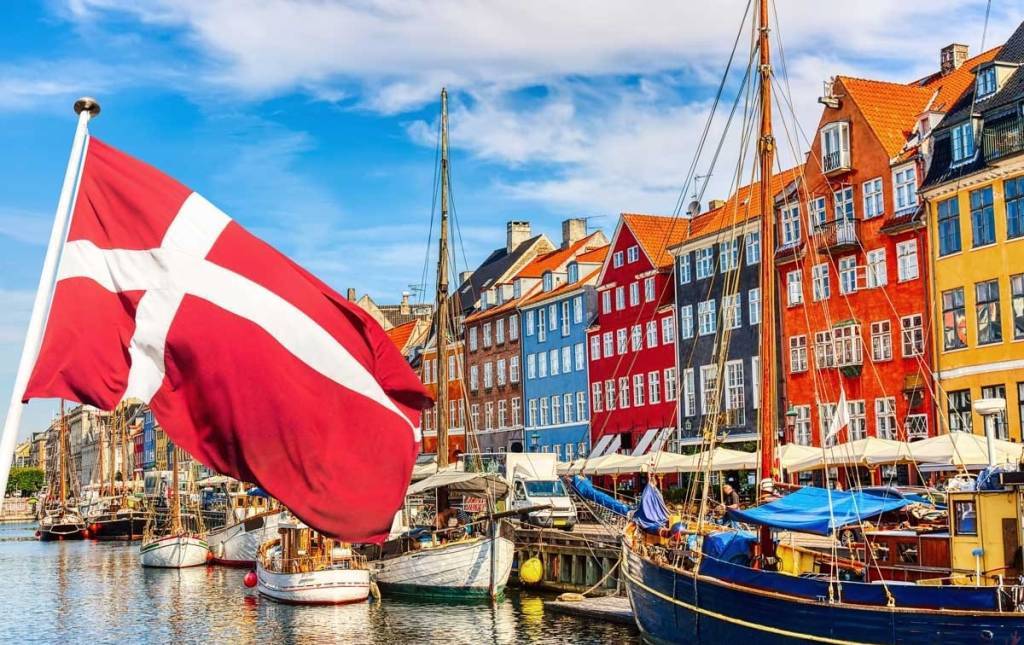
32 years have passed since the establishment of diplomatic relations between the Republic of Uzbekistan and the Kingdom of Denmark.
Uzbekistan considers Denmark an essential partner in Europe and pays special attention to developing multilateral cooperation with this country.
Currently, cooperation between the two countries has intensified in economics, healthcare, inter-parliamentary communication, and within the EU and other international organizations.
The capital of the Kingdom of Denmark is the city of Copenhagen. The government system is a constitutional monarchy. The current Constitution of the country was adopted on June 5, 1953. Legislative power is exercised by the Folketing (unicameral parliament) and the queen. The Folketing has 179 deputies. They are elected for a term of 4 years by universal direct and secret ballot. The executive branch is headed by the king (queen). He appoints or dismisses the prime minister and members of the government.
Denmark is a highly developed industrial-agrarian country. Private investment is a priority. 30 percent of the gross national product belongs to the public sector. The share of industry and construction in GDP is 26.4 percent, and the share of agriculture, forestry, and fishing is 3.5 percent. More than 40 percent of manufactured products are exported abroad.

Oil, natural gas, kaolin mining, mechanical engineering, shipbuilding, chemical, and food industries, and the production of various oil products are developed. Agriculture is the most productive sector of the Danish economy. There are about 80 thousand farms in the country.
Kindergarten is the first stage of the Danish education system. Compulsory education has been introduced from 6 to 9 years of age. The duration of training is 7 years in primary school, 3 years in junior high school and gymnasium, and 1-3 years in vocational school. Admission to a higher education institution is carried out based on a gymnasium certificate.
The country has such scientific institutions as the Royal Danish Academy of Sciences, founded in Copenhagen in 1742, the Royal Danish Academy of Fine Arts, founded in 1754, the Academy of Technical Sciences, opened in Lyngby in 1937, and more than 20 research institutions.
The royal and municipal libraries in Copenhagen, the state and university libraries in Aarhus, the Royal Danish Museum of Fine Arts, the Royal Maritime Museum, and the Hans Christian Andersen House Museum in Odense are among the places that attract travelers.
On January 3, 1772, the daily newspaper Fyens Stiftstidende was published in Odense for the first time. Politiken, a daily newspaper specializing in national and world news, founded in 1884, has a large circulation. The socio-political publication Ekstra Bladet has been operating since 1904. The Billed Bladet magazine, the daily Information newspaper, the monthly New Politics magazine, and many other modern and electronic publications inform country residents about current events, sports, and cultural news.
Danish Radio and Television is officially considered independent, but it is a semi-governmental organization in practice. The state controls all broadcasts and programs in the country.
The Danish news agency Ritzaus Bureau was founded on February 1, 1866 by the famous journalist Erik Ritzau. It cooperates with Nordic news agencies to provide Nordic news in English.
After Eric Ritzau died in 1904, his son Lauritz Ritzau served as Director General of the Agency from 1916 to 1958.
Ritzau Bureau cooperates with three other Scandinavian news agencies.
In November 2017, Ritzau acquired Scanpix Denmark. Scanpix is a leading Danish agency with over 25 million photographs in digital and physical archives. It works closely with subsidiaries in Norway, Sweden, and Estonia.
Ritzaus Bureau today owns 12 media groups.
Mukharrama Pirmatova, UzA