Regional cooperation in the efficient use of water resources is growing
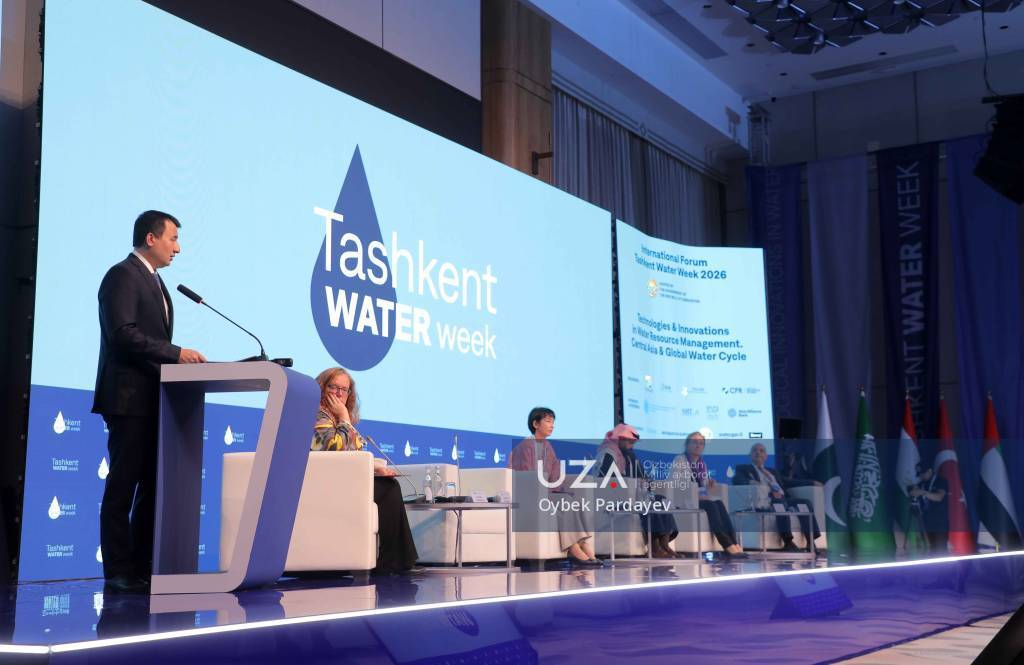
The first day of the International Forum Tashkent Water Week took place in the capital.
Representatives of international organizations, experts, scientists, and specialized professionals from the country and foreign nations participated in this major event organized by the Government of Uzbekistan.
At the opening ceremony of the forum, Deputy Prime Minister of the Republic of Uzbekistan Jamshid Khodjayev, United Nations Resident Coordinator in Uzbekistan Sabine Machl, CEO of Miahona Awaadh Al Otaibi, and others highlighted that as demand for water for supply and irrigation in Central Asia grows, the water shortage is worsening. In these circumstances, managing these resources efficiently is becoming a priority that requires increased regional cooperation.
Experts note that the forum’s main goal is to enhance regional cooperation and develop modern models that promote the efficient use of water resources in Central Asia, ensuring long-term economic sustainability.
“The reforms being implemented in water resource management are already producing positive results. In turn, the forum serves as an important platform for expanding cooperation across sectors. International mechanisms have been established in partner countries to manage transformation and multilateral processes effectively. At the same time, there is an increasing need to develop political dialogue, ensure a sustainable supply, deepen coordination, promote integration and diversification, and widely adopt innovative technologies. All of this is very important for achieving water sustainability”, noted Minister of Water Resources of the Republic of Uzbekistan Shavkat Khamrayev.
During the forum, participants discussed modern water supply technologies and digital innovations, global trends and current challenges in water resource management, as well as the role of water in achieving food security and fostering intersectoral cooperation.
Additionally, important areas such as introducing green standards, the responsible use of land resources, developing human capital, and training qualified personnel for the water management sector were considered.
“In global practice, various financing models are used, with the most common being public-private partnership (PPP)”, noted CEO of Miahona (Saudi Arabia) Awaadh Al Otaibi. “For example, in Saudi Arabia, within this model, risks are clearly allocated, enabling the parties to define their responsibilities throughout all stages of project implementation, including construction and operation. This also helps to reduce timelines and improve efficiency”.
This approach also guarantees transparency, promotes project growth, and increases their investment appeal.
Another important area is traditional business financing. When credit resources have insufficient duration, additional funds are mobilized through international development finance institutions such as the World Bank or the Islamic Development Bank. Typically, this mechanism relies on multilateral agreements and targeted support tools. Alongside this, other performance-driven forms of financing are also used.
In the discussions, it was also highlighted that water resources are a crucial element in sustainable development, and their responsible management is vital for ensuring economic growth, food security, and environmental stability.
[gallery-28343]
Nasiba Ziyodullayeva, UzA