Malaysia: A Synergy of History and Future
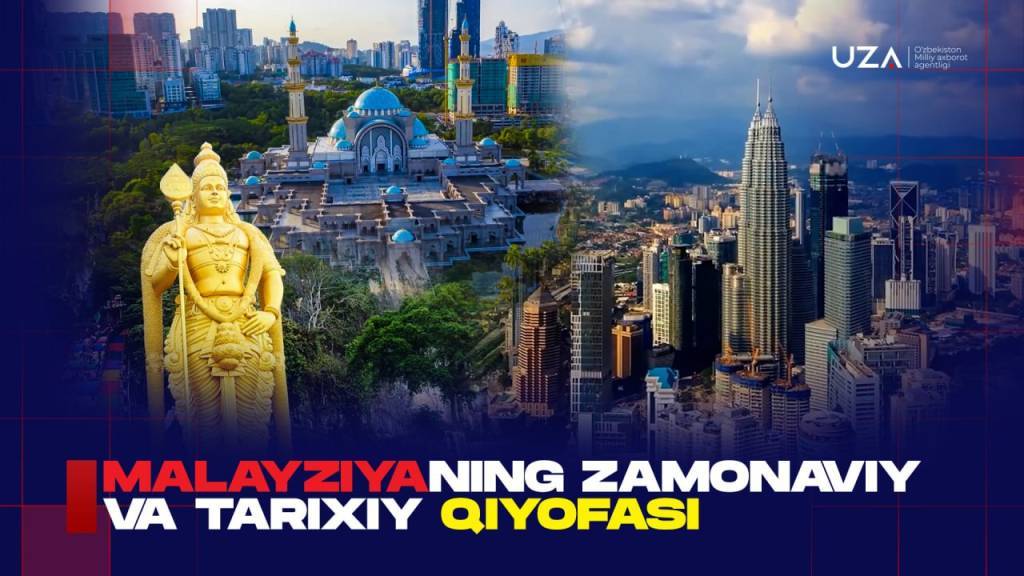
Malaysia is a country of striking contrasts, where modern megacities coexist with ancient towns, and tropical islands attract visitors with their white sandy beaches. Contemporary architecture and soaring skyscrapers clearly reflect the country’s economic potential, creative energy, and appeal. Its unique natural landscapes and the abundance of fruits and seafood leave a particularly strong impression. The national cuisine is also distinguished by its originality and a rich diversity of flavors.
Recently, a press tour to Malaysia was organized for a group of Uzbekistan journalists, during which they became familiar with life in cities such as Kuala Lumpur, Kota Kinabalu, Malacca, and Putrajaya.
Kuala Lumpur
Kuala Lumpur is the capital of Malaysia and one of its largest cities, serving as the country’s economic, financial, and cultural hub. The city is famous for its modern skyscrapers, large shopping malls, and historic landmarks. One of the most iconic symbols of the city is the globally recognized Petronas Twin Towers.
Kuala Lumpur is one of Southeast Asia’s top tourist, business, and transportation centers and is rightly seen as a cosmopolitan city where people from different cultures and nationalities live together peacefully.
According to Nadia Zakariah, Senior Assistant Director of the International Promotions Division at Tourism Malaysia, under the Ministry of Tourism, Arts and Culture, Kuala Lumpur, Langkawi, and Malacca are the most attractive destinations for travelers from Central Asia.
She also notes that the eastern parts of the country – specifically the states of Pahang, Terengganu, Kelantan, and Sarawak, as well as the island of Borneo – have significant tourism potential. Another well-known destination is Penang Island, where visitors can relax and explore a variety of culinary options. While Chinese cuisine is common, local and halal dishes are also available. Additionally, some restaurants serve Uzbek cuisine.
One of the fastest-growing sectors in Malaysia is medical tourism. Residents of Central Asia often come here for medical examinations. The high quality of services combined with affordable prices makes Malaysia attractive to international visitors. Additionally, the country serves as an important educational and language hub for the region: many educational centers operate here, where English is primarily taught following the British system. Students are provided with all the necessary conditions for living and studying.
As part of the press tour, participants visited sites such as the Petronas Twin Towers, Menara Kuala Lumpur, and the Royal Selangor Visitor Centre. The Menara Kuala Lumpur, built in 1996, is considered one of the country’s most notable engineering landmarks and is mainly used for broadcasting television and radio signals. It stands at a height of 421 meters. At the 276-meter level, there is an exhibit of scale models of famous television towers worldwide, including the Tashkent TV Tower. Additionally, the tower has an observation deck and a revolving restaurant that offers a 360-degree panoramic view of the city.
Today, Menara Kuala Lumpur is not only a vital part of the country’s telecommunications infrastructure but also one of its main tourist attractions.
Meeting with an Uzbek Entrepreneur
A meeting with Uzbek entrepreneurs was organized for journalists during the trip.
Giyos Yusupov, head of the O‘zbegim restaurant in Kuala Lumpur, states that his main goal is to promote Uzbekistan’s national traditions and cuisine internationally. He explains that this idea and the desire to realize it motivated him to move to Malaysia.
“Since 2022, we have been managing the O‘zbegim restaurant, whose interior reflects the cultural values and national character of Uzbekistan”, he says. “The national flag flies above the building, filling us with a special sense of pride. Currently, about 20 representatives of Uzbek, Tajik, and Turkmen nationalities work at the restaurant in two shifts. All the necessary conditions have been created for them. Our staff speaks several languages, which allows them to communicate easily with visitors from Central Asia, Malaysia, Singapore, Indonesia, Thailand, the CIS countries, and Europe. I also speak four languages fluently. Despite some challenges, especially those related to adapting to the local climate, our restaurant has successfully presented Uzbek cuisine, which is very popular among foreigners. In the future, we plan to expand our activities and open restaurants in Indonesia and Singapore”.
Such initiatives help develop tourism, promote national culture, and enhance Uzbekistan’s international image.
Kota Kinabalu and Mari Mari Cultural Village
Kota Kinabalu, the capital of the state of Sabah on the island of Borneo, is one of Malaysia’s key cities. A mild tropical climate, clean air, and a relaxed pace of life characterize it. The average annual temperature ranges from 25 to 32 degrees, while the picturesque natural surroundings harmonize with modern urban infrastructure.
One of the region’s most notable natural symbols is Mount Kinabalu, standing at 4,095 meters and situated within a national park. This mountain is listed on the UNESCO World Heritage List and is a favored spot for mountaineering and ecotourism enthusiasts.
Not far from the city, Tunku Abdul Rahman National Park includes five islands located 3-8 kilometers from the center. The islands are known for their scenic landscapes, clean beaches, and rich underwater life. All necessary facilities are available for snorkeling, diving, and other water sports, while the area’s ecosystem remains protected.
The city’s economy relies on tourism, the service sector, fishing, and the oil and gas industry, making it appealing not just for travel but also for jobs and education.
The region is known for its rich ethnic and cultural diversity, with over 30 ethnic groups speaking more than 150 dialects. This diversity can be experienced at the Mari Mari Cultural Village, established in 1996. It is a distinctive open-air museum that displays the traditions, lifestyles, and customs of the peoples of Borneo.
Visitors here can observe traditional methods of making fire using bamboo, ancient hunting techniques, and the preparation of national dishes. Demonstrations of folk dances and cultural performances accompany the tour.
According to Zarinah Amiludin, Marketing Manager of the Sabah Tourism Board under the Ministry of Tourism, Culture and Environment, Sabah stands out from other regions of Malaysia for its unique nature, picturesque islands, and rich national traditions.
“In 2025, the state was visited by 3.7 million domestic and international tourists”, she says. “However, the share of visitors from Central Asia, especially from Uzbekistan, remains relatively low. Last year, it was about 300 people. Currently, efforts are underway to increase tourist flows from Central Asian countries. In particular, proposals are being developed and studied for tourist routes, hotel infrastructure, and national cuisine, with the interests of tourists from the region in mind. Close cooperation has been established in this area with tourism organizations and tour operators in Malaysia”.
Tourist facilities stay open late, and with advisory services, chatbots, and QR codes, tourists can quickly access information about nearby medical facilities and law enforcement agencies.
Malacca – A Crossroads of History and Civilizations
Malacca is one of the oldest and most distinctive cities in Malaysia, located in the state of the same name. Due to its strategic position along the South China Sea and the Malacca River, it has remained an important trade and cultural center of the region for centuries.
Founded in the 15th century, the city quickly became a major trading hub between East and West. Merchants from India, China, and Arab nations gathered there, fueling its vibrant economic and cultural growth.
In 1511, Malacca was captured by the Portuguese and later fell under Dutch and British influence. The architectural heritage from these periods has been preserved to this day, giving the city a unique historical character.
The city is also closely linked to Islamic and Arab culture: in the 14th-15th centuries, Arab merchants arrived here, bringing their traditions and religious values. This has been reflected in the city’s cultural identity, where Arabic inscriptions are still visible.
Today, Malacca is a popular tourist destination, attracting visitors worldwide with its many historical and cultural landmarks. Its inclusion on the UNESCO World Heritage List highlights its global importance.
Impressions from the Press Tour
This press tour made it easy to see Malaysia’s modern growth, rich history, unique nature, and cultural diversity. Each region leaves a different impression: Kuala Lumpur as a lively city, Kota Kinabalu as a hub for ecotourism, Putrajaya as a modern government center, and Malacca as a bridge of history and cultures.
The development of cooperation in tourism, culture, and information exchange helps strengthen mutual trust between Uzbekistan and Malaysia, laying a solid foundation for implementing new joint projects and expanding promising areas of collaboration.
Nasiba Ziyodullayeva, UzA