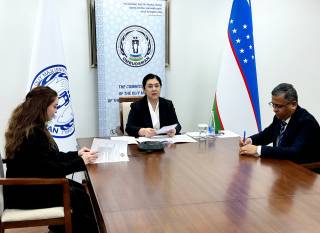
World Atomic Week: How is Uzbekistan advancing its small-scale nuclear power plant project?
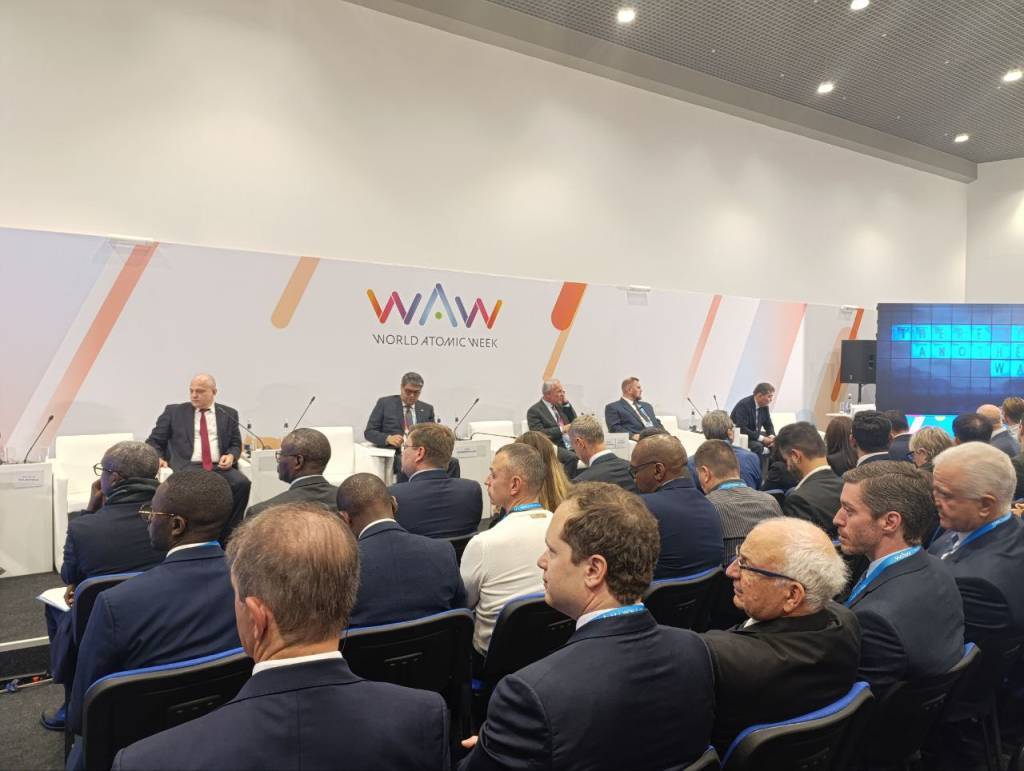
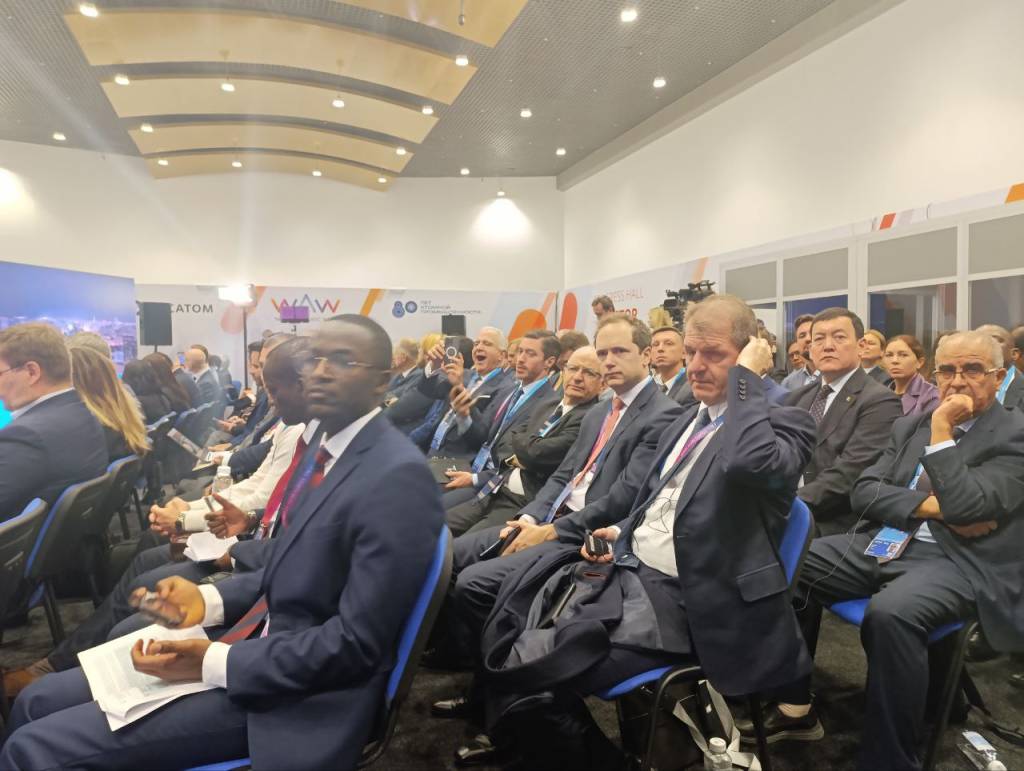
As part of the World Atomic Week held in Moscow, a session titled “Opportunities for Small-Scale Nuclear Power Plants” took place, with Uzbekistan’s delegation participating alongside representatives from many countries.
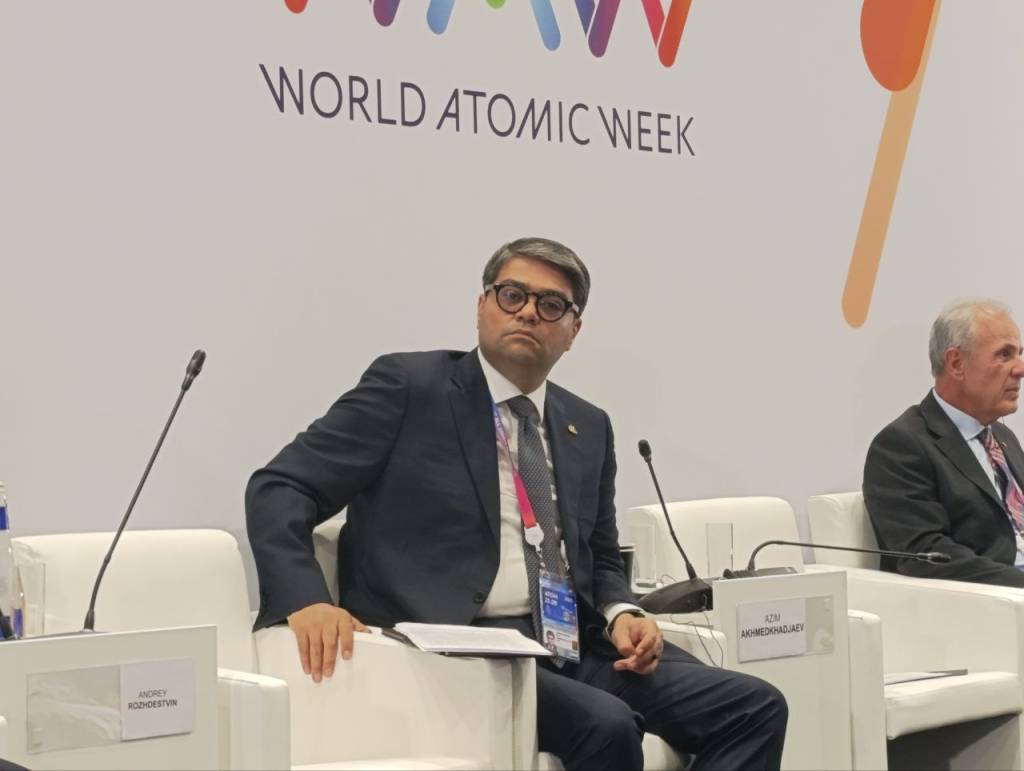
Information about the construction of a small-scale nuclear power plant in Uzbekistan was presented by the Director of the Uzatom Agency, Azim Akhmedkhodjayev:
“Within one year, large areas have been prepared. Research has been completed, and earthworks have begun. Currently, we are planning to organize the excavation pits, as the President has assigned the task of pouring concrete for the small modular reactor.
In parallel, work is being carried out with the licensing authorities and regulators of Uzbekistan and the Russian Federation. We are cooperating with the IAEA, which is monitoring the project’s progress. This ensures that the work being carried out meets international requirements and safety standards. Over time, we will proceed with the large-scale implementation of the project.
The issue of building a nuclear power plant is of critical importance for Uzbekistan. Given our country’s historically significant and ambitious industrial and technological program, we are now on the threshold of overcoming an essential technological barrier.
We aim not only to use the opportunities of technological progress, but also to demonstrate that Uzbekistan is becoming a leader in the practical deployment of small modular reactors. In doing so, we will establish a broad school of expertise. In the future, the country may become a hub for training specialists, as well as for the exchange of knowledge and experience.
Overall, we can create an excellent school for the development of small modular nuclear power plants in our country. Moreover, these efforts will contribute to a green future. Currently, we view SMRs as a significant opportunity within our decarbonization program and intend to transition away from traditional methods of energy production, particularly coal-fired power plants.
We are convinced that SMRs will provide an opportunity to decentralize electricity generation in the most remote areas of the country. Undoubtedly, this is a significant responsibility, and we are fully aware of it. I believe that within the project, we have ensured broad cooperation and engaged experts from foreign countries.
First and foremost, a comprehensive cooperation program has been developed with the IAEA. At the same time, to avoid mistakes in the project, we have taken every aspect into account, as errors in such projects are unacceptable, and we fully recognize our responsibility in this regard. We also understand that the task set before us is achievable, and we will carry it out at a proper level. This is the formation of an entirely new industry.
A branch of the National Research Nuclear University MEPhI is operating in Tashkent. To date, 166 specialists have been trained. We approach the issue of personnel training with full responsibility. The Tashkent branch of MEPhI is the only university of its kind in the country, and its graduates are assigned to jobs by decision of the Cabinet of Ministers of the Republic of Uzbekistan. The government determines their places of work and directs them to industry organizations. Uzatom, the Directorate for Construction, and other state institutions support them. The Prime Minister serves as the head of the Supervisory Board of the Tashkent branch of MEPhI.
Since 1956, the Institute of Nuclear Physics has been operating in our country. A research nuclear reactor on its premises remains active. The reactor operates without problems and is used for both fundamental and applied research, as well as for the production of radioisotopes for medical and industrial applications, and for materials science.
It is worth noting that over this period, we have trained a group of specialists with strong expertise in small modular reactors, as our reactor has a capacity of 10 megawatts.
During the session, in collaboration with Rosatom, we approved a program that provides personnel training not only at MEPhI but also at other institutes and universities across Uzbekistan. Additionally, we are organizing a School of Advanced Engineering, which will prepare specialists for the construction of nuclear power plants.
Interviewed by Nasiba Ziyodullayeva, UzA
Moscow, Russia