Uzbekistan and Georgia: Current Priorities for Bilateral Progress
The history of the partnership between Uzbekistan and Georgia offers a compelling example of how two countries, neither bound by alliance commitments nor by historical dependency, have come to recognize each other as genuine strategic partners.
One of the key priorities of Uzbekistan’s contemporary foreign policy is to expand cooperation with the countries of the South Caucasus. This approach reflects Tashkent’s consistent policy of diversifying its external economic relations and strengthening regional connectivity. Within this framework, the South Caucasus is regarded as an important partner that can contribute to Uzbekistan’s sustainable economic growth, expand the country’s transport and logistics opportunities, and enhance its overall foreign economic potential.
The growing importance of the South Caucasus stems from its role as a natural bridge between Central Asia and Europe. Amid the ongoing transformation of global logistics and the emergence of new transport and economic corridors, this role has become increasingly significant, reinforcing Uzbekistan’s interest in practical cooperation with regional countries.
Georgia holds a special place in this strategy because of its considerable transit potential, well-developed transportation infrastructure, and favorable conditions for expanding trade, investment, and humanitarian cooperation.
Although diplomatic relations between Uzbekistan and Georgia were established in the early years of independence, they remained overshadowed for many years by other pressing national priorities in both countries. For nearly two decades, bilateral relations developed largely by inertia: annual trade turnover fluctuated between $30 million and $50 million, high-level contacts were infrequent, and joint projects were limited.
A turning point came after 2017, when Uzbekistan, under President Shavkat Mirziyoyev, embarked on a policy of openness and active integration into regional and global economic processes. Within this broader strategy, the South Caucasus emerged as one of Tashkent’s key foreign policy priorities. Georgia was among the partners whose bilateral relations required comprehensive reassessment and renewed political attention.
The first high-level dialogue in a fifteen-year hiatus took place in September 2017, when, on the sidelines of the United Nations General Assembly in New York, the President of Uzbekistan met with the Prime Minister of Georgia, Giorgi Kvirikashvili. The meeting sent a strong political signal of both countries’ commitment to revitalizing bilateral cooperation and laid the groundwork for expanding contacts across multiple levels of government.
In the years that followed, political dialogue steadily intensified. Parliamentary relations were established, regular contacts were launched between the heads of government and the foreign ministries, and annual official meetings between the Prime Ministers of Uzbekistan and Georgia became an established practice.
In 2023, the Prime Minister of Uzbekistan Abdulla Aripov paid an official visit to Georgia. In 2025, Georgian Prime Minister Irakli Kobakhidze paid a reciprocal official visit to Uzbekistan, during which he held talks with the President of Uzbekistan and met with the Prime Minister and the leadership of both chambers of the Oliy Majlis.
The steady strengthening of political dialogue has laid a solid institutional foundation for the progressive development of Uzbekistan and Georgia. A central role in this process is played by the Intergovernmental Commission on Economic Cooperation, which focuses on implementing bilateral agreements, removing existing barriers, and identifying new avenues for cooperation.
The effectiveness of these institutional mechanisms is evident in the consistently positive performance of bilateral economic relations, particularly in trade. Over the past nine years, trade between Uzbekistan and Georgia has tripled, reaching $267 million in 2025. By comparison, bilateral trade totaled only $89.1 million in 2017.
The highest level of bilateral trade was recorded in 2024, when it increased by nearly 50 percent from the previous year to a record $326 million.
Equally noteworthy is that this growth has been driven not only by rising trade volumes but also by structural diversification. Whereas bilateral trade once consisted of a relatively limited range of commodities, its product composition is now considerably broader.
Uzbekistan exports industrial goods, including non-ferrous metals, copper wire, rolled metal products, and electrical equipment, as well as food products such as legumes, fruit, and tobacco, and chemical products such as polymers. Georgia, in turn, exports food products, beverages, pharmaceuticals, construction materials, and metal products to Uzbekistan.
An important indicator of expanding trade and economic cooperation has been the growing investment activity by the business communities of the two countries, reflected in the establishment of joint ventures. Today, around 100 enterprises with Georgian capital operate in Uzbekistan, while more than 140 Uzbek companies are active in Georgia. This demonstrates the growing level of mutual trust between business circles and their interest in maintaining a long-term presence in each other’s markets.
The continued positive dynamics of economic cooperation suggest that the two countries have the prerequisites to move beyond a trade-based model toward deeper industrial and investment cooperation. The most promising areas include the textile industry, agriculture and food production, pharmaceuticals, construction, and services, where the economies of both countries have complementary advantages.
One of the key dimensions of relations between Uzbekistan and Georgia is the expansion of transport and logistics links among Central Asia, the South Caucasus, and Europe. In this area, the interests of the two countries align most naturally.
For Uzbekistan, using Georgia’s transport infrastructure to access European markets is particularly important. The ports of Poti and Batumi are key elements of this logistics chain. For Georgia, in turn, increased cargo flows from Uzbekistan and other countries in the region create opportunities to expand trade ties with Asian states.
According to experts from the Center for the Study of Transport and Logistics Development Problems under the Ministry of Transport of the Republic of Uzbekistan, bilateral freight transportation also shows positive trends. By the end of 2025, the total cargo volume transported between Uzbekistan and Georgia reached 146.8 thousand tons. Export shipments increased by 27 percent to 53.4 thousand tons, while import shipments rose by 26 percent to 71.5 thousand tons.
In this context, the development of the Middle Corridor is increasingly important. Today, it is regarded as one of Eurasia’s most promising transport arteries, opening new opportunities for route diversification and the growth of international trade. Over the past five years alone, Uzbekistan’s foreign trade cargo transported along this route has doubled, reaching 1.2 million tons by the end of 2025.
At the same time, cooperation between Uzbekistan and Georgia in this field is moving beyond the basic use of existing transport infrastructure toward the creation of a dedicated logistics base. A vivid example is Uzbekistan’s construction of a multifunctional logistics terminal in the Poti Free Industrial Zone. The project includes a modern warehouse complex covering about 30 hectares, designed to handle various cargo types, including containerized, general, bulk, and perishable goods.
The implementation of this project will create an important logistics hub to ensure the supply of Uzbek products to European markets. At the same time, the terminal will be used to organize reverse cargo flows, thereby contributing to increased trade not only between Uzbekistan and Georgia but also with other Central Asian states.
It is a transport and logistics partnership with the greatest potential to become the main driver of relations between Uzbekistan and Georgia in the coming years. While at this stage the parties are focused on trade and infrastructure modernization, the long-term goal is to create a full-fledged economic corridor linking Central Asia, the South Caucasus, and European markets.
Alongside the development of these large-scale routes, people-to-people ties are also strengthening. In recent years, mutual interest in tourism among citizens of the two countries has grown noticeably. Thanks to direct flights from Tashkent to Tbilisi and Batumi, operated 13 times per week, the number of Uzbek tourists visiting Georgia has steadily increased, reaching more than 21.5 thousand in 2025.
For its part, Uzbekistan is attracting growing interest among Georgian travelers seeking to explore the country’s unique cultural heritage, including Samarkand, Bukhara, Khiva, and other ancient cities. Over the past seven years, tourist numbers from Georgia to Uzbekistan have increased more than 2.5 times – from 3,000 people in 2019 to 6,800 in 2025.
Thus, relations between Uzbekistan and Georgia are currently at a stage of steady and progressive development. Whereas ten years ago bilateral interaction was based mainly on diplomatic contacts and limited trade ties, today a new format of partnership is taking shape, covering the political, economic, transport, and humanitarian spheres.
Of particular importance is that this expansion of cooperation is unfolding against the backdrop of major changes in the international economy and global logistics. As new transport routes between Asia and Europe are being formed, Uzbekistan and Georgia are objectively becoming integral parts of a single connected space.
The realization of this potential in the medium term will depend on both sides’ readiness to align political will with genuine economic interest. Such an approach will give the partnership between Uzbekistan and Georgia new practical substance and make it possible to build a sustainable model of cooperation based on pragmatism, mutual trust, and a shared commitment to sustainable development.
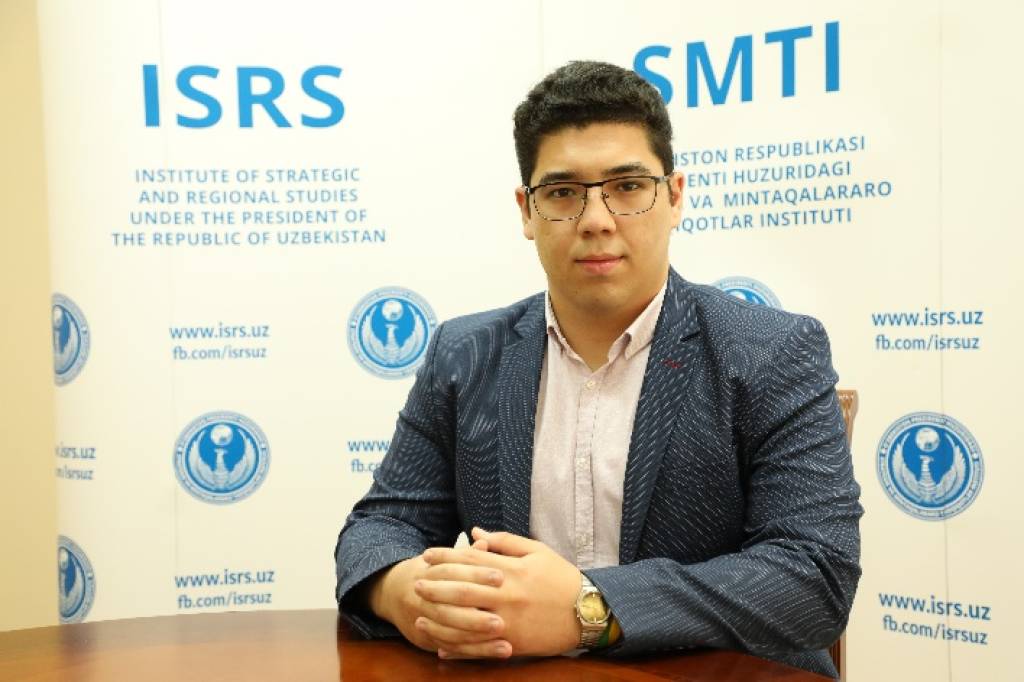
Miraziz Mirumarov,
Leading Research Fellow,
Institute for Strategic and Regional Studies under the President of the Republic of Uzbekistan