The largest museum of Islamic civilization in the world
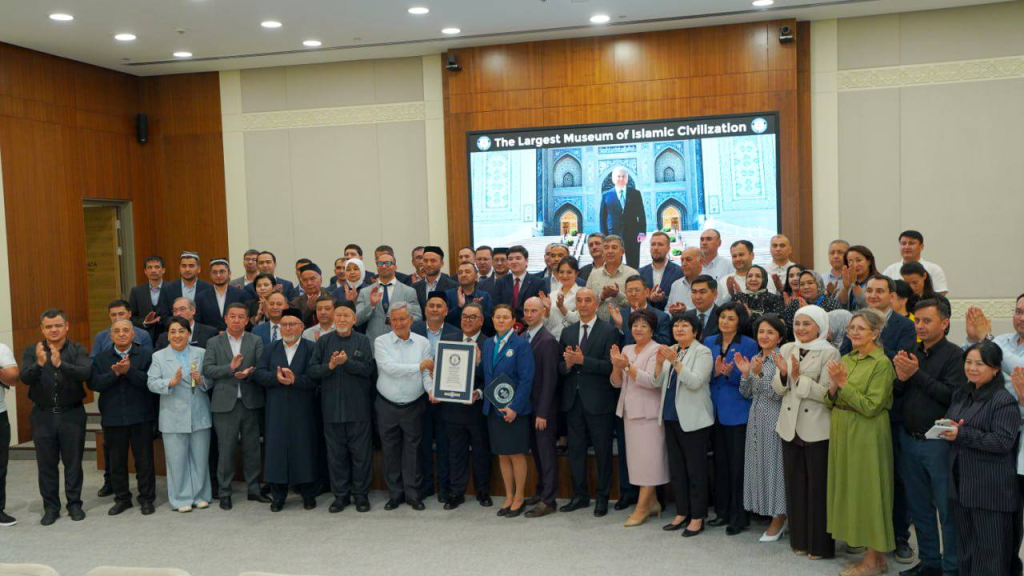
As previously reported, the Islamic Civilization Center in Uzbekistan has officially been recognized by Guinness World Records as the world’s largest museum of Islamic civilization. The certificate was presented at a ceremony attended by Sheida Subashi, the official Guinness World Records representative.
According to her, an official logbook was used during the evaluation process, in which each exhibit was recorded and confirmed by specialists in Islamic archaeology, art, and science.
The ceremony was also attended by architects, planners, designers, and builders who contributed to the project’s implementation. The award was presented to the members of the Center’s Scientific Council.
The Center for Islamic Civilization is a large scientific, educational, and museum complex, established on the initiative of Uzbekistan’s President Shavkat Mirziyoyev. The project was launched in 2017 and completed in March 2026. It is conceived as a modern cultural and educational platform that combines rich historical heritage, scientific potential, and advanced technologies.
The chief architect of the project, Abduqahhor Turdiyev, emphasized that the complex’s architectural design reflects Uzbekistan’s centuries-old culture and traditions, and that the Center itself has become a symbol of the country’s openness to the world and its active participation in the global dialogue of civilizations.
Today, the Center is one of the most visited cultural venues in the region – up to 5,000 people visit here every day, including both citizens of the country and foreign tourists.
Director of the Center, Firdavs Abdukhalikov, noted that the awarding of the certificate was recognition of the large-scale activities conducted at the initiative of the Head of State, and stressed the importance of further development of scientific and enlightenment projects aimed at preserving and popularizing Uzbekistan’s cultural heritage.
Awarding Guinness World Records status not only confirms the uniqueness of the project, but also strengthens Uzbekistan’s position as one of the key centers of Islamic culture, science, and tourism, as well as a modern platform for inter-civilizational dialogue based on the principles of tolerance and mutual respect.
Aziza Alimova, UzA