The Head of State reviewed the agrivoltaics technology implemented in Quva
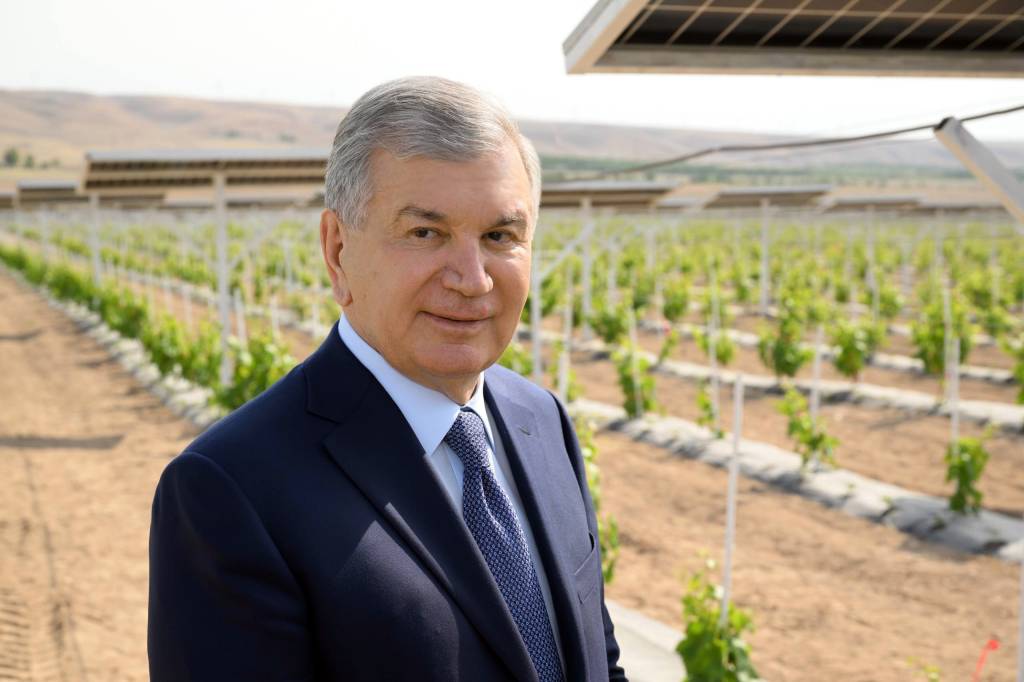
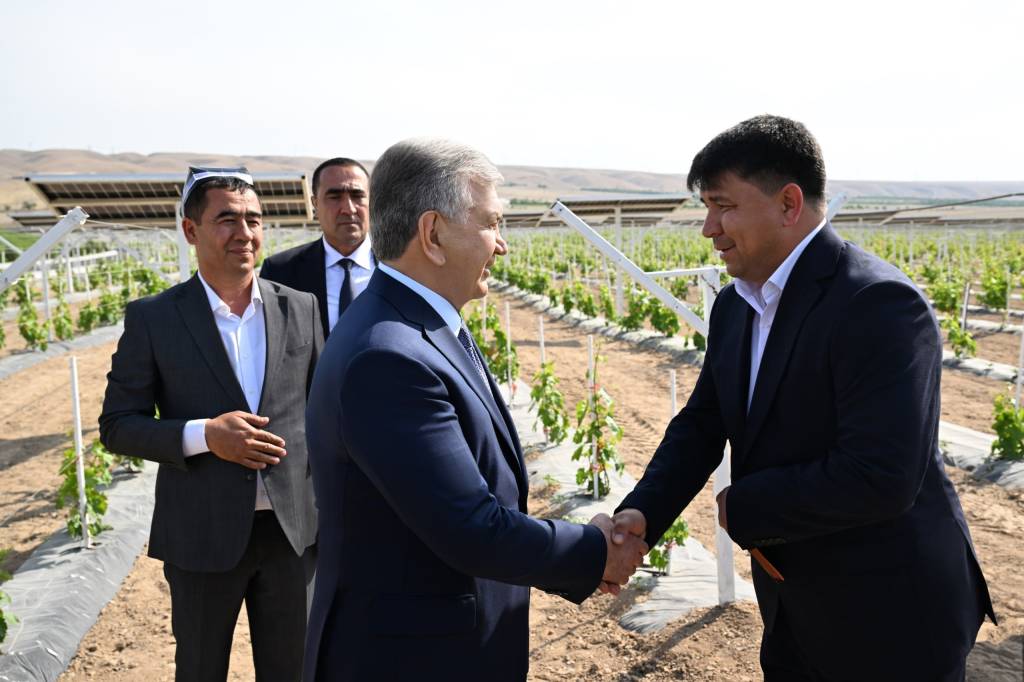
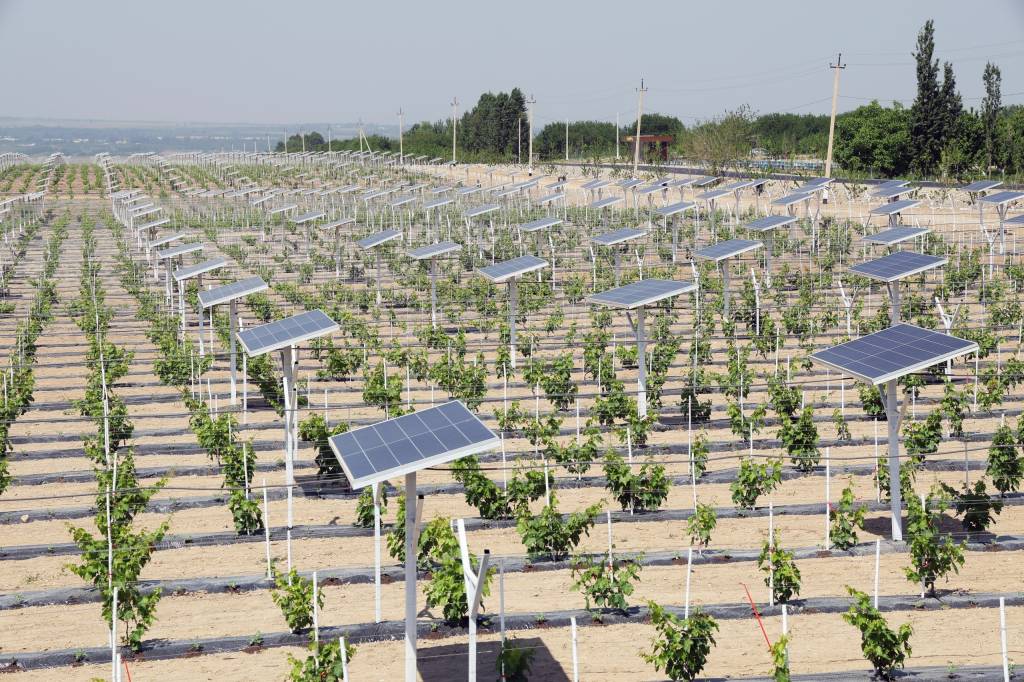
During a visit to Fergana region, President Shavkat Mirziyoyev got acquainted with an agricultural complex in Quva district, where agrivoltaics technology has been implemented.
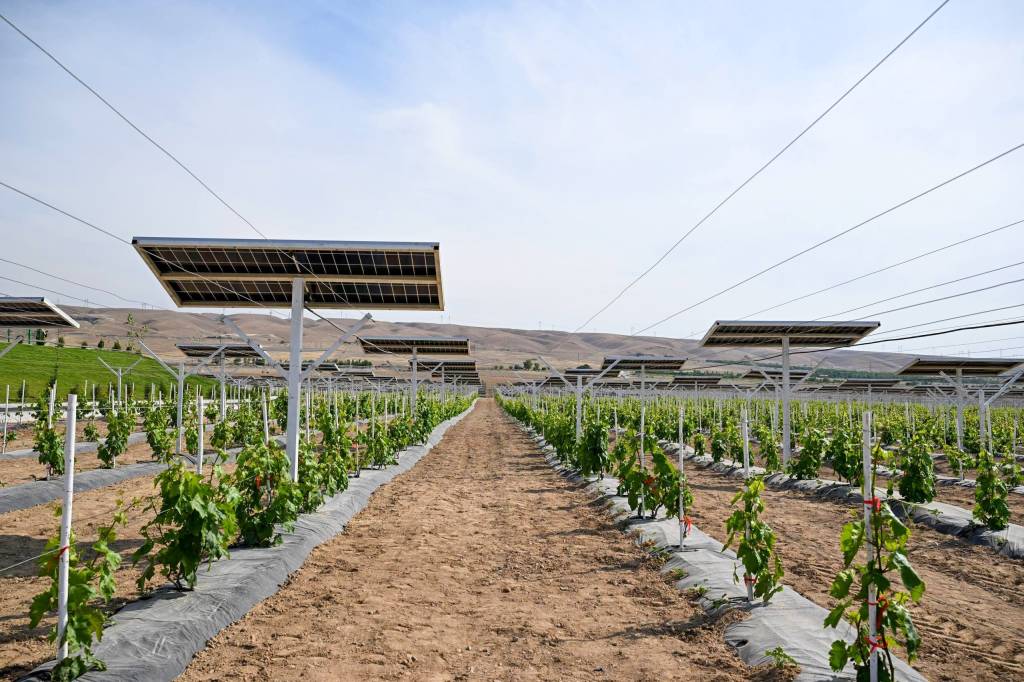
In Uzbekistan, given the growing energy consumption in agriculture and water management, special attention is paid to expanding green energy capacity. Agrivoltaics enables the simultaneous cultivation of crops and electricity generation on the same land using solar panels.
This approach is particularly effective in Uzbekistan, where there are many sunny days. According to estimates, this area in Uzbekistan has a potential of 10 gigawatts. The panels provide shade for plants, help retain soil moisture, and reduce water consumption. In turn, crops maintain an optimal soil temperature and increase the efficiency of solar modules.
Advanced water-saving technologies have also been introduced at the complex. In particular, a sprinkler irrigation system based on technology from the Austrian company Bauer is used. It ensures uniform water distribution across fields, helps maintain soil moisture, enables targeted fertilizer application, and increases crop yields.
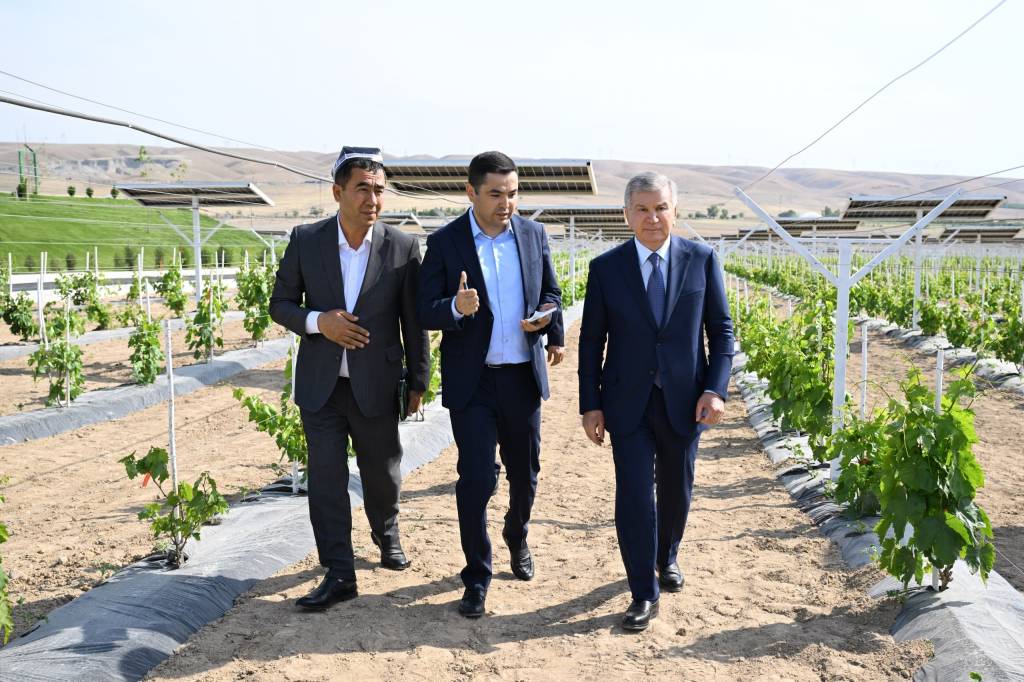
This technology was previously tested in the country’s farming enterprises and proved highly efficient: water use decreased by 40 percent, fertilizer use by 35 percent, and manual labor by 90 percent, while yields increased by 25 percent.
The complex, covering 110 hectares, combines intensive horticulture, livestock farming, and aquaculture. It is one of the first agro-complexes in the country to introduce renewable energy sources and water-saving technologies.
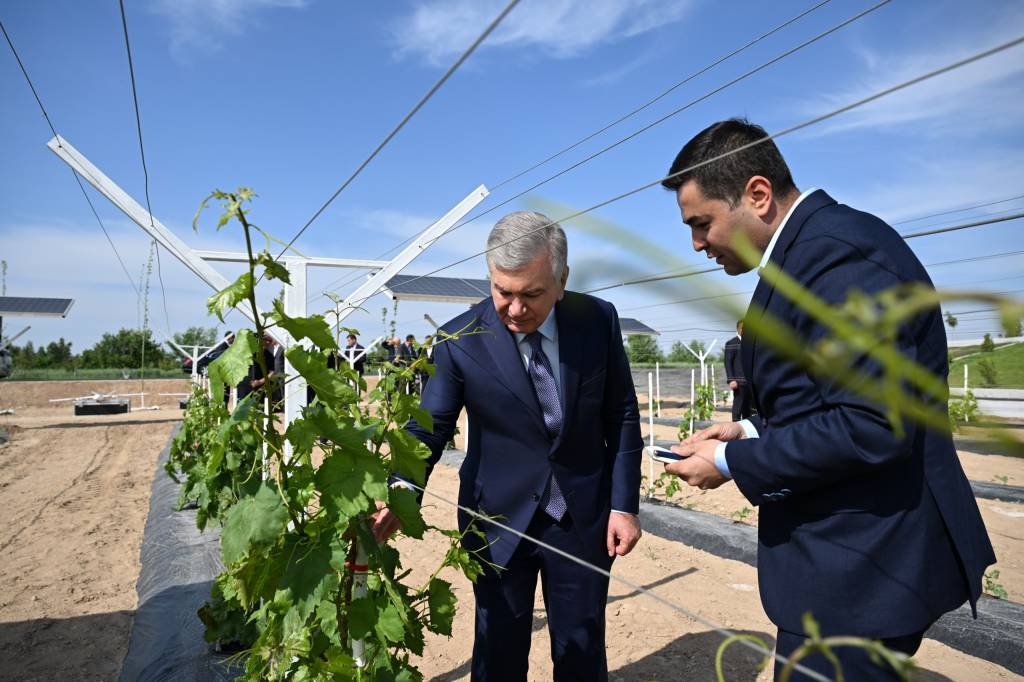
A total of 10,000 solar panels have been installed on the territory. They not only generate electricity but also help retain soil moisture by shading plants. The electricity is used to oxygenate fish-farming ponds, while water from these ponds, enriched with minerals, is directed to nourish vineyards and orchards.
In the livestock sector, an interconnected system has also been established: cattle are kept in the shade of solar panels, fed grass from the orchard area, and organic fertilizers are used to improve soil fertility. Thus, energy, water, feed, and fertilizers are integrated into a single, efficient chain.
Such a system enables dual returns from the land, reduces production costs, and increases competitiveness. Most importantly, it increases farmers’ incomes, creates new jobs, and strengthens the local economy.
Today, the agro-complex cultivates the export-oriented grape variety “Avatar”, maintains pedigree cattle and sheep, and has established an intensive aquaculture operation. As a result, the incomes of more than 100 families have increased, and 350 people have found employment. Export volume amounts to $2.5 million.
Now, this experience, unique not only for the country but for the entire region, is planned to be expanded to 2,000 hectares across 13 regions of the country.
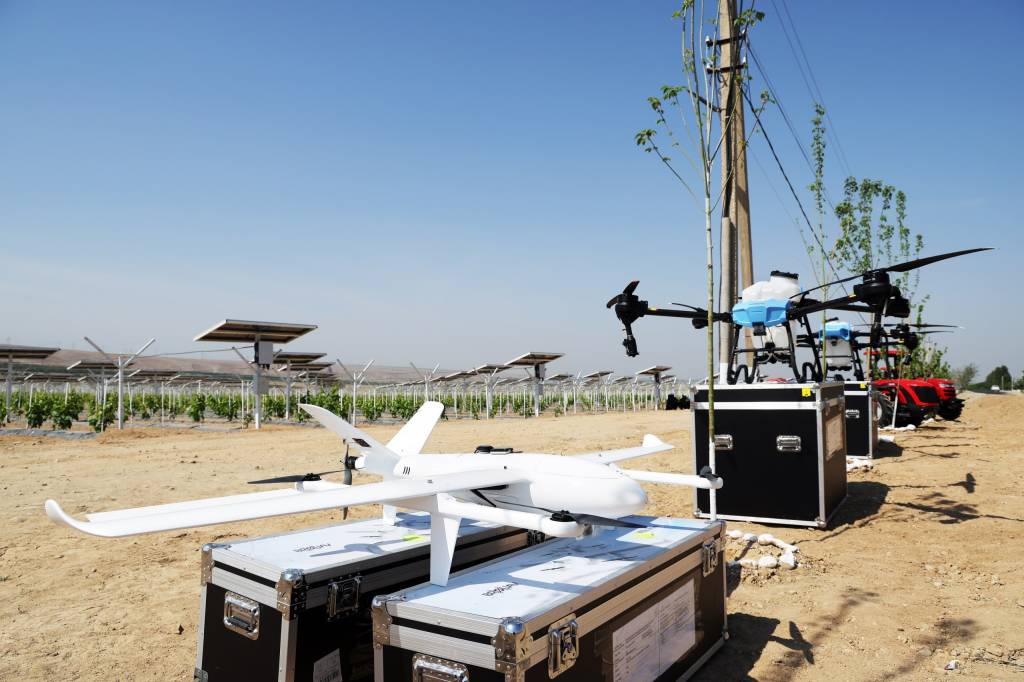
After reviewing the activities at the complex, the Head of State also observed the processing and monitoring of crops using agrodrones.
UzA