Shafoat Nurullaeva emphasizes key aspects of Uzbek-Chinese cooperation at the Samarkand Symposium
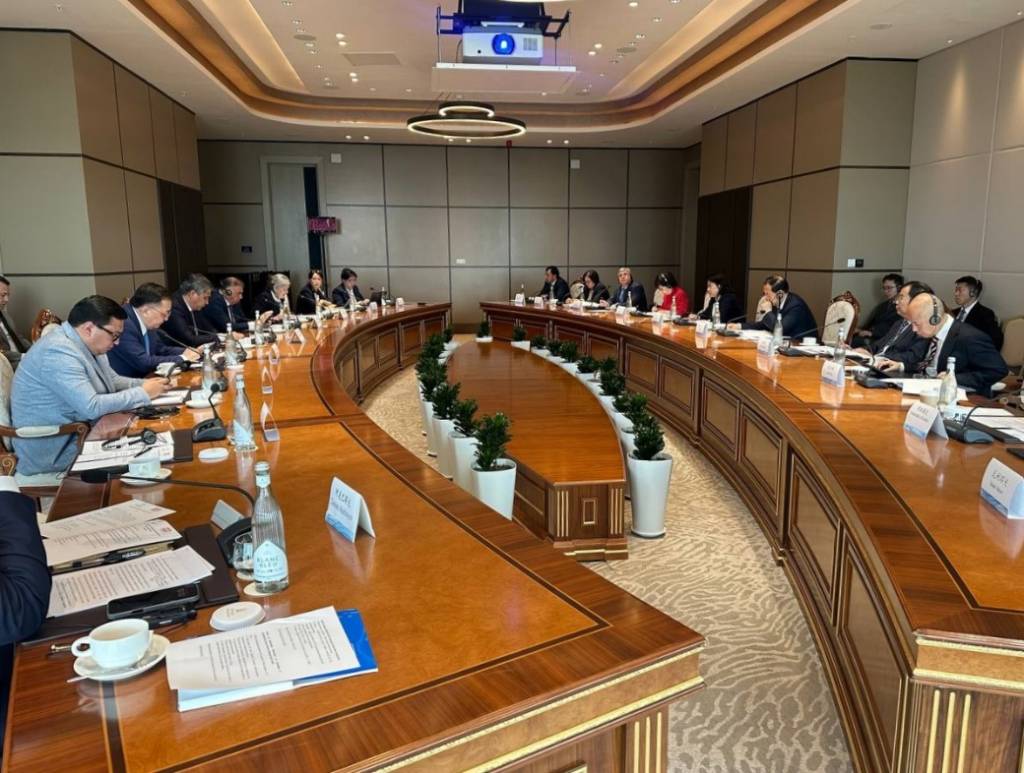
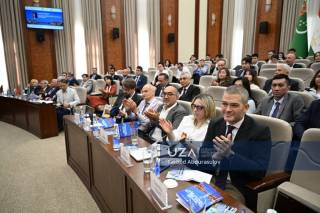
On 2 April this year, Samarkand hosted the symposium of the China – Central Asia Development Knowledge Network. The event was jointly organized by the Center for International Knowledge on Development (CIKD) and the Institute for Macroeconomic and Regional Studies under the Cabinet of Ministers of the Republic of Uzbekistan.
The symposium gathered representatives from the expert and analytical communities of Uzbekistan, Kazakhstan, Kyrgyzstan, Tajikistan, and China, along with the CAREC Institute.

As part of the symposium, Shafоat Nurullaeva, Deputy Director of the Institute for Strategic and Regional Studies under the President of the Republic of Uzbekistan (ISRS), delivered a presentation titled “Challenges and Opportunities for Development in the Contemporary Global Environment”. She noted that the current stage of global development is marked by significant structural shifts, increasing geopolitical tensions, and growing fragmentation of the global economy.
In this context, economic interdependence is increasingly taking on the characteristics of an instrument of competitive rivalry, while global supply chains and technological linkages are undergoing significant transformation.
According to her, the combined impact of geoeconomic, technological, and climate-related factors is creating a complex set of interconnected challenges for states, requiring not only adaptation but also the ability to develop forward-looking strategies.
At the same time, she stressed that the quality of institutions and the strategic management of development are increasingly important factors in competitiveness.
As the ISRS Deputy Director emphasized, developing countries like Uzbekistan face the risk of a growing technological and institutional gap, which objectively requires a consistent and evidence-based government policy.
Uzbekistan is steadily implementing a large-scale reform plan aimed at ensuring sustainable economic growth, improving public welfare, and strengthening the competitiveness of its economy. In recent years, notable progress has been made: the economy has surpassed $140 billion, investment inflows have equaled roughly one-third of GDP, foreign trade has increased by 25%, gold and foreign exchange reserves have exceeded $60 billion, the unemployment rate has dropped to 5%, and more than 1.5 million people have been lifted out of poverty.
It was noted that Uzbekistan aims to become an upper-middle-income country and greatly expand its economy by 2030 while maintaining high growth rates. In his address, the President of the Republic of Uzbekistan, Shavkat Mirziyoyev, emphasized the need to develop Uzbekistan’s own development model, based on domestic potential and the effective use of international opportunities.
In this context, China’s experience is particularly significant, as it is Uzbekistan’s main trade and economic partner, one of its largest investors, and a key source of advanced technologies. It was emphasized that China’s development priorities, to be outlined in its 15th Five-Year Plan for 2026-2030, largely align with Uzbekistan’s goals, including innovation-driven growth, green transformation, increased technological self-reliance, and the pursuit of sustainable development.
Against this backdrop, key priorities for deepening Uzbek-Chinese cooperation were outlined. These include developing industrial and technological cooperation with a move towards higher value-added production, strengthening transport and logistics connections, including through the implementation of the China – Kyrgyzstan – Uzbekistan railway project, accelerating digital transformation based on artificial intelligence and big data technologies, promoting the green economy, and investing in human capital through education and science.
In conclusion, Shafoat Nurullaeva expressed confidence that strengthening cooperation between Uzbekistan and China will help build a long-term framework for an all-weather, comprehensive strategic partnership. She noted that this will create conditions not only for an effective response to current global challenges but also for ensuring the sustainable and balanced development of the region in the coming years.
UzA