Saving the Aral Sea: Who can Central Asian countries rely on?
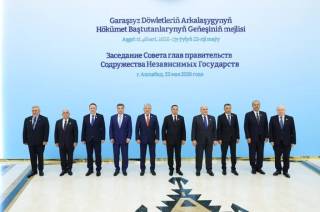
One important indication of the growing concern among Central Asian countries about the fate of the Aral Sea was the holding of a major forum on April 22 – a meeting of the Council of Heads of the Founding States of the International Fund for Saving the Aral Sea.
The event was held under the chairmanship of the President of Kazakhstan, Kassym-Jomart Tokayev, who, in his speech, expressed gratitude to the heads of Kyrgyzstan, Tajikistan, Turkmenistan, and Uzbekistan for participating and proposed several coordinated measures to preserve the ecosystem of the Aral Sea basin.
According to him, this problem is of broad international significance, which is why the Fund’s work has attracted considerable attention from many states and international organizations.
Thus, activities within the framework of international environmental initiatives have intensified: the Executive Committee of the Fund participated in several major events, including the One Water Summit in Riyadh, the 7th UN Environment Assembly in Nairobi, COP29 in Baku, and COP30 in Belém. The focus is also on implementing the action program to assist countries in the Aral Sea basin and the regional environmental protection program to support sustainable development in Central Asia. Moreover, 30 regional projects are being implemented in collaboration with international organizations.
The President of Tajikistan, Emomali Rahmon, emphasized the need for a collective response to environmental threats, including accelerated glacial melt, ecosystem degradation, and an increasing number of natural disasters. In this regard, he proposed establishing an interstate energy commission and intensifying the adoption of water- and energy-saving technologies. He also noted that the Fourth High-Level International Conference within the framework of the International Decade for Action “Water for Sustainable Development” would be held in Dushanbe in late May and invited the meeting’s participants to take part.
The speech by President of Kyrgyzstan Sadyr Japarov, who stated the need to reform the Fund amid changes in the water-use system, the introduction of fair compensation mechanisms for upstream countries, and the protection of the glaciers of the Tian Shan and Pamir, somewhat stood apart from the broader context. Noting the shallowing of Lake Issyk-Kul and the reduction of water resources, the head of the Kyrgyz Republic emphasized that Kyrgyzstan, which forms a significant part of the region’s water resources, uses only a small share, since “the remaining significant part is directed to neighboring states”.
For his part, the President of Turkmenistan, Serdar Berdimuhamedov, proposed preparing a new resolution of the UN General Assembly on issues related to the Fund’s interaction with international structures, which, according to him, would raise cooperation with the UN system to a qualitatively new level:
Protecting the Aral Sea is a shared responsibility
Berdimuhamedov noted the need to consolidate efforts among states and international partners and proposed establishing a regional climate technology center in Central Asia under the auspices of the UN to support initiatives that increase international attention to the Aral Sea problem.
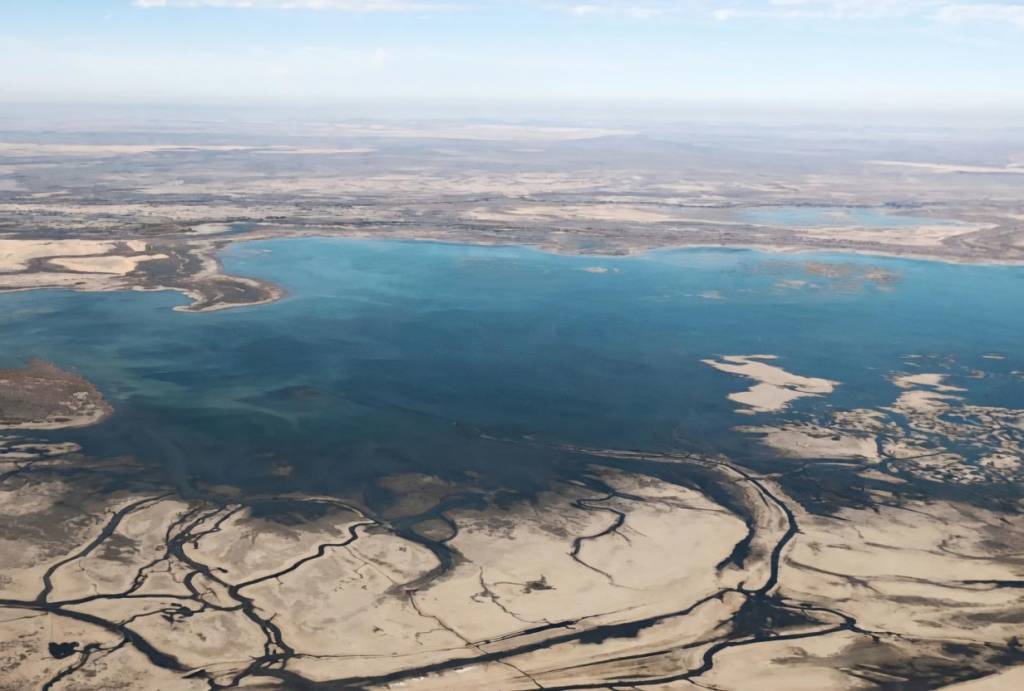
Indeed, the Aral Sea needs to be saved. In the middle of the last century, this salt lake was the fourth-largest in the world, supporting dozens of plant and animal species. Today, the volume of water in it has decreased by dozens of times. Billions of tons of toxic salts have accumulated there, carried in by water used to flush agricultural fields. According to experts, approximately 107-114 billion tons of salt have accumulated on the dried seabed, leading to a catastrophic decline in fish stocks, which previously numbered about 34 species, more than 20 of which were commercially important.
Accordingly, this dealt a serious blow to the local fishing industry, which once employed about 60,000 people. At present, the fishing sector in the Aral Sea region is facing a difficult period. For example, in 2023, the volume of the Northern Aral Sea was 20.1 cubic kilometers, the water surface area of lake systems and wetlands was 439 square kilometers, and the permitted fish catch was 7,000 tons, compared with a water volume of 26.3 cubic kilometers, a water body area of 1,014 square kilometers, and a fish catch limit of 1,920 tons in 2007.
Every year, winds lift 80 million tons of toxic salts from the dried bottom of the Aral Sea and carry them thousands of kilometers, as far as Western Europe and the Tian Shan and Himalayan mountains, negatively affecting human health and ecosystems throughout the region. Residents, breathing polluted air, suffer from numerous diseases, including those of the eyes, lungs, digestive and genitourinary systems, as well as blood disorders.
Thus, issues regarding the Aral Sea’s future state and transboundary water use remain among the most acute for Central Asia.
G. Khonnazarov, UzA