Measures to support the sustainable operation of enterprises reviewed
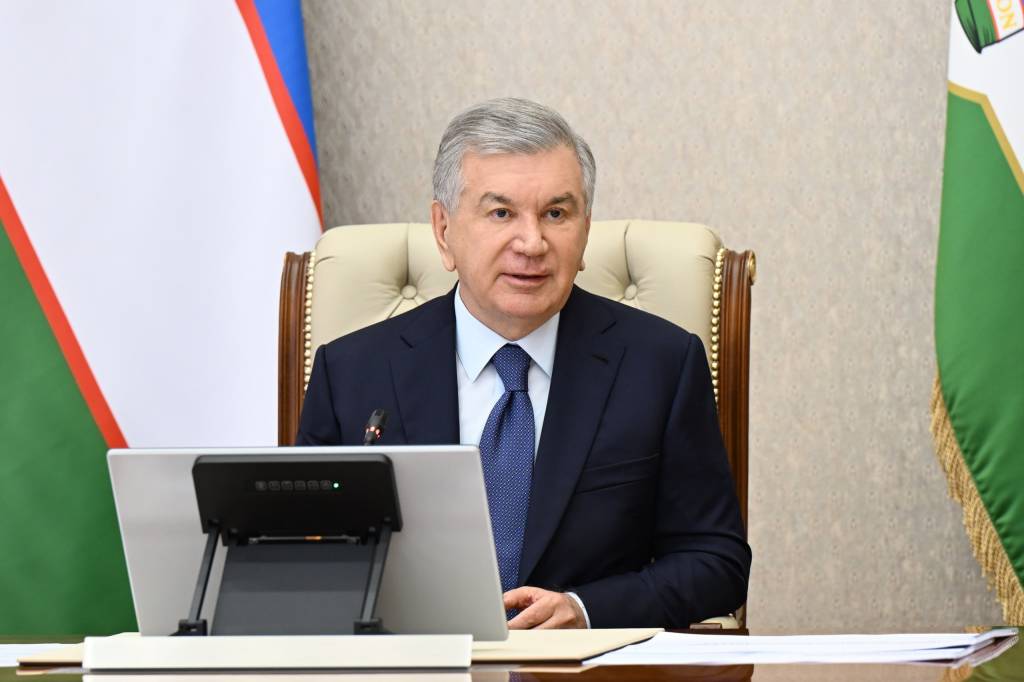
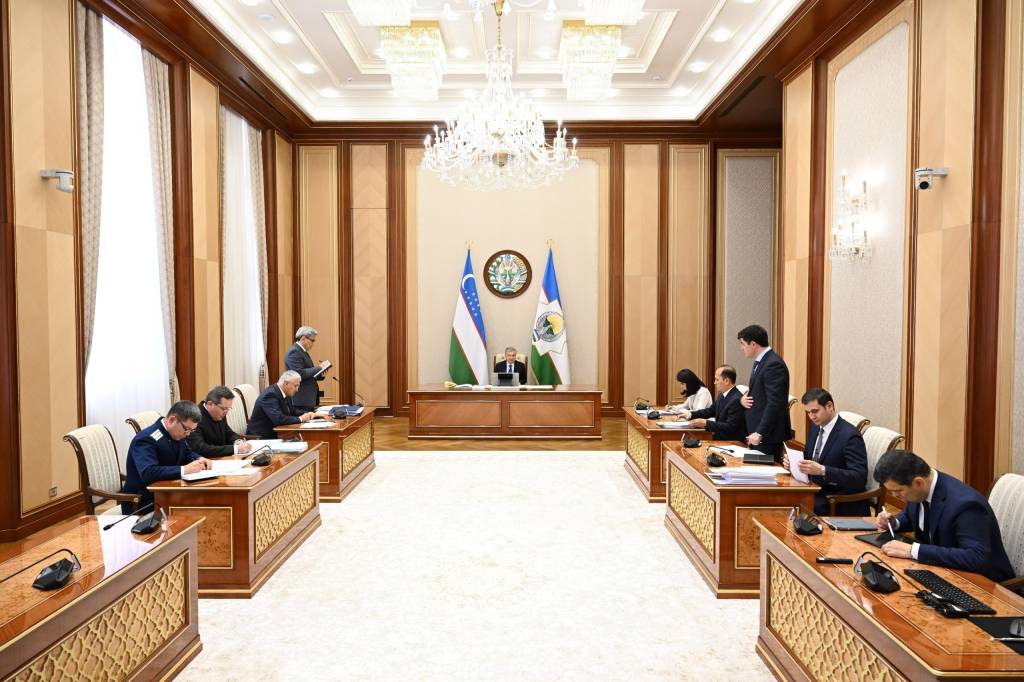
President Shavkat Mirziyoyev reviewed a presentation on improving the sustainability of manufacturing enterprises and addressing issues of concern to entrepreneurs.
In Uzbekistan, large-scale efforts are underway to develop entrepreneurship, support investment projects, and create new production capacity. At the same time, an important task remains: fully utilizing existing industrial potential, ensuring the stable operation of enterprises already in operation, and increasing their production and export capacity.
During the presentation, the results of a study of enterprises that, for various reasons, are not operating at full capacity or have experienced revenue declines were reviewed. These cases are mainly observed in the textile, construction, food, petrochemical, electrical engineering, and other sectors.
It was noted that the operations of enterprises in this category are negatively affected by factors such as a shortage of working capital, limited access to utility infrastructure, delays in project implementation, worn-out equipment, disruptions in raw material supply chains, and a decline in product demand.
It was estimated that by restoring production at enterprises and fully utilizing existing capacities, it is possible to achieve additional output and exports totaling 65.6 trillion UZS.
In this regard, it was decided to introduce a new system that provides for individual assessment of each enterprise's condition and full utilization of capacity. For this purpose, a Republican headquarters will be established with the participation of relevant agencies and banks. Representatives from headquarters will, within two weeks, conduct on-site visits to identify issues hindering enterprise operations and take measures to resolve them on the spot.
For enterprises whose operations can be restored, banks and responsible agencies will work together to allocate the necessary credit funds, provide working capital, and address infrastructure and raw material issues.
During the presentation, particular attention was also paid to large assets on commercial banks’ balance sheets.
As of today, banks hold 70 assets on their balance sheets valued at more than 10 billion UZS. A task has been set to develop a separate mechanism to integrate these assets into the economy, identify suitable investors, and establish production facilities based on them.
The issue of accounting for and evaluating the effectiveness of projects implemented within investment programs was also addressed during the presentation. It was noted that some enterprises launched in 2021-2025, as part of nearly 17,000 projects, do not fully reflect their activities in tax and statistical reporting. Responsible officials have been instructed to analyze each project and ensure proper taxation and accurate reflection in statistical reporting.
Separate issues that negatively affect the business environment and lead to complaints from the public and business entities, along with proposals to resolve them, were also reviewed.
In particular, the placement of signs and brand identifiers by business entities, certain administrative requirements for public catering and retail facilities, procedures in labor relations, cashless payments, the application of tax benefits, financial penalties, excessive documentation in foreign economic activity, and other issues were discussed.
For example, under current regulations, in some cases, even signs displaying an enterprise’s name, type of activity, or trademark are classified as advertising, which requires obtaining a separate permit and making the corresponding payments. This not only creates an additional administrative burden for entrepreneurs but also affects the recognizability of retail and service facilities, customer flow, and revenue.
In this regard, it was proposed not to classify as advertising information about the name of a business entity and its type of activity displayed on a building, and to abolish the practice of issuing the corresponding permits. An initiative was put forward to introduce, in stages, design requirements for the placement of advertising and other informational signs, taking into account proposals from entrepreneurs, and to simplify the procedure for placing their own trademarks on vehicles owned by legal entities.
It was also proposed to simplify the procedure for refunding a portion of value-added tax for public catering enterprises and to ease procedures related to environmental review and compensation payments for certain retail, public catering, and service facilities. In addition, it was proposed to clarify certain procedures in labor relations between employers and employees.
Particular attention was paid to digitalization and the expansion of cashless payments. Given that payments for many goods and services are increasingly shifting to non-cash forms, it was noted that the need exists to make such payments as convenient as possible for citizens and businesses through the development of banking infrastructure, improvements to the fee system, and cashback refunds.
It was proposed to introduce commission-free money transfers between bank cards held by the same individual, to expand convenient cashless payment options for the population, and to create opportunities for prompt cashback payments based on cash register receipts in the sectors of public catering, the sale of alcohol, tobacco products, and fuel. It was also proposed to review expenses for SMS notifications from the “antifraud” system introduced to ensure the security of bank card transactions, and to consider alternatives such as mobile application notifications or biometric identification.
In the area of tax administration and financial penalties, it was proposed to eliminate contentious situations arising from the application of tax incentives and to introduce a rule that penalties for tax arrears should not exceed the principal debt. In addition, it was proposed to prevent abuse of the notification system regarding the non-issuance of receipts and to improve the procedure for suspending a VAT payer certificate.
To simplify foreign economic activity, proposals were put forward to reduce duplicate documentation in the import process, to create more convenient procedures for entrepreneurs to open trading houses, branches, and representative offices abroad, and to effectively use the capabilities of the Uzexpocentre to promote national products in international markets broadly.
The Head of State emphasized the need to reduce unnecessary barriers to entrepreneurship, simplify control and regulatory mechanisms, and ensure that digitalization processes are not an additional burden on businesses but a tool that creates convenience and facilitates entrepreneurs’ activities.
Responsible officials were given specific instructions to ensure the full utilization of existing production capacity, the financial recovery of enterprises, increased production and export volumes, the creation of new jobs, and the expansion of favorable conditions for entrepreneurs.
UzA