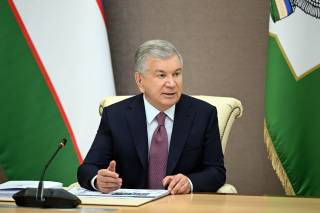
Measures to deepen reforms in the judicial and legal system reviewed
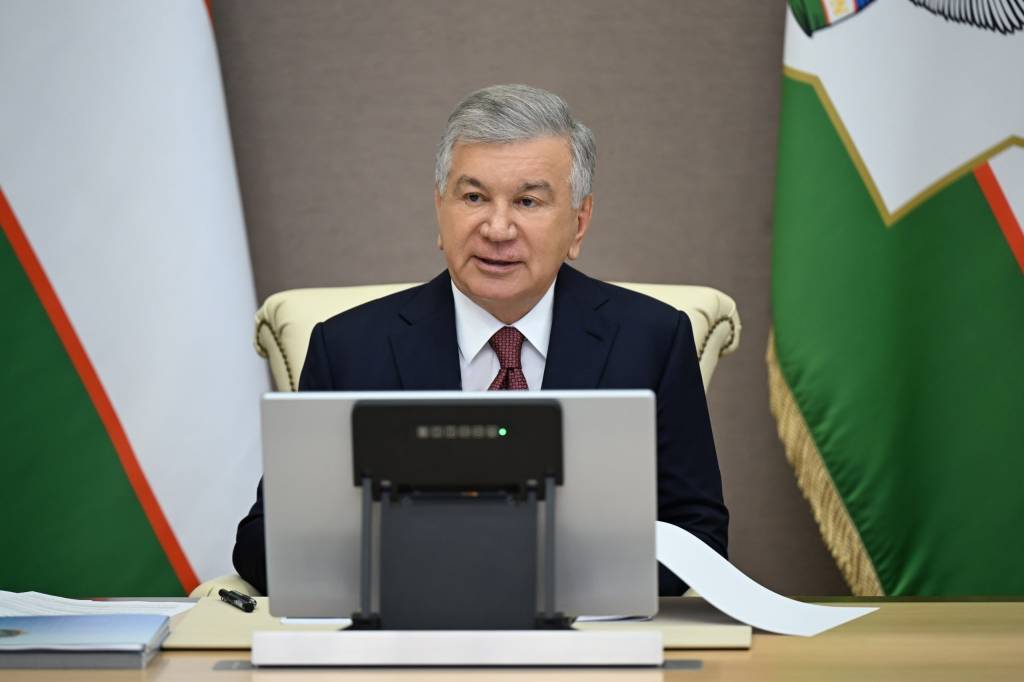
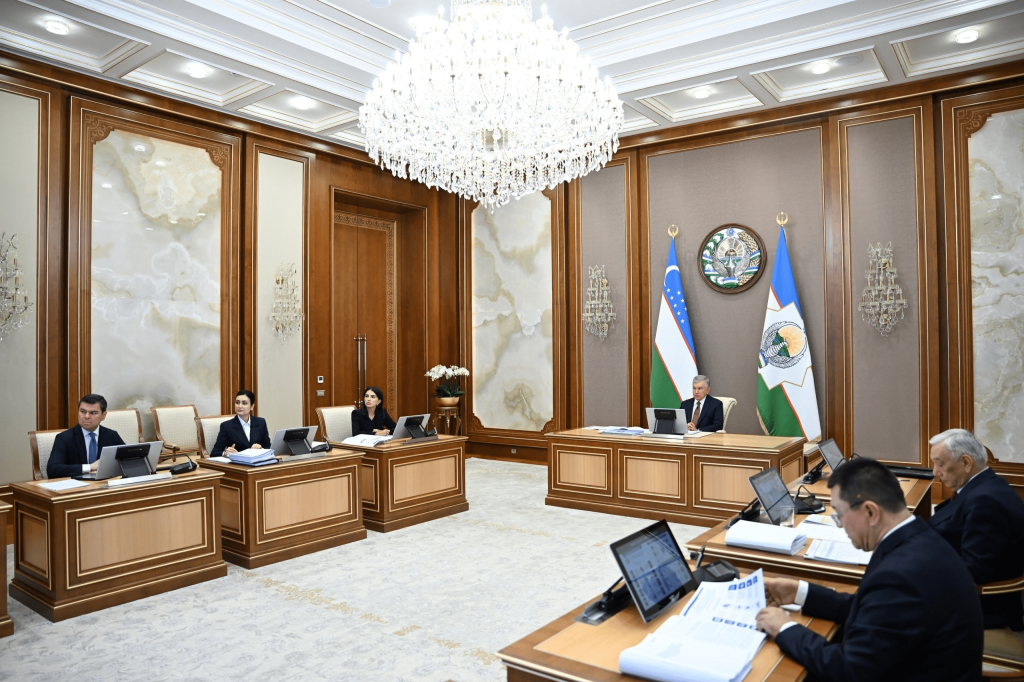
President Shavkat Mirziyoyev met with the heads of the judicial system to discuss the results of judicial and legal reforms and priority tasks in this area.
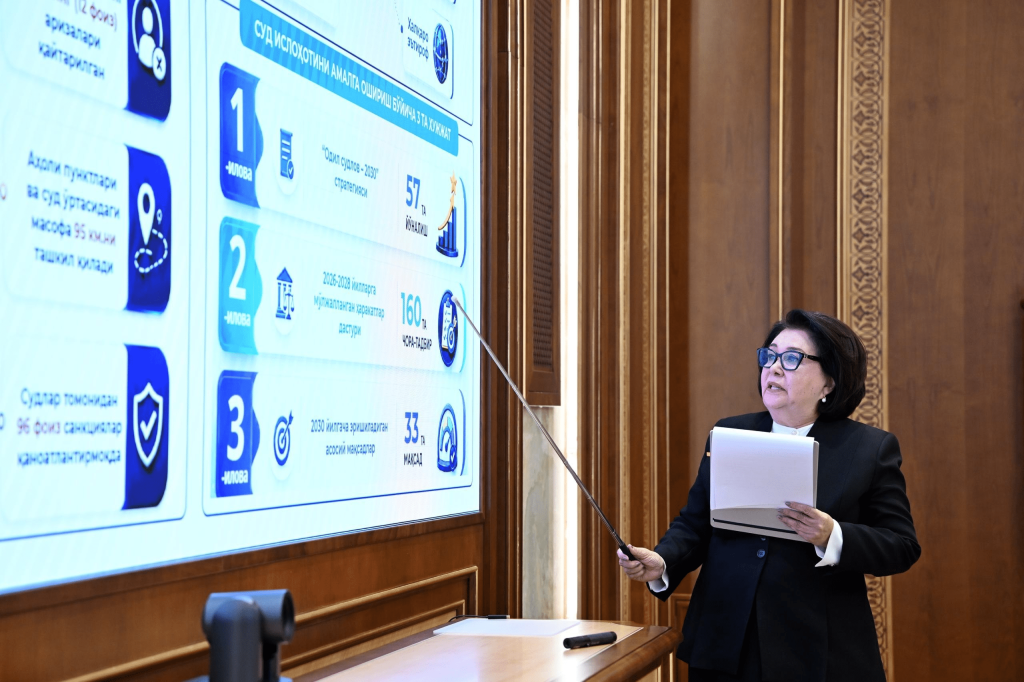
During the meeting, a draft of the Justice 2030 Strategy was introduced, outlining plans to develop court activities through 2030.
In recent years, reforms have been continually pursued to enhance judicial independence, safeguard human rights via the courts, and broaden access to justice. However, an analysis of public appeals and judicial practices indicates that lingering issues remain within the system that require attention.
It was noted that the reforms’ outcomes should primarily ensure that citizens can access courts without undue obstacles, restore their violated rights promptly, and trust in the fairness of the decisions.
The Justice 2030 Strategy was developed with public input, discussions with scholars, practicing lawyers and attorneys, and international best practices. It outlines 57 tasks, with the Action Program for 2026-2028 detailing 160 specific measures. Additionally, it sets 33 targets to be accomplished by 2030.
To improve the objectivity of reviewing lower court decisions, five interregional courts will be established starting July 1, 2027. These regional courts will continue to serve as appellate and cassation courts, but their supervisory review powers will be transferred to the interregional courts. This shift aims to eliminate the practice of courts reviewing their own decisions and will make it easier for citizens to access judicial review without needing to go to the capital.
By 2030, civil courts will be expanded to almost all districts and cities, given their role in handling daily life issues and high public visitation. This expansion aims to improve public access. Moreover, all courts will provide information, application submission, and digital services via a unified “one-stop shop” platform.
If an application is filed in a court outside its jurisdiction, the court will not send it back to the citizen. Instead, the court will independently forward it to the appropriate court. For minor deficiencies, the court will also help the applicant resolve them.
To resolve economic disputes more efficiently, the court will implement a standard for “proactive economic case management”. This approach will reduce the necessity for entrepreneurs to navigate multiple authorities and repeatedly resubmit documents.
Since personal liberty is a fundamental value, a “reasonable suspicion” (Prima Facie) standard will be implemented to enhance protections for human rights during investigation and inquiry stages. When granting authorization, an investigating judge can assess the lawfulness of detention, the adequacy of suspicion or charges, and may request additional necessary information. This aims to prevent unwarranted restrictions on personal liberty.
An open “Register of Precedents” will be kept to maintain consistency in judicial practice, which will include resolutions from the Presidium of the Supreme Court.
Starting in 2028, judicial administration will take over organizational tasks not directly related to the administration of justice, relieving judges of these duties.
The “Digital Court” concept will be fully implemented across all courts, and the my.sud.uz portal and its mobile application will be improved. Plans include increasing the share of electronically submitted applications to at least 50 percent, ensuring audio recording of 100 percent of court hearings, and increasing the number of users of the Supreme Court’s information systems by at least fivefold.
In addition, it is planned to expand the use of mediation and conciliation procedures, maintain an open register of administrative acts declared unlawful, and increase the number of crime categories whose cases are considered with the participation of a “jury” to at least three.
The meeting also reviewed a sample of special uniforms for court administrative staff. This will help citizens easily identify court employees and strengthen their sense of professional responsibility.
In addition, proposals were considered to improve constitutional proceedings, enhance the effectiveness of judicial self-governance bodies, strengthen the judiciary’s independence, and provide advanced training abroad for judicial personnel.
The Head of State approved the draft Strategy and signed the relevant Decree to implement the planned reforms.
UzA