Measures aimed at reducing the shadow economy and enhancing the effectiveness of prosecutorial oversight in the sector reviewed
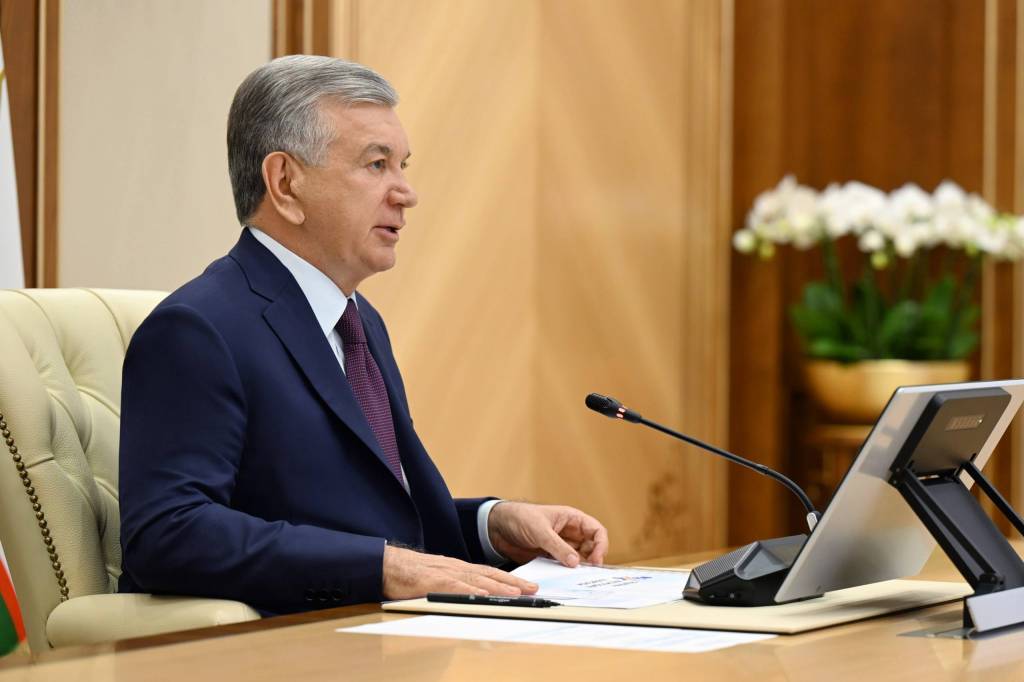
President Shavkat Mirziyoyev reviewed a presentation on measures to reduce the share of the shadow economy and to improve the effectiveness of prosecutorial oversight in this area.
In recent years, systematic efforts have been undertaken in this direction. In particular, special and territorial commissions to combat the shadow economy have been established, risk analysis and segmentation systems have been introduced in the tax and customs authorities, several legislative gaps that had enabled shadow transactions have been eliminated, and measures to encourage conscientious entrepreneurs have been strengthened.
As a result of the implemented measures, the non-observed economy’s share has fallen from 35% to 23% over the past two years. An additional 38 trillion UZS has been collected for the state budget. The number of formally employed individuals has surpassed 8.5 million, and the average official salary is nearly 6.5 million UZS.
At the same time, the share of the shadow economy remains high. According to statistical estimates, in the first quarter of this year, the non-observed economy amounted to 81.1 trillion UZS in agriculture, 24.5 trillion UZS in trade and services, 23.9 trillion UZS in construction, and 6.7 trillion UZS in industry.
In addition to reducing budget revenues, the shadow economy undermines the country’s healthy competitive environment, lowers citizens’ level of social protection due to informal employment, and deprives the population, including consumers and business entities, of the opportunity to fully benefit from the guarantees and state support mechanisms provided by law.
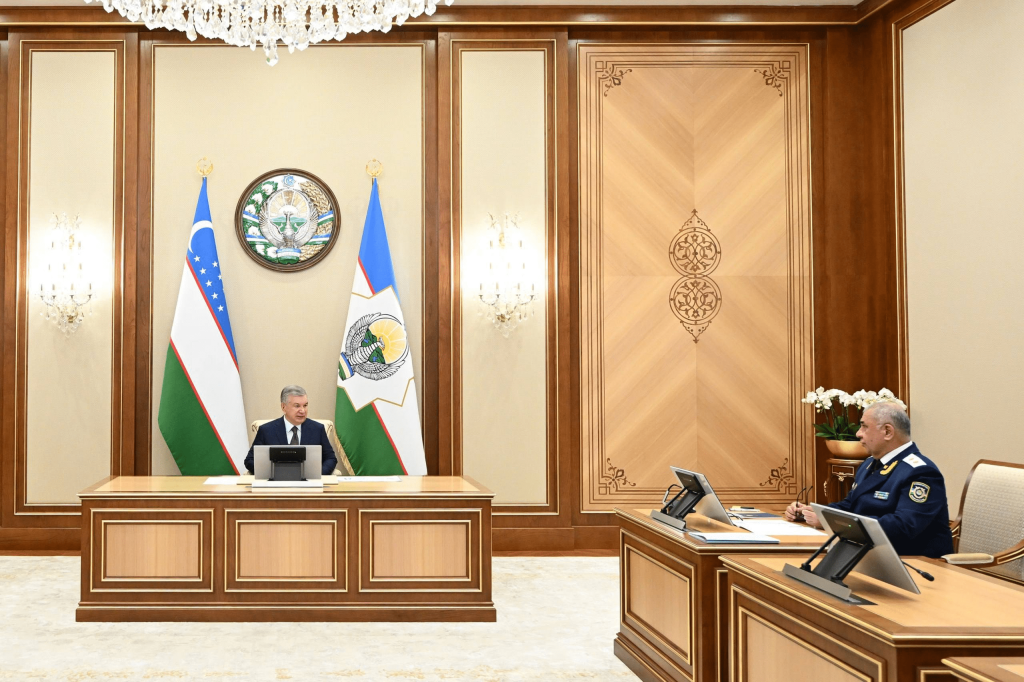
The 2030 goals aim to cut the shadow economy in half, boost formal employment to 14 million, and increase cashless payments to 75%.
Earlier, the Head of State instructed the relevant bodies to create a unified digital platform that would use artificial intelligence to display shadow economy risks, potential budget losses, and additional revenue sources by sector and region, and to identify and eliminate factors contributing to shadow transactions.
During the presentation, information was provided on the capabilities of the “Shadow Economy Map” platform, developed by the Prosecutor General’s Office and launched in pilot mode to achieve these objectives.
The platform aims to boost budget revenues and sustain a healthy competitive landscape by detecting shadow transaction risks and allowing responsible authorities to oversee their eradication across 22 key economic sectors, 85 areas, 14 regions, and 208 districts and cities.
Qualified specialists in taxation, customs, finance, economics, statistics, econometrics, and probability theory were involved in developing the platform. More than 100 risk assessment criteria were formulated, and individual coefficients were assigned to each, taking into account regional and sectoral characteristics, the tax regime, trade turnover, significance to the state budget, and other factors.
To identify shadow economy risks and potential budget losses by sector and region, the platform has been integrated with the information systems of 16 responsible ministries and agencies, enabling real-time processing of all data.
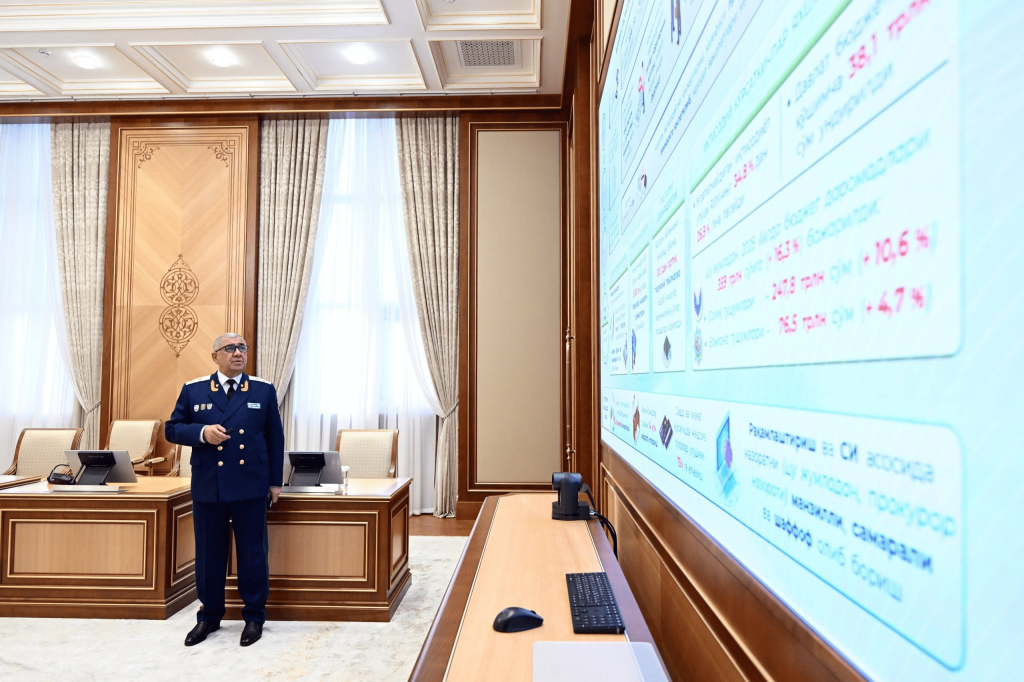
Based on the platform’s analytics, sectors and regions will be automatically classified into “green”, “yellow”, and “red” categories according to the level of shadow-economy risk and potential budget losses.
The platform also automatically identifies risks such as operating without a license, concealing actual turnover, jobs, and payroll, and understating profitability and profit figures.
During the presentation, it was proposed to elevate prosecutorial oversight in this area to a qualitatively new level by digitalizing it through the platform’s capabilities.
In particular, the use of the platform’s analytical data will enable the targeted allocation of resources and personnel within ministries and agencies responsible for combating the shadow economy, while minimizing the human factor’s influence in oversight activities. Sectors and regions with a high level of shadow-economy risk will be automatically identified, and the causes of these risks will be analyzed. Targeted instructions will be issued to the responsible agencies, their implementation will be monitored, and the results achieved will be assessed.
If the problem is not resolved at the district or city level, it will be referred to the regional level and, if necessary, to the national level. The system will enable identification of the root cause of the problem and, on this basis, development of proposals to eliminate it, improve legislation, and increase budget revenues.
The Head of State highlighted that reducing the shadow economy should primarily involve digitalization, improved data exchange, reduced human involvement, and organized oversight.
The officials in charge were directed to incorporate over 70 information systems into the platform by October 1, cover all regions and sectors, and achieve full platform launch before next year.
In addition, instructions were given to strengthen prosecutorial oversight to create equal competitive conditions for all business entities and to increase officials’ accountability for reducing the scale of the shadow economy.
UzA