Future Perspective of Airport Investment in Uzbekistan
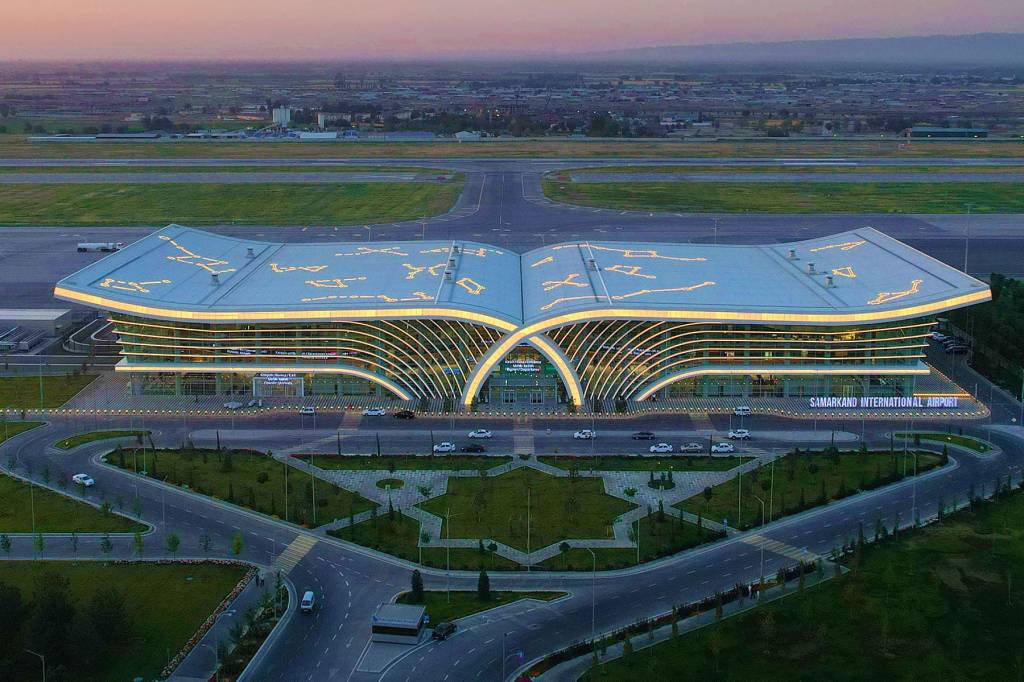
Uzbekistan is rapidly transforming its aviation sector as part of broader economic reforms and efforts to integrate globally. Airport investment has become a strategic priority, with the goal of positioning the country as a regional transport hub linking Asia, Europe, and the Middle East. The future of airport development in Uzbekistan shows strong growth potential, driven by infrastructure modernization, foreign partnerships, and rising passenger demand.
Rising Demand and Strategic Location
Uzbekistan’s geographic location in Central Asia offers a natural advantage for transit aviation. The country lies at the crossroads of major global routes, well-positioned to connect East and West, as well as North and South. Developing efficient transfer hubs could significantly reduce travel time – potentially by up to two hours on certain routes – while also lowering fuel consumption.
Among potential locations, Samarkand is a strong candidate for a major international hub. Its historical significance, tourism appeal, and proximity to energy resources, including GTL fuel production in the south, enhance its strategic value.
Vision for a World-Class Airport
A future international airport in Samarkand could be designed to handle 30 to 60 million passengers annually. Such a facility would require more than 80 gates and a well-organized terminal structure, including separate arrival and departure levels and a central transfer zone for international passengers.
To compete globally, the airport should adopt advanced infrastructure and services, including:
· Environmentally sustainable design and low-emission operations
· Modern runway systems equipped for high safety and efficiency
· High-quality passenger amenities such as hotels, medical facilities, lounges, and entertainment areas
· Retail and dining options featuring international brands
· Unique attractions, such as cultural exhibits or innovative architectural features
In addition, integrating tourism experiences – such as guided city tours of Samarkand for transit passengers – could enhance the airport’s appeal and boost the local economy.
Economic Impact and Global Positioning
Large-scale airport investment would require billions of dollars, but the long-term returns could also reach billions through increased tourism, transit traffic, and business activity. Such projects would create significant employment opportunities and support Uzbekistan’s ambition to revive its role as a modern Silk Road hub.
To achieve global recognition, Uzbekistan could aim to benchmark its airports against leading international hubs like Singapore Changi Airport and Hamad International Airport, both known for excellence in passenger experience and operational efficiency.
Human Capital and Aviation Ecosystem
Infrastructure alone is not enough. Uzbekistan should also invest in aviation education by establishing pilot training centers and airline operations academies. Developing a highly skilled workforce will be essential to sustaining long-term growth in the aviation sector.
Cargo and Industrial Logistics Development
In addition to passenger hubs, Uzbekistan has strong potential to become a regional cargo leader. Redeveloping the Khanabad airfield in Karshi into a major cargo airport could significantly enhance logistics capacity. Its strategic location near Afghanistan, Turkmenistan, and Tajikistan makes it well-suited for regional trade.
A cargo hub similar in concept to Al Maktoum International Airport could position Uzbekistan as a key logistics center, especially given its landlocked geography and limited access to seaports.
Reviving Domestic Aircraft Production
Uzbekistan could also explore reviving its aircraft manufacturing capabilities. The former Chkalov Aviation Plant in Tashkent offers an opportunity for reinvestment and modernization, potentially enabling domestic production of civilian and cargo aircraft.
In short, Uzbekistan’s aviation industry is undergoing rapid development. Rapid population growth and a strategic geographic location are creating vast opportunities. Investments in airports, logistics, and sector-specific education accelerate economic growth, create new jobs, and further integrate the country into the global economy. Achieving these noble goals requires a long-term strategy and a comprehensive, innovative approach.
Durbek Sobirov,
International Expert