European experience is valuable for opening new opportunities
Today’s bank employees need more than just financial knowledge. A modern banking specialist must also understand digital technology, anticipate customer needs, accurately assess risks, and, most importantly, recognize that each decision affects a person’s future.
Rapid shifts in the global financial market, the increasing speed of digital transformation, and the widespread integration of artificial intelligence and modern banking technologies are creating new challenges for the financial system. In this context, the competitiveness of the banking sector largely relies on the expertise and potential of its professionals.
In this context, Uzbekistan’s focus on developing human capital in the banking and financial sector, and on studying modern knowledge and advanced foreign experience, is particularly important. At the initiative of President Shavkat Mirziyoyev, the country is undertaking large-scale efforts to reform the banking system, digitize services, expand access to financial services for the public and business entities, and introduce modern management methods.
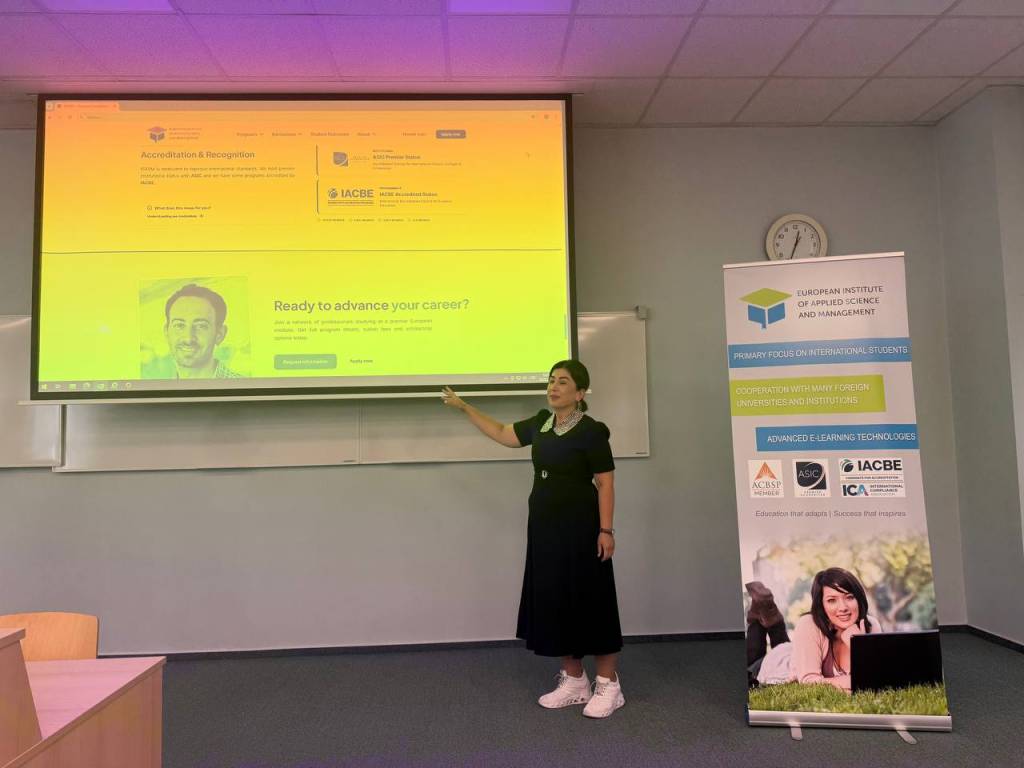
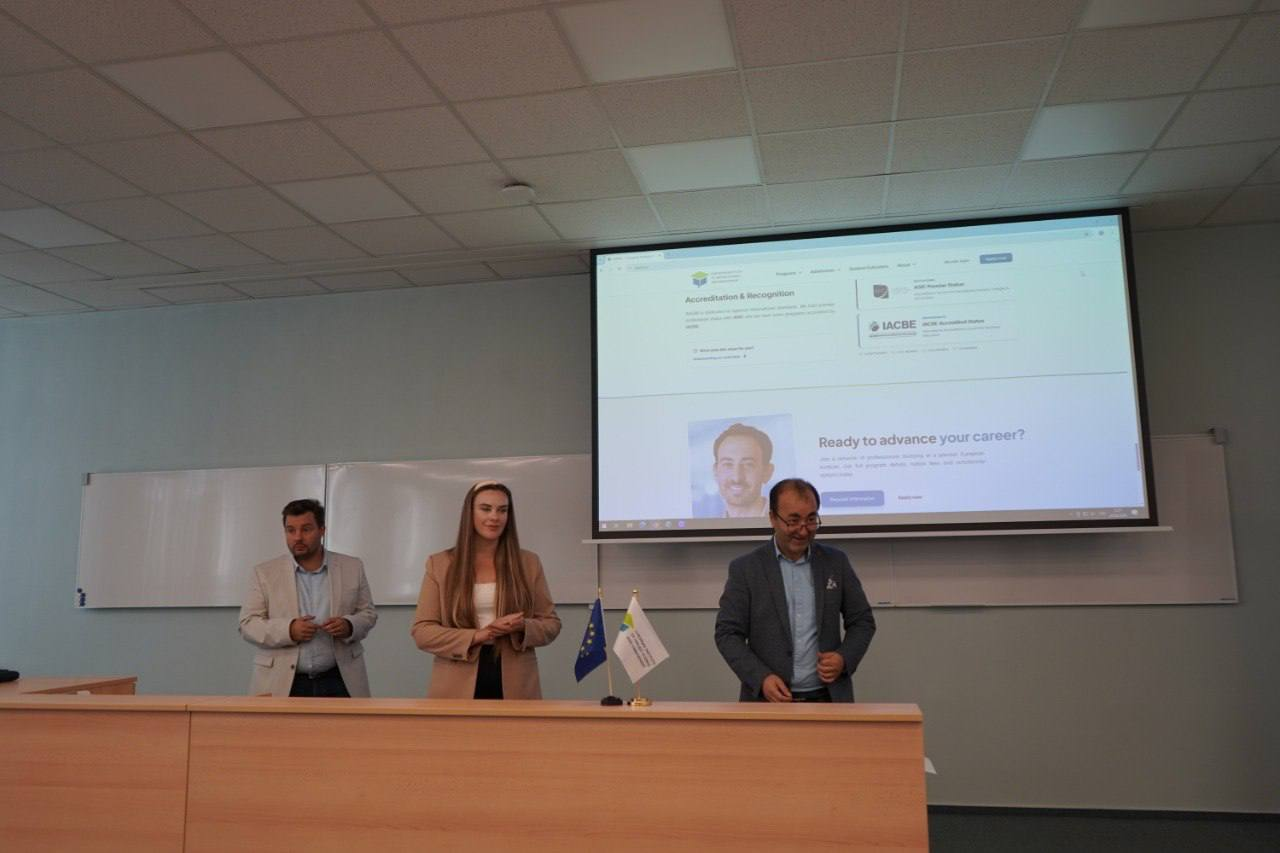
As a logical continuation of these processes, a group of Uzbek banking professionals participated in a training seminar at the European Institute of Applied Science and Management in the Czech Republic. The seminar was initiated by the Joint-Stock Commercial People’s Bank of the Republic of Uzbekistan and the Intersectoral Institute for Professional Development and Retraining of Financial and Banking Personnel.
Nargiza Latipova, Deputy Head of Support for Women and Family Entrepreneurship at the Bukhara Regional Center of JSC Xalq Bank, was among them.
“A bank employee today cannot meet the needs of tomorrow’s client with yesterday’s knowledge”, says Ms. Latipova. “Therefore, it is crucial to improve our qualifications, study the world’s best practices, and apply them in our work. The training seminar in the Czech Republic was not just a lesson for us but a valuable school of experience that allowed us to view the banking system from a new perspective”.
When comparing the Czech experience with the processes in Uzbekistan, the approaches to digital services stand out.
In the Czech Republic, a significant share of banking services is now performed remotely. Mobile apps, online banking, and digital ID solutions have greatly minimized the necessity for customers to visit branches. Essentially, the bank no longer waits for customers; instead, banking services reach them directly.
In recent years, Uzbekistan has experienced significant progress in digital financial services. Mobile banking, online payments, remote services, digital products, and automation systems are now more prevalent.
The key difference is that digital banking began much earlier in the Czech Republic, whereas in Uzbekistan, this process is progressing rapidly. Currently, digitalization in the country is evolving from a mere technological upgrade to a new model that redefines the relationship between banks and their clients.
European banks also emphasize customer-centricity. It’s not just about how much a client deposits or how large their loans are. It’s also about understanding their needs, time, capabilities, and financial security.
This aspect is particularly significant for Uzbekistan, given that a primary role of the People’s Bank is offering financial assistance to the broader public, women, and family-owned businesses.
In the Czech Republic, there is a strong emphasis on proactive risk assessment, analysis of credit histories, and the efficient utilization of public-private partnership mechanisms for financing small and medium-sized enterprises.
In Uzbekistan, support for entrepreneurship has been formally integrated into state policy. Each year, financial mechanisms are refined to promote women’s entrepreneurial efforts, grow family businesses, and boost public income.
Therefore, the Czech experience highlights how the mechanism works, whereas the Uzbek experience shows its potential to be guided in favor of the wider population’s interests.
The seminar also covered a key issue: bank risk management.
Participants showed great interest in the robust prudential supervision by the Czech National Bank, which includes mechanisms for monitoring inflation, ensuring bank liquidity, and maintaining financial stability.
Uzbekistan’s banking system is adopting new risk-management strategies to improve loan-portfolio quality, reduce non-performing loans, and maintain financial stability.
Here, the most important lesson from the European experience is this: it is more effective to anticipate a problem than to resolve it after it arises.
This is the strength of a modern bank – it not only allocates funds but also prevents risk.
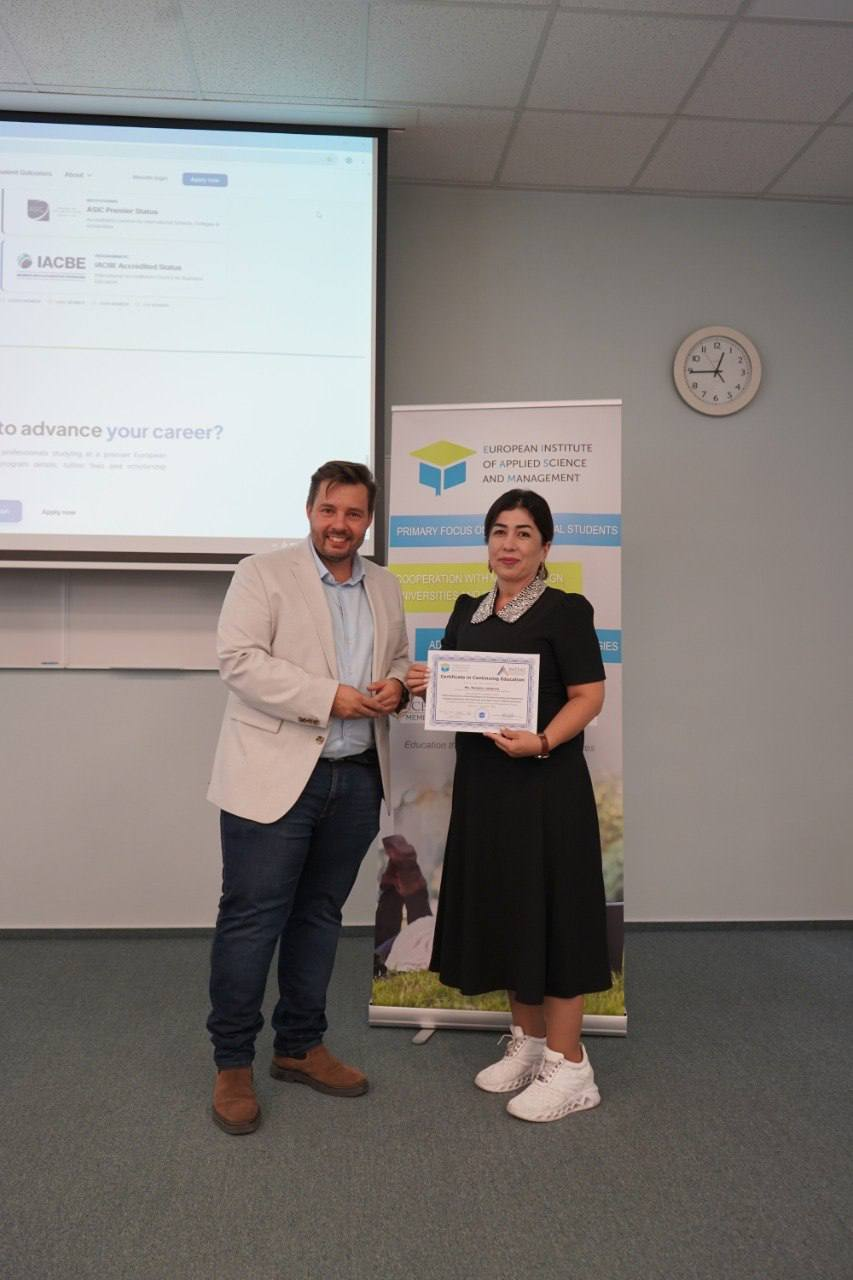
A key characteristic of the European educational system is its combination of theoretical knowledge and practical application.
During the seminar, theoretical information was linked to real-life banking case studies, requiring participants to make independent decisions in specific situations.
This approach is also highly relevant to Uzbekistan’s banking system. This is because there is a significant difference between reading a rule in a book and resolving a complex real-life financial situation. Knowledge is an opportunity. Practice, however, is the result. Therefore, the greatest value of studying foreign experience lies precisely in the ability to apply it to one's own work processes.
For Nargiza Latipova, this trip is mainly important because she intends to apply what she has learned to her work.
In practice, approaches such as expanding digital services to support women and family entrepreneurship, conducting thorough customer needs analyses, assessing financial risks, and enhancing service quality are especially important.
In Bukhara, more accessible, efficient, and user-friendly banking services for women entrepreneurs, family startups, and individuals needing financial support will strengthen their social influence.
From this perspective, the knowledge acquired in the Czech Republic is not merely theoretical information distant from the local context. Its real significance appears when it enables an entrepreneurial woman in Bukhara to launch her business, a family to establish a source of income, or a client to save time.
Today, banks are evaluated globally not just by their capital and technology, but also by their human capital.
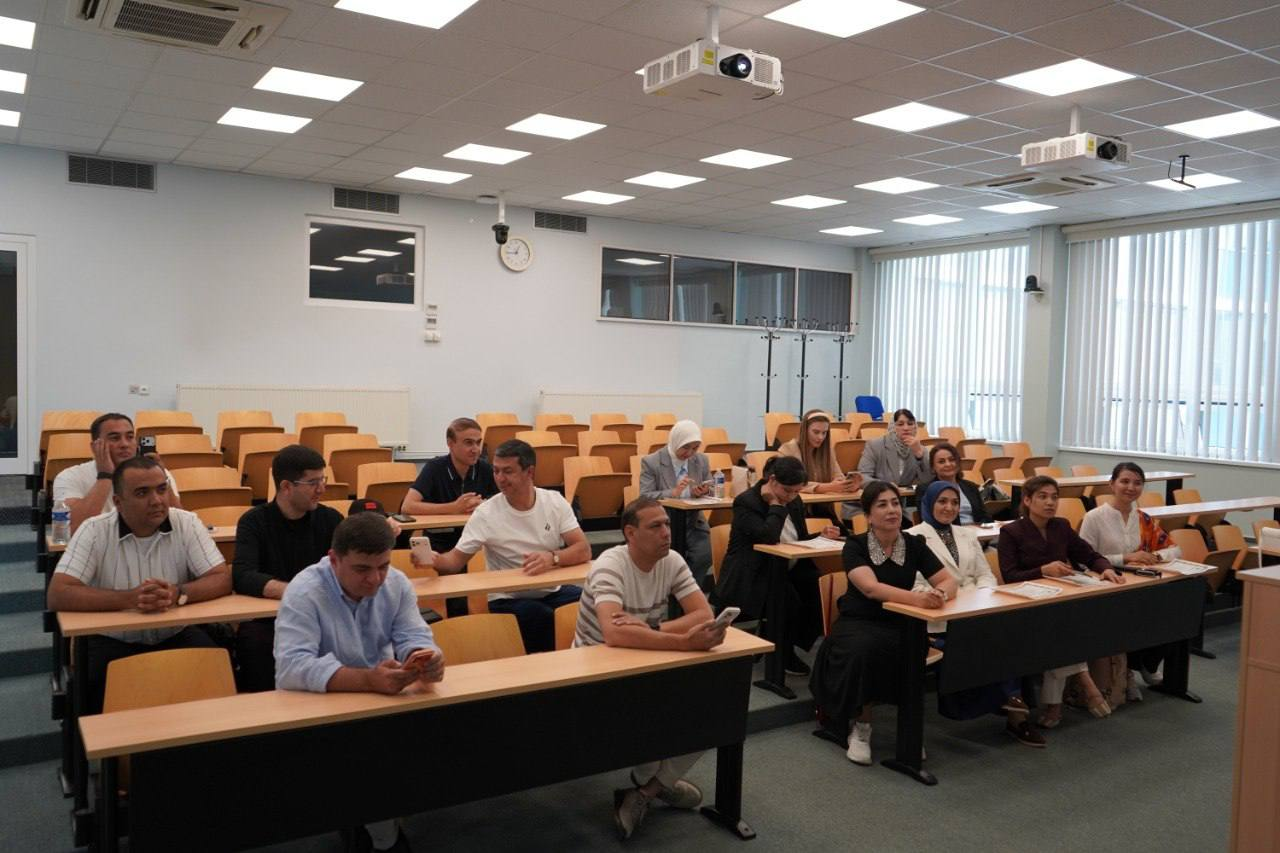
While acquiring modern software and technology is feasible, mastering their effective use requires time and systematic training. This includes developing skills to communicate with clients, address problems, and foster innovation. The Head of State emphasizes the importance of investing in human capital, enhancing education and professional systems, and creating opportunities for learning modern professions. For example, a training seminar in the Czech Republic enabled bank employees to gain firsthand knowledge of European practices, compare them with Uzbekistan’s context, and tailor the best elements to local needs. Ultimately, progress depends on studying advanced experiences, aligning them with national priorities, and applying these insights to improve people's lives.
Every new approach learned in the Czech Republic today can become a new service, a new convenience, or a new business opportunity in Bukhara tomorrow. In this sense, the greatest outcome of this trip is not a certificate or a document confirming participation in the training seminar. The greatest result is when a specialist who has mastered global experience returns to their homeland and applies their acquired knowledge for the benefit of the people. No matter how much modern technology a bank building contains, its true character is ultimately defined by people. And a knowledgeable, inquisitive specialist who keeps pace with the times will lead any system toward progress.
Zarif Komilov, UzA