Enhancing prevention inspectors’ work and the public safety system discussed
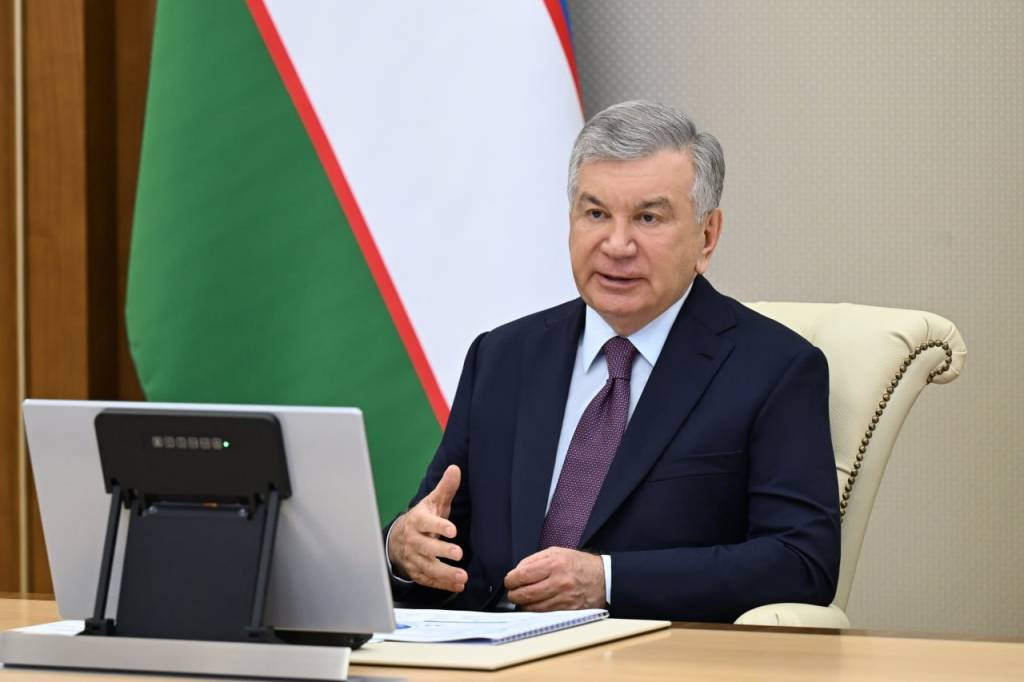
President Shavkat Mirziyoyev reviewed a presentation of proposals to improve the work of prevention inspectors and the public safety system, and to enhance personnel training in the sector.
As noted, officers of the road patrol, patrol services, and guard service must respond promptly to citizens’ appeals, regardless of their specialization or assigned area. The most effective prevention strategy involves early detection and removal of factors that cause offenses, along with focused efforts with at-risk individuals.
At the same time, it was noted that the practice of assessing crime primarily by comparing figures and indicators has not yet been fully abandoned. It was emphasized that the crime situation should not be assessed solely based on statistics. The key criteria should be the level of public trust, the recurrence of offenses, and the effectiveness of work with risk groups.
During the presentation, it was suggested that the effectiveness of public safety units be evaluated based on the principle of a “system serving the public”, with the primary goal of gaining citizens’ approval and trust in safety measures.
To this end, it is expected that the activities of the road patrol, patrol, and guard services will be integrated by consolidating their tasks into a unified system, including promptly responding to citizens’ appeals, maintaining an open dialogue with the public, and conducting targeted work with individuals at risk.
In particular, it is proposed that certain functions and powers related to road safety be transferred to the patrol service and guard units. In turn, certain powers related to maintaining public order will be assigned to the road patrol service.
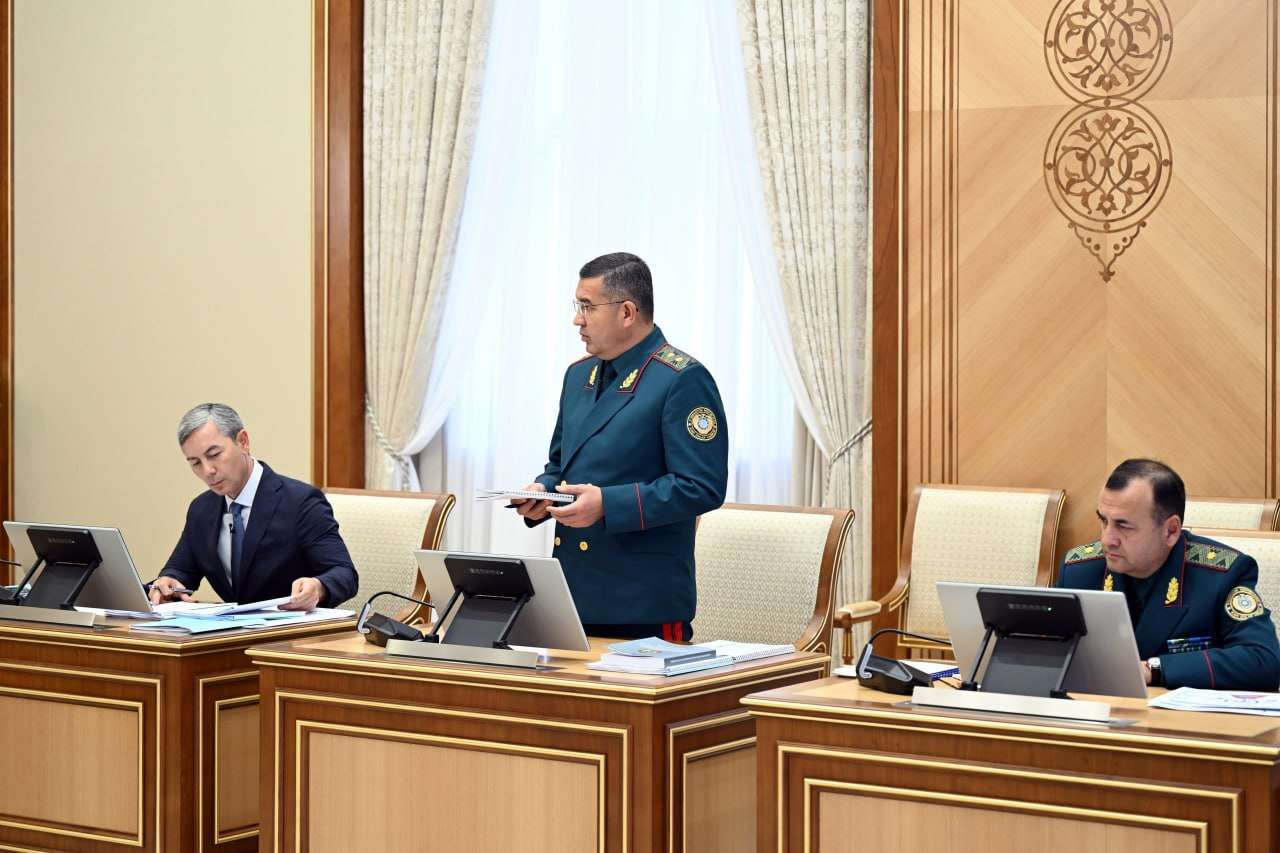
Currently, over 10,000 prevention inspectors work across nearly 9,000 mahallas nationwide. Highlighting the significance of this workforce, the Head of State stressed that efficient crime prevention fundamentally depends on well-organized efforts by these inspectors.
It was noted that, in practice, prevention inspectors have been assigned approximately 50 additional functions unrelated to their core responsibilities. In some cases, instead of preventing crime and addressing residents’ concerns directly in the mahallas, they are compelled to handle other matters.
In this regard, information was presented on the draft Law “On the status of prevention inspectors of internal affairs bodies”. The draft clearly defines the legal status of prevention inspectors, their tasks, rights and responsibilities, guarantees for their professional activities, measures of social and legal protection, and procedures for commendation and disciplinary action.
Under the draft law, the main goal of a prevention inspector will be to build strong public trust and effectively prevent crime in their assigned area. A prevention inspector will be recognized as an official authorized to perform pre-investigation inquiries and preventive measures within their designated jurisdiction.
Prevention inspectors will be assigned solely the duties mandated by law. The state will safeguard their rights, honor, dignity, and professional reputation. The status of prevention inspector is considered officially granted upon swearing the “Oath of loyalty to professional duty”.
The draft law prohibits interference with the professional activities of prevention inspectors and the assignment of tasks and duties outside their competence. It requires government bodies to submit a written response to a prevention inspector’s request within 10 days and to consider the inspector’s formal submissions without delay, providing a written response within 1 month.
A prevention inspector will be entitled to use government information systems free of charge. Inspectors will independently determine the forms of crime prevention, issue mandatory preventive directives, make formal submissions and require their implementation, develop their own methods for conducting preventive measures, and prepare the relevant documents within the scope of their competence.
At the same time, prevention inspectors will be required to strictly comply with the Code of Professional Conduct and Service Discipline for Employees of Internal Affairs Bodies, promptly receive and respond to citizens’ reports of offenses submitted in any form, immediately arrive at the scene of an offense and conduct an inquiry, and provide victims with first aid and any other necessary assistance.
The draft law also provides for strengthening the social and legal protection of prevention inspectors. In particular, it is planned to require hokimiyats to provide inspectors with office space and housing, establish administrative liability for obstructing their lawful activities, and grant additional pension guarantees to employees with long service records.
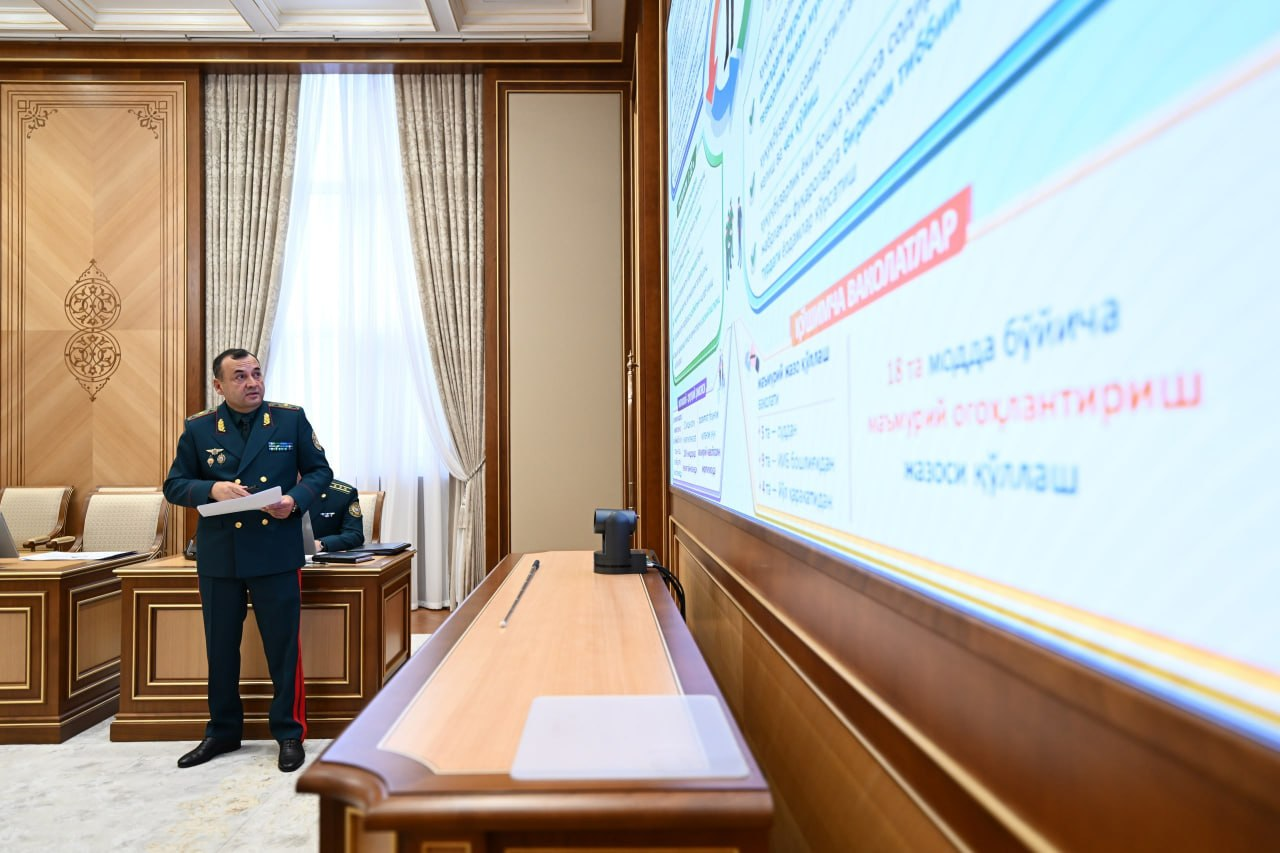
It is also planned to expand the powers of prevention inspectors. In particular, their authority to impose administrative penalties for certain types of administrative offenses will be broadened, and they will be granted the right to issue administrative warnings under 18 articles.
Prevention inspectors’ accountability to the public will also be strengthened. They will report quarterly on their work to ensure a safe environment within the territory entrusted to them. If more than 50 percent of residents express no confidence in their performance, the inspector will be referred for certification, after which their suitability for the position will be reviewed.
During the presentation, particular attention was paid to training modern, patriotic, and well-rounded personnel for the public safety sector. Employees at the mahalla and district levels must possess the knowledge, professional training, and practical skills needed to make sound decisions in any situation.
To this end, it was proposed to transform the University of Public Safety by increasing the enrollment quotas to 600 students for full-time study and 300 for distance learning.
The university will train personnel in crime prevention, road safety, maintenance of public order, and security services. A degree program and a department in Crime Prevention Activities will be established to train prevention inspectors specializing in work with women, young people, and minors, as well as in markets and shopping complexes.
The educational process is expected to include innovative disciplines such as risk analysis, geographic information systems, unmanned aerial vehicle technologies and robotics, profiling, conflict studies, problem-oriented sociology, open-source digital analytics, and family mediation.
An educational cluster will be established to train personnel for internal affairs bodies. In particular, a continuous system covering all levels of training will be introduced, from the departmental specialized boarding school, academic lyceums, and technical schools of the internal affairs bodies to the Academy of the Ministry of Internal Affairs and the Institute for Advanced Training.
As part of the introduction of a vocational education system, officers and sergeants with secondary specialized education will be trained at technical schools in Namangan and Samarkand. Particular attention during training will be given to legal and technical training, physical endurance, combat readiness, professional skills, and the development of competencies in working with digital technologies, unmanned aerial vehicles, and IT platforms, as well as the provision of first aid. Theory and practice will be integrated through a dual education model.
It was also proposed to transform the Ministry of Internal Affairs Academy. The academy’s activities will be reorganized around the “education – research – practice” cycle, with specialized schools established in public safety, operational-search operations, cybercrime prevention, forensic expertise, and social rehabilitation.
Under a new dual education framework, cadet training will be organized around the “learning – practice – service” principle. In the first year, the primary emphasis will be on theoretical knowledge, physical and combat training, and introductory practical training. In the second year, the focus will be on scenario-based simulation exercises and practical training in specialized service activities. In the third year, training will focus on developing psychological resilience, crisis-management decision-making skills, and practical experience as trainee officers.
The training system for senior personnel will undergo revisions. The School of Management plans to introduce master’s degree programs at the first and second levels of management, as well as in specialized fields and in academic and pedagogical training. Additionally, a dedicated office to assess and promote the professional development of senior staff will be established.
The President approved the proposals and directed officials to free prevention inspectors from duties beyond their scope, enhance their legal and social protections, digitize the public safety system, and conduct personnel training aligned with modern standards.
UzA