“Eco Pulse”: A youth-led initiative for cleaner air in Uzbekistan

Today, environmental challenges have moved beyond national and regional boundaries to become a global concern for humanity. Amid climate change, air pollution, and growing pressure on natural resources, monitoring environmental conditions using reliable data is increasingly important. Modern digital technologies, in turn, are creating new opportunities to strengthen environmental monitoring and provide the public with access to accurate and timely information.
Against this backdrop, Jaloliddin Musayev, a 12th-grade student at International House Tashkent, has developed “Eco Pulse”, a digital platform that provides accessible air quality information.

Launched in September 2025, the platform monitors six major pollutants – PM2.5, PM10, nitrogen dioxide (NO₂), ozone (O₃), sulfur dioxide (SO₂), and carbon monoxide (CO). The data is converted into the Air Quality Index (AQI), enabling users to track local trends and view short-term forecasts.
“Eco Pulse” has gradually expanded beyond a single technology project. According to project data, more than 1,200 users have registered on the platform, and over 20 schools and 52 clinics across Uzbekistan use its information. Around 30 volunteers have also helped install air-quality sensors in various locations, enabling the platform to supplement external information with locally collected data.
The initiative has also developed a research component. Together with researchers and collaborators in Uzbekistan, Musayev has been working on an open PM2.5 dataset covering Uzbekistan, Kazakhstan, Kyrgyzstan, Tajikistan, and Turkmenistan. The dataset includes more than 341,000 hourly readings from monitoring stations across six Central Asian cities.
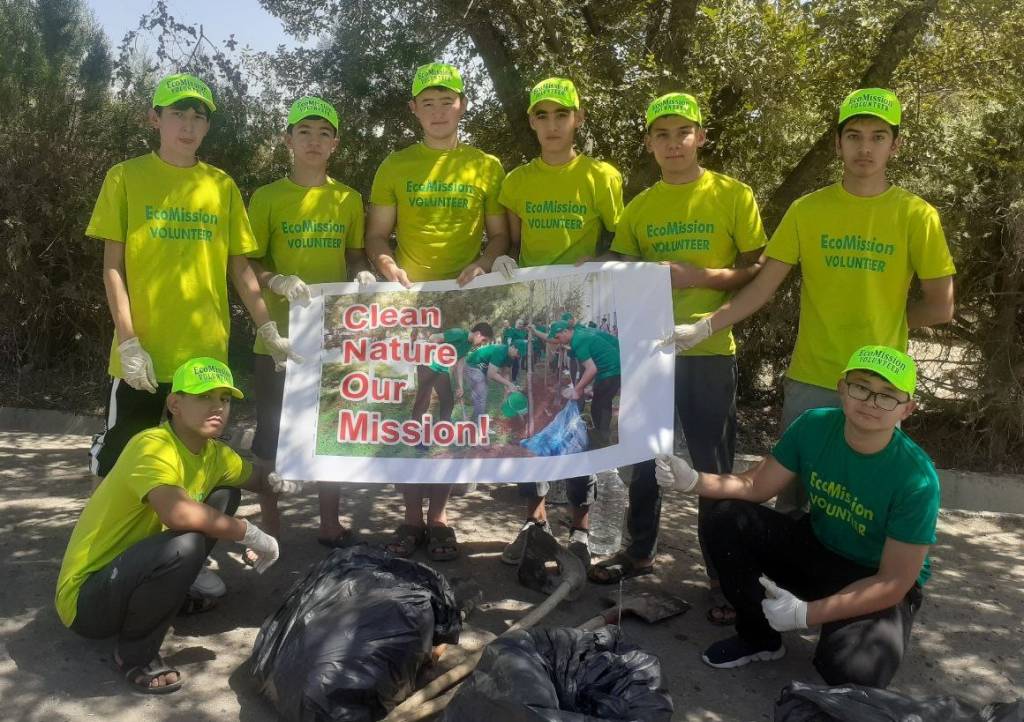
Alongside “Eco Pulse”, J.Musayev is involved in environmental and youth initiatives. He is one of the co-founders of “Blue Zarafshon”, a volunteer movement that organizes environmental awareness activities and cleanup campaigns. In 2026, he also launched “TexnoNova”, a youth technology hackathon in Fergana focused on technological solutions for reducing urban air pollution.
One of the technical challenges in the project has been the reliability of low-cost air-quality sensors. Jaloliddin is currently exploring methods to improve sensor calibration and to use more reliable data in forecasting models.
Utkir Alimov, UzA