Central Asia at a turning point: What lies ahead for regional cooperation?
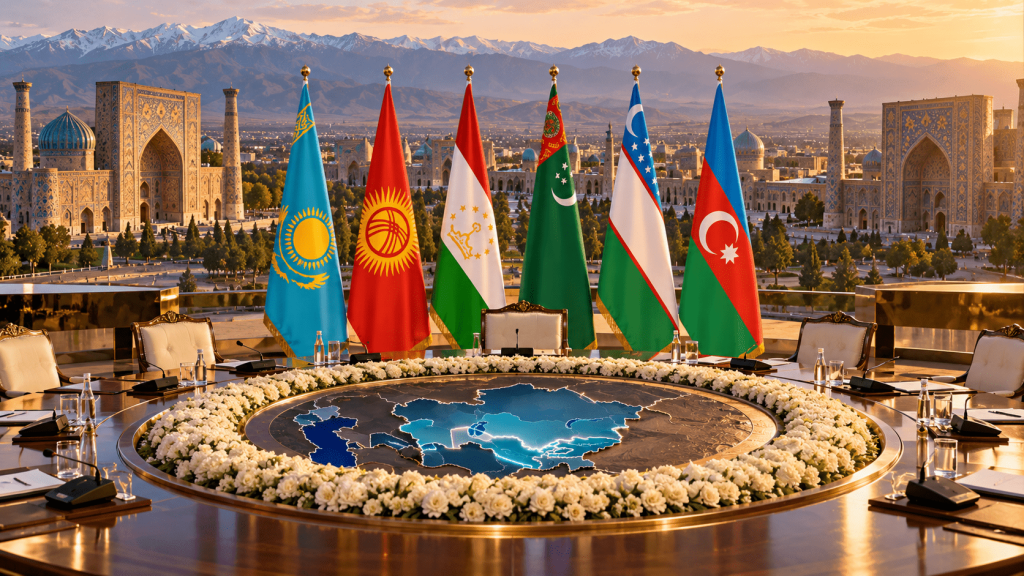
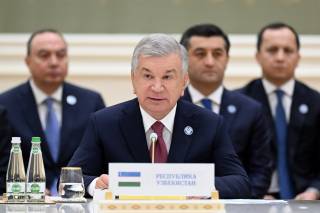
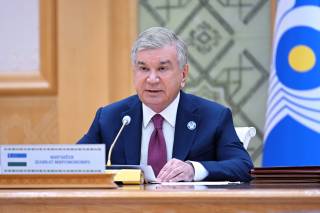
Over the past eight years, the Consultative Meetings of the Heads of State of Central Asia have become the region’s main political forum for discussing regional issues without external mediation. Launched in Astana in 2018, the process entered a new phase at its seventh meeting in Tashkent in November 2025, when Azerbaijan joined the format as a full-fledged participant. The former group of five thus expanded geographically, marking the start of a new regional space connected to the South Caucasus and Europe through the Caspian Sea.
Today, intra-regional trade is growing, important agreements on border issues have been reached, and transport and energy projects are multiplying. However, major challenges remain unresolved: weak institutional mechanisms, the gap between adopting declarations and implementing them, water and energy issues, competition with external powers, and “cooperative competition” among participating states.
We spoke with Professor Sayfiddin Jurayev, Doctor of Political Science, about the importance of these issues for Central Asia’s future, Uzbekistan’s role in the region, and the prospects for the upcoming summit in Turkmenistan.
– Sayfiddin Akhmatovich, the Consultative Meetings of the Heads of State of Central Asia have come a long way. How would you characterize this format as a mechanism for regional cooperation today?
– The results show that the Consultative Meetings have revived political dialogue in Central Asia and established it as a regular mechanism. Seven meetings were held from 2018 to 2025. Most importantly, the format has maintained its momentum despite external shocks, including the pandemic, the Russia – Ukraine conflict, and changes in the situation in Afghanistan.
Initially, the main goal was to rebuild trust. Over time, the agenda broadened to cover legal frameworks, cross-sectoral cooperation, transport, water and energy resources, and the green agenda. Azerbaijan’s participation as a full-fledged member at the 2025 meeting in Tashkent further strengthened the format’s geographical and economic potential.
In my view, the most significant achievement is that, in their engagement with external powers, the countries of the region now act not individually but as a unified entity. To date, dialogue has been established with the United States, China, Russia, the European Union, Japan, India, South Korea, and the Persian Gulf countries within the “Central Asia Plus” framework.
– Even as the format strengthens, do institutional limitations remain?
– Yes, and this is a serious problem. The current format lacks a permanent secretariat, a dedicated budget, and any mechanism to ensure that adopted decisions are implemented in a binding manner. Most documents are based on consensus, with national coordinators responsible for overseeing implementation. As a result, a gap remains between signing declarations and putting them into practice.
This is especially evident in trade and transit, as well as in the technical barriers that remain. Countries aim to expand mutual trade, harmonize transport tariffs, and simplify border-crossing procedures. However, sanitary and phytosanitary controls, border queues, and differences in technical regulations continue to create obstacles for businesses.
At the same time, strengthening the format does not require establishing a supranational structure immediately. Instead, institutionalization should proceed gradually. For example, the country holding the chairmanship could first establish a coordination center and unified monitoring system on a rotating basis, with a permanent secretariat considered later.
– What impact will Azerbaijan’s accession to the format have? Has the term “Central Asian Five” taken on a new meaning?
– Azerbaijan’s accession as a full-fledged participant has transformed the format’s geographic scope. While the former group of five focused primarily on cooperation within Central Asia, new opportunities have now emerged to establish direct links with the South Caucasus and Europe via the Caspian Sea. In this context, the “Trans-Caspian Six” model is being considered as a possible scenario.
This creates significant opportunities in the transport and energy sectors. Projects such as the Middle Corridor and the Caspian – Black Sea – Europe Green Energy Corridor, together with green energy cooperation among Azerbaijan, Kazakhstan, and Uzbekistan, will align the economic interests of all six countries.
– Uzbekistan’s regional policy is defined by “strategic flexibility”. What advantages does this approach offer the country, and what are its limitations?
– Since 2016, Uzbekistan has become significantly more willing to reach agreements with its neighbors. In most cases, Tashkent has taken the initiative to address border demarcation, water and energy challenges, restore transport links, and promote economic cooperation. These steps are better understood not as concessions, but as expressions of strategic flexibility: the policy promotes stability, opens access to markets, and advances long-term interests.
Overall, neighboring countries view this policy favorably. Kazakhstan sees Uzbekistan’s flexibility as a foundation for allied relations. This approach has led to an agreement with Kyrgyzstan on border issues, improved relations with Tajikistan, and cooperation with Turkmenistan on the use of the Amudarya’s waters and transit issues.
– What should we expect from the summit in Turkmenistan, and how will it differ from earlier meetings?
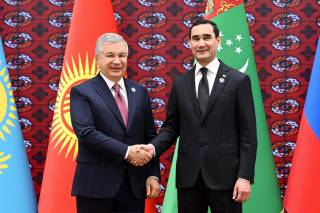
– The eighth Consultative Meeting in Turkmenistan will be the first to include Azerbaijan as a full-fledged member. Accordingly, the main focus will be on giving practical substance to the transition from a group of five to a group of six. The agenda covers energy, transport, the Caspian Sea, water resources, and issues related to the Aral Sea. Turkmenistan is placing particular emphasis on gas routes, the TAPI project, the Trans-Caspian Gas Pipeline, and Caspian infrastructure. For Uzbekistan, transport corridors, the water-energy balance, and issues related to Afghanistan are especially important.
In my view, the key priorities are adopting a joint statement, issuing sector-specific documents on transport and energy, and implementing existing roadmaps. Given Turkmenistan’s policy of neutrality and cautious approach to supranational commitments, a major institutional shift at the summit is unlikely. The most realistic outcome is to consolidate the six-country format and advance practical projects in the Caspian region.
Interviewed by Musulmon Ziyo, UzA