Uzbekistan and Germany: engaged in active educational cooperation
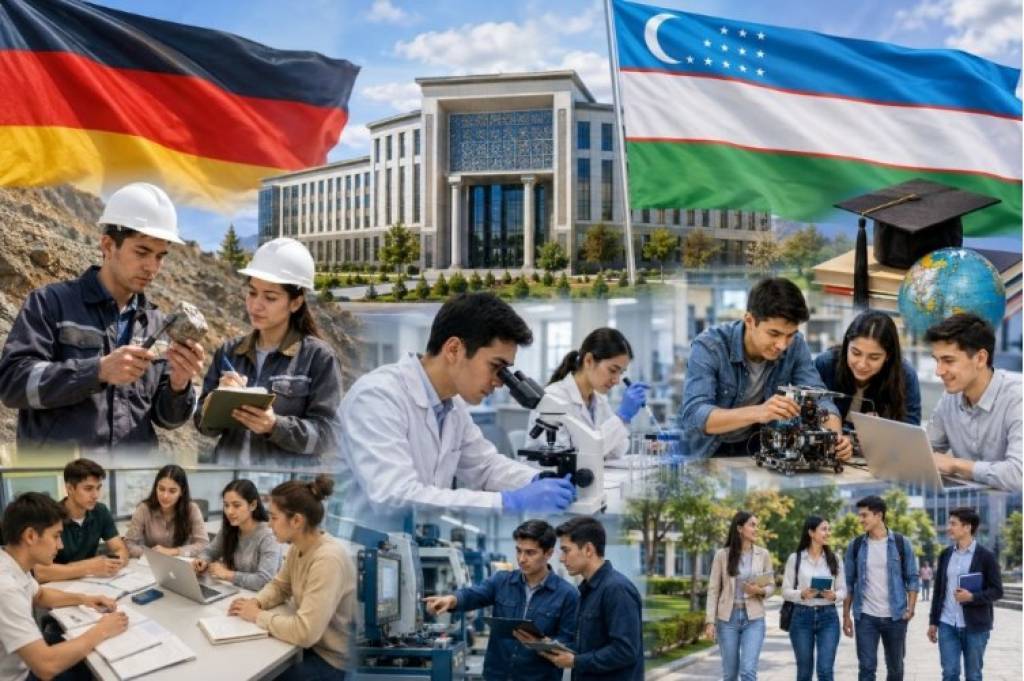
Uzbekistan and Germany’s cooperation in education and science has progressed to a more practical phase. How is this partnership transforming the national system? What new international opportunities are now available for young people?
Throughout the long history of relations between Uzbekistan and Germany, education and science have held strategic significance. Recently, this partnership has advanced to a new level. The opportunities available to young people to gain knowledge and skills aligned with international standards are especially valued within Germany’s academic community. A notable outcome of these efforts is the integration of higher education institutions from both countries.
The establishment of a representative office for universities from Saxony at the University of Geological Sciences, along with organizing specialized vocational and language training courses in the country for young people planning to study in Germany, is helping develop a system for training highly qualified professionals in mining, mechanical engineering, materials science, and geoecology.
With support from the German Academic Exchange Service (DAAD) and the Goethe-Institut in Tashkent, students and young scientists in the country are enhancing their skills at top European universities and engaging in joint research projects. This cooperation emphasizes the importance of understanding Germany’s advanced educational practices and integrating them into Uzbekistan’s national education system.
The renowned Duale Ausbildung system is a key focus area: students spend part of the week learning theoretical concepts at university, while the other days are dedicated to gaining practical skills through hands-on training. This approach helps address unemployment among higher-education graduates. The practice-oriented Fachhochschule model will enable comprehensive laboratory-based training in engineering and information technology. Incorporating the German universities’ emphasis on integrating science and business, such as conducting research commissioned by major industrial companies, and upholding academic freedom, which allows students to select their classes and majors independently, will enhance Uzbekistan’s education system and foster the development of independent, high-potential specialists.
Fardona Yakhshiboyeva, UzA