The Uzbek Model of Rehabilitation: Seven Years of “Mehr” Humanitarian Operations
In the modern history of New Uzbekistan, protecting the rights, freedoms, and legitimate interests of its citizens – wherever they may be in the world – has become not merely a constitutional obligation but the highest expression of the state’s humanity and responsibility. One of the most challenging yet strategically significant tests of this commitment has been the repatriation of compatriots from conflict zones in Syria, Iraq, and Afghanistan.
Uzbekistan was among the first countries in the world to shift from a policy of “estrangement” to one of “return and compassion”, thereby developing a distinctive rehabilitation model.
The first such humanitarian operation was launched exactly seven years ago – on May 30, 2019 – at the personal direction of President Shavkat Mirziyoyev. During that mission, 156 Uzbek nationals – predominantly women and children – were brought home from war-ravaged Syria. It was a defining moment: for the first time, the state openly declared its readiness to welcome back citizens who had gone astray.
That operation marked the start of a series of missions conducted under the collective name “Mehr” (meaning compassion in Uzbek). The core philosophy behind President Mirziyoyev’s initiative is that Uzbek citizens who found themselves in conflict zones due to misguided choices retain the right to state protection and the opportunity for a new life.
Each mission was unique in its logistics, risk profile, and the circumstances of those being brought home. The second operation, Mehr-2, carried out in October 2019, was notable for the evacuation of 64 children from Baghdad, Iraq – children whose mothers remained imprisoned abroad, and for whom Uzbekistan assumed full guardianship.
In December 2020, despite sweeping restrictions due to the global pandemic, Mehr-3 rescued 98 women and children from the Al-Hol and Roj camps in Syria, where they had been living in dire sanitary conditions. Many of the children had shrapnel wounds and serious chronic illnesses. The operation was conducted with technical support from the United States and international organizations.
Mehr-4, carried out in February 2021, focused on Afghanistan, securing the return of 24 citizens caught in the crossfire of that country's protracted war.
The final stage, Mehr-5, was completed in April 2021, bringing home 92 individuals from Syria – 24 women and 68 children, including 7 who were full orphans. This operation also refined a rapid documentation protocol: birth certificates were issued to children directly at the airport, ensuring they received immediate legal status upon arrival.
In total, the Mehr operations have repatriated more than 530 individuals, about 75% of whom are children. The guiding principle throughout has been unequivocal: children cannot be held responsible for their parents’ choices.
Repatriation is far more than a logistical exercise – it is the complex process of transforming yesterday’s outcasts into full members of society. The Uzbek Model rests on five pillars:
Legal Restoration. 100% of repatriates have received official documentation. Every child born in a conflict zone has received a Republic of Uzbekistan birth certificate, granting access to healthcare and education.
Economic Empowerment. The state has ensured that no one faces hardship alone. Through subsidized credit programs and vocational training, women have found employment and established small businesses in their local communities, achieving economic independence. Repatriates also receive assistance to recover housing rights lost during their absence or are provided with subsidized rental housing.
Inclusive Education. Repatriated children attend mainstream schools – not segregated facilities – and participate in academic competitions and sporting events alongside their peers. To date, approximately 10 repatriates, including women, are enrolled in higher education institutions, and 9 children have won or placed in national and regional academic olympiads.
Spiritual Guidance. Representatives of the Committee on Religious Affairs, together with respected theologians and imams of the Muslim Board of Uzbekistan, conduct preventive counseling sessions, introducing repatriates to the tenets of traditional Hanafi Islam as a counter-narrative to extremist interpretations. More than 90% of returnees have successfully adapted and now lead secular lives.
Community Engagement Through the Mahalla. Neighbors and community activists within the mahalla (traditional neighborhood institution) play an essential role in helping families reintegrate, preventing stigmatization, and fostering genuine support. Each family is assigned an experienced mahalla mentor who assists with everyday challenges and monitors the family's well-being.
The international community widely recognizes the outcomes of Uzbekistan’s repatriation program as one of the most successful humanitarian models in the world. The United Nations has officially recommended the Uzbek Model as a roadmap for other governments. Former UN Under-Secretary-General Vladimir Voronkov has repeatedly highlighted it as an example of how a state can effectively balance justice and compassion.
Rehabilitation and reintegration initiatives have also advanced at the regional level. At the high-level international conference “Regional Cooperation of Central Asian Countries within the Framework of the Joint Plan of Action for the Implementation of the UN Global Counter-Terrorism Strategy”, held in Tashkent on March 3-4, 2022, President Mirziyoyev proposed establishing, under the auspices of the UN Counter-Terrorism Office, a Regional Expert Council comprising leading specialists from Central Asian countries.
The Council was launched in May 2024 and reflects broad support for the collaborative implementation of comprehensive rehabilitation and reintegration programs for individuals returning from conflict zones. It comprises more than 40 highly qualified experts from across Central Asia, including representatives of law enforcement and judicial bodies, as well as psychologists, theologians, medical professionals, and social workers.
The project has gained further credibility through the participation of prominent international organizations, including the Organization for Security and Co-operation in Europe (OSCE), the Global Community Engagement and Resilience Fund (GCERF), and the International Institute for Justice and the Rule of Law (IIJ).
The Council’s work has been presented at key UN platforms: in Geneva and New York on November 11 and December 10, 2024, respectively, and in Vienna on May 21, 2025.
Uzbekistan has demonstrated to the international community that repatriation is not a security risk – it is an instrument for strengthening security. International organizations are investing in Uzbekistan today not to remedy a problem but to scale its success to other regions of the world.
Work with repatriates in Uzbekistan has now moved from an emergency rescue phase to one of systemic integration. The country operates a well-functioning mechanism that combines state support with community oversight. The state ensures the full legal “erasure” of repatriates’ past so it does not obstruct their future. Where the early focus was on physical health, the emphasis has now shifted to mental well-being and civic identity. A repatriate in Uzbekistan in 2026 is a taxpayer, an active participant in mahalla life, and a parent whose children are building their futures in the country.
In contrast to those who chose to close their borders to their citizens, Uzbekistan’s leadership chose the path of responsibility. The country’s experience affirms that when a state extends a hand, society grows stronger – and security becomes unshakable.
Uzbekistan’s motto in this sphere is clear: “Children cannot be terrorists” – and every Uzbek citizen will always be protected by their homeland.
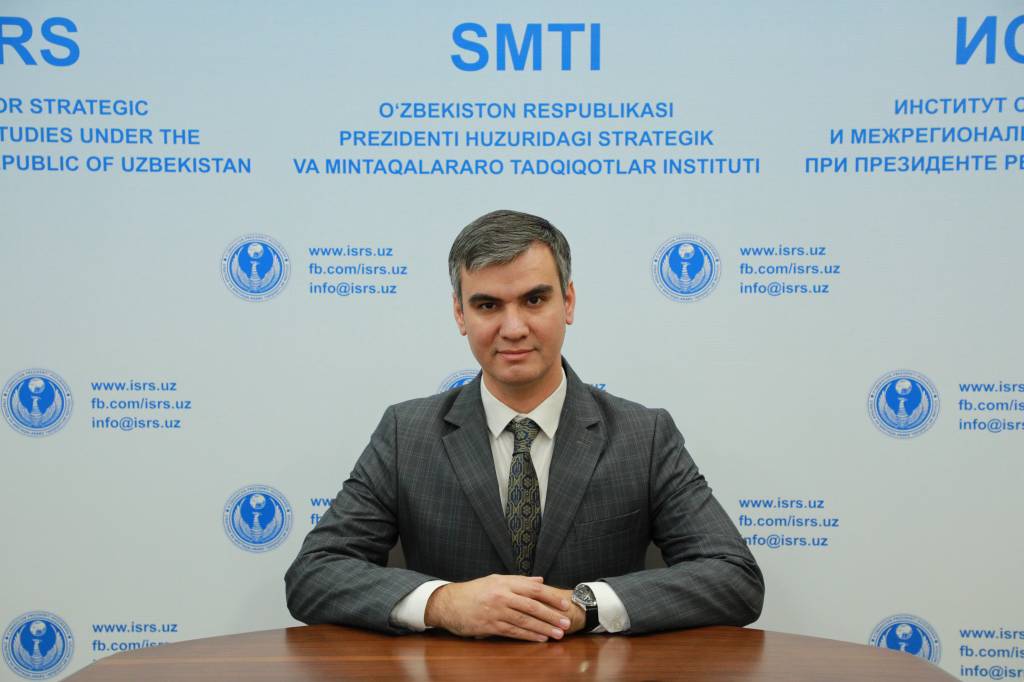
Timur Akhmedov,
Head of Department,
Institute for Strategic and Regional Studies under the President of the Republic of Uzbekistan