SCO Bishkek Summit: What decisions does Uzbekistan propose?
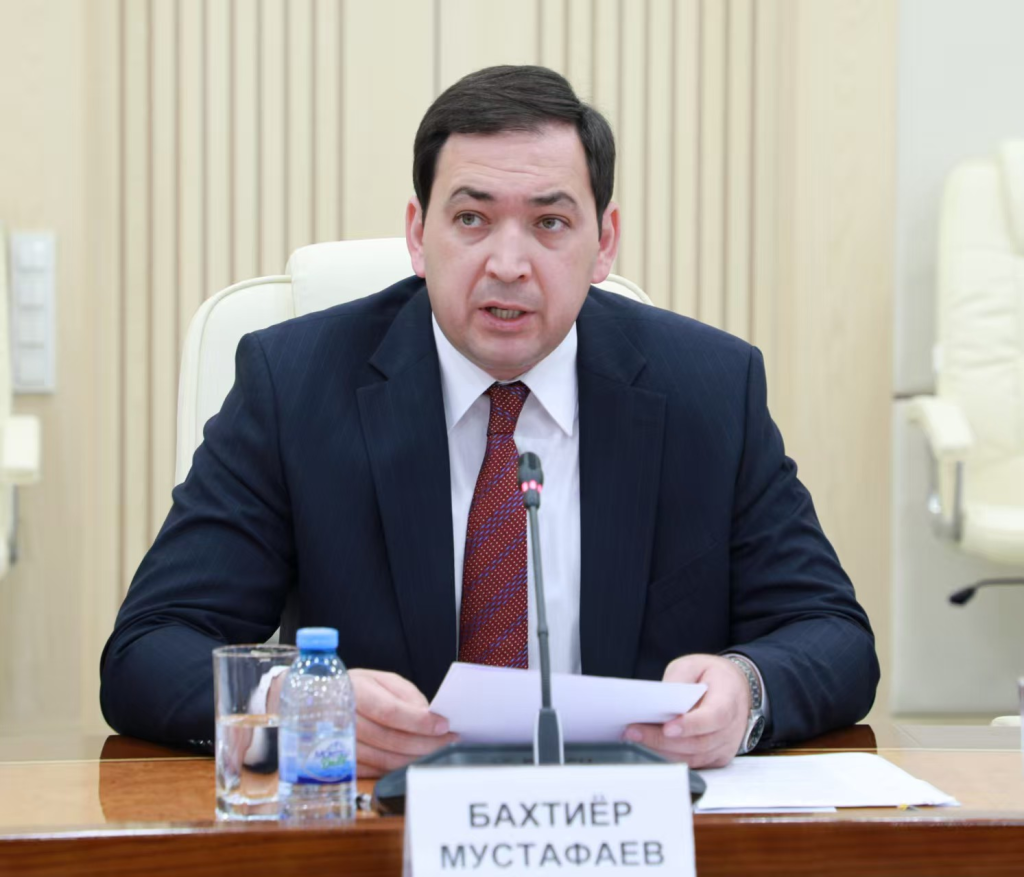
Our editorial team approached Bakhtiyor Mustafayev, Deputy Director of the Institute for Strategic and Regional Studies under the President of the Republic of Uzbekistan, to request a comment on the initiatives proposed by President Shavkat Mirziyoyev at the SCO Summit in Bishkek.
– The outcomes of the SCO Summit in Bishkek, attended by President Shavkat Mirziyoyev, are now widely discussed in the international media and among experts. In this regard, we would like to ask: what role does the SCO play in Uzbekistan’s foreign policy, and why does Tashkent place particular importance on this platform?
– For Uzbekistan, the SCO is not a situational diplomatic format but a key pillar of its foreign policy. In 2001, Uzbekistan became one of the organization’s founding members. The Executive Committee of the Regional Anti-Terrorist Structure is based in Uzbekistan, and Central Asia is officially recognized as the SCO’s geographical and strategic core.
Through this platform, Tashkent pursues three closely interconnected objectives: strengthening regional security, expanding the continent’s economic connectivity, and pursuing an open, non-aligned, multi-vector foreign policy.
Uzbekistan’s commitment is reflected not only in political statements, but also in the consistent promotion of practical initiatives. In 2018, at the President’s initiative, SCO leaders adopted a Joint Appeal to Youth. In Samarkand in 2022, the Uzbek side raised issues of transport connectivity, food security and the reconstruction of Afghanistan. In 2023, Uzbekistan proposed the Code of Good-Neighborliness, Trust and Transboundary Partnership. In 2024-2025, it put forward initiatives to strengthen SCO unity and proposed the concept of a Common Transport Space.
The current proposals continue this line: Tashkent is consistently translating the common principles of the “Shanghai Spirit” into practical mechanisms for cooperation.
– You noted that Uzbekistan does not limit itself to political statements and regularly advances practical initiatives within the SCO. The Bishkek Summit was no exception: the President proposed developing a vision for “SCO 2040”. Why is such a long-term document needed when the Organization already has a Development Strategy through 2035?
– The Strategy through 2035 primarily addresses what the Organization should accomplish over the medium term. The “SCO 2040: A Space for Common Development” vision is intended to address a more fundamental question: what should the SCO become after this strategy has been implemented? The aim is to move from a set of sector-specific programs toward a common model of an interconnected space, with the movement of investment, technology and knowledge, joint production, and direct links between regions and businesses.
This long-term horizon is justified by the Organization’s scale and diversity. The SCO countries account for around 42% of the world’s population and approximately 36% of global GDP in purchasing power parity terms. At the same time, their mutual trade, according to various estimates, has only recently approached $1 trillion. Comparing these figures highlights the main gap: the SCO’s political and demographic weight still far exceeds the depth of its internal economic cooperation.
– One of the most practical initiatives the President of Uzbekistan presented at the Bishkek Summit was the creation of an SCO Industrial Cooperation Map. How can this mechanism turn the Organization’s vast geographical and economic scale into real cross-border production chains?
– The main challenge today is less a lack of joint projects than fragmented information and differing regulatory conditions. In Uzbekistan alone, more than 1,500 joint projects with SCO countries are currently being implemented. At the same time, businesses still find it difficult to obtain, in one place, systematic information on available industrial sites, raw material resources, potential suppliers, support measures, logistics opportunities and markets across all ten member states. In this context, the SCO Industrial Cooperation Map could serve as a single digital tool, making it easier to identify partners and reducing transaction costs in preparing and coordinating joint projects.
Its practical impact will depend on the platform’s content. If it includes a verifiable registry of special economic zones, available production capacities, localization requirements, transport tariffs and investment incentives, businesses will be able to build cross-border value chains rather than remain limited to trading raw materials and finished products. This is particularly important for small and medium-sized enterprises, which do not have the resources of large corporations to study ten different jurisdictions independently.
– Continuing the economic agenda of the Bishkek Summit, the President of Uzbekistan called for moving from discussions of general principles to the practical launch of the SCO Development Bank. Why does the Organization need its own financial institution, and how can it avoid becoming another bureaucratic structure?
– The SCO has many transport, energy, and digital initiatives, but it lacks a mechanism to turn them into a pipeline of well-prepared, financeable projects. The Interbank Consortium coordinates banks, but it does not replace a development institution with common criteria for project appraisal, co-financing and monitoring. A development bank could fill this institutional gap, particularly for multinational projects whose benefits and risks are shared among several countries.
Uzbekistan’s proposal is significant because it links the launch of the bank not to creating an administrative structure, but to forming a portfolio of mature projects in transport, energy, industry, and digital infrastructure. This is the right sequence: first, identify the projects, their costs, expected impact and sources of repayment; then determine the bank’s capital and institutional structure. To ensure reliability, the bank would need a transparent procurement policy, independent project assessment, debt sustainability analysis, and the ability to provide financing in different currencies.
– A separate part of the President of Uzbekistan’s address in Bishkek focused on artificial intelligence. Why did Tashkent propose creating an Open Multilingual SCO Data Corpus rather than a single-language model, and what practical value could it offer the countries of the Organization?
– Modern artificial intelligence depends not only on computing power, but also on the availability of high-quality data. Most of the languages spoken across the SCO space are significantly underrepresented in global digital datasets compared with English and Chinese. As a result, AI systems have a weaker understanding of local legal, scientific and cultural terminology, while governments and businesses are often forced to rely on products trained on foreign linguistic and contextual data.
An open data corpus could become shared basic infrastructure: standardized texts, speech and translations in the languages of the member states would enable the development of machine translation, education, healthcare, public services and e-commerce applications. This would be a more realistic first step than creating a single SCO model. Each country could develop its own solutions using a compatible shared dataset while ensuring compliance with relevant legal requirements.
Key conditions would include protecting personal data, respecting copyright, ensuring quality control, and representing the languages of all member states equally.
– The Bishkek Summit paid considerable attention to transport connectivity. The President of Uzbekistan proposed establishing a Council for the Integration of Railway Systems of the SCO Member States. What practical problems should this Council address, and what would its creation mean for Uzbekistan and Eurasian transit more broadly?
– New railway lines alone do not create a seamless corridor. Differences remain at the borders in technical standards, track gauges, tariffs, electronic document formats, train schedules and control procedures. The Council is intended to serve as a permanent mechanism for coordinating these “connections” between different systems precisely. For Uzbekistan, as a doubly landlocked country, the predictability of transit across several states is no less important than the route length itself.
Its practical agenda could include through-tariffs and coordinated schedules, mutual recognition of electronic waybills, synchronized border-crossing operations, digital cargo tracking, and coordinated investment in bottlenecks. This would help connect the China – Kyrgyzstan – Uzbekistan railway with routes through the Caspian Sea, the North – South Corridor, and prospective routes toward South Asia.
– The situation in Afghanistan was also a key part of the Bishkek Summit agenda. The President of Uzbekistan called for the resumption of regular SCO dialogue with Afghanistan. Why is such dialogue particularly important now, and what role could a restored SCO - Afghanistan Contact Group play?
– The logic behind the proposal is pragmatic: the absence of dialogue does not eliminate threats; it reduces neighboring countries’ ability to manage them. Afghanistan is directly adjacent to the SCO space, and developments in the country have a direct impact on risks related to terrorism, drug trafficking, illicit arms trade, migration and water issues. Isolating the country could only deepen the economic crisis, expand the social base for radicalization and strengthen the shadow economy. At the same time, regular contacts do not imply automatic recognition of the current authorities. They provide a tool for setting conditions, monitoring their implementation and addressing specific security issues.
In the long term, the best way to strengthen security around Afghanistan is to create legitimate sources of income, jobs and sustainable economic interdependence with neighboring countries within Afghanistan itself.
In 2025, Afghanistan’s foreign trade approached $13.9 billion. Due to disruptions along the Pakistani route, part of the trade flow has already been redirected through Iran, Uzbekistan, Turkmenistan, and Tajikistan. If these links are channeled into legitimate trade, energy, transport and infrastructure projects, greater economic engagement can help reduce the space for extremism and smuggling.
– To conclude our discussion of the initiatives proposed at the Bishkek Summit, we should also note the President of Uzbekistan’s proposal for a program to preserve traditional arts and intangible cultural heritage for 2028-2030. Why does the SCO need a separate program in this area, and what practical results could it deliver?
– The SCO brings together states with different political systems and interests, so its long-term cohesion cannot rely solely on intergovernmental agreements. Traditional arts, crafts, music, oral traditions, and cultural festivals create horizontal ties between societies and help shape a shared cultural space while preserving national identities and differences.
In practical terms, the program could include joint registries and digital archives, restoration and research projects, festivals, exchange programs for traditional artisans, youth training, and cultural tourism routes. For Uzbekistan, this would serve as both an instrument of cultural diplomacy and a means of supporting regional economies: traditional crafts contribute to employment, small businesses, and cultural tourism.
– During his visit to Bishkek, the President of Uzbekistan also took part in the “SCO Plus” meeting, which focused on the United Nations’ role in shaping a fairer multipolar world order. How could the model of cooperation proposed by Uzbekistan between the UN, regional organizations and individual states improve the effectiveness of international cooperation without creating new dividing lines? And what practical role could the “SCO Plus” format play in this process?
– The central message of the address is that the emergence of a multipolar world should not weaken universal international institutions or create competing geopolitical blocs. The UN should retain its central coordinating role and uphold common principles of international cooperation, while regional organizations should complement its efforts by adapting global decisions to the specific conditions, capacities and needs of individual regions. Such an approach would combine the UN’s universal legitimacy with the practical capabilities of regional organizations, strengthening the effectiveness and manageability of the international system.
In this context, the “SCO Plus” format is proposed as a bridge between states, regional organizations, and global institutions. It could serve as a platform for coordinating various initiatives in areas such as sustainable development, advanced technologies, climate adaptation, education, healthcare and youth empowerment. The proposed Network of Regional Organizations would help systematize such cooperation, facilitate the exchange of experience and jointly promote solutions within the UN framework. An open bank of interregional projects and technologies, in turn, would help translate political agreements into concrete programs that contribute to achieving the Sustainable Development Goals.
Uzbekistan links the effectiveness of international cooperation to tangible results for states, businesses and citizens: greater access to markets, the development of cross-border corridors, increased investment and the wider use of modern technologies. The proposal to transform “SCO Invest” into a permanent platform aims to address this objective.
At the same time, establishing the “SCO Plus” Forum of Cultures and Civilizations in Khiva is intended to give cooperation a broader societal and humanitarian foundation. In this way, Tashkent is proposing a model of open multipolarity in which states’ strategic autonomy is strengthened not through isolation, but through greater connectivity, complementary initiatives, and expanded points of contact between countries and regions.
UzA