President of Uzbekistan calls for intensified regional cooperation on critical minerals
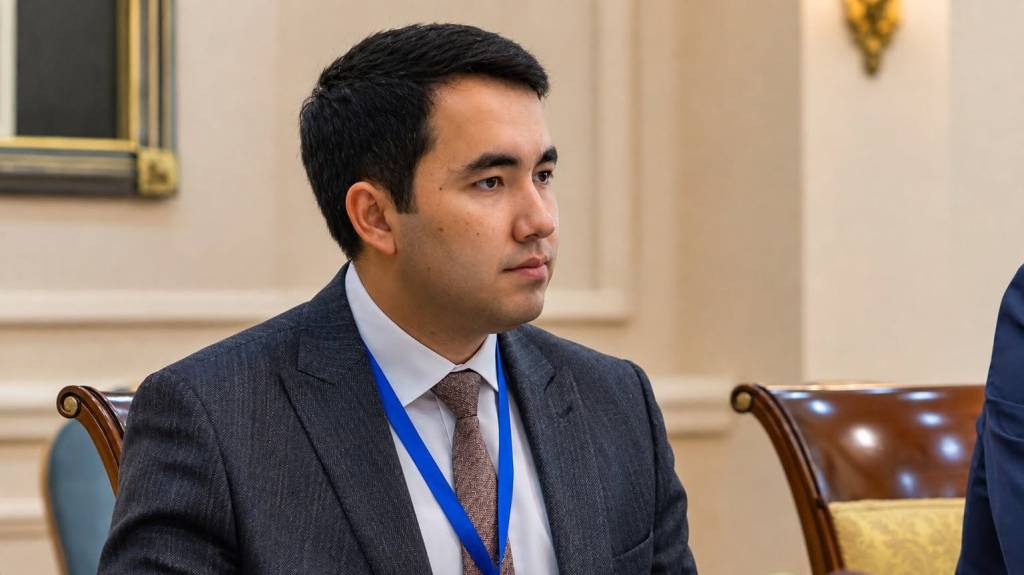
On October 8, the Eighth Consultative Meeting of the Heads of State of Central Asia and Azerbaijan was held in Turkmenistan’s Avaza National Tourist Zone. For the first time, Azerbaijan participated in this format as a full-fledged participant.
In his address, the President of Uzbekistan Shavkat Mirziyoyev outlined practical areas for further regional cooperation. Particular attention was given to critical minerals, whose importance, according to the Head of State, is “growing rapidly”.
Today, these resources are becoming strategic assets of the new economy. Battery, electric vehicle, microelectronics, and solar and wind energy equipment production is directly linked to the extraction and processing of critical minerals.
As digitalization, electrification, and the energy transition accelerate, global demand for these minerals continues to rise, underscoring the need for reliable, diversified supply chains.
Central Asia has significant potential to extract and process critical minerals. Its strategic importance depends not only on the size of its reserves but also on its capacity to develop advanced processing technologies and produce high-value-added goods.
In this regard, the key task is to ensure that the region’s resource potential serves, to the greatest extent possible, as a foundation for joint production and technological value chains. In the broader context of the President of Uzbekistan’s address, this aligns with the formula “six economies – one product”: cooperation could encompass the entire cycle, from geological exploration and extraction to advanced processing and finished-goods production.
In this context, the Head of State called for “joint action” and proposed accelerating the establishment of the Regional Alliance on Critical Minerals, an initiative he had previously put forward.
As the Alliance’s first practical step, the President proposed developing a unified digital map of Central Asia’s critical mineral reserves. The map could serve as a common information platform to assess resource potential, enhance investment transparency, and prepare joint projects in geological exploration, processing, and high-tech manufacturing.
As Shavkat Mirziyoyev noted, this approach would send a clear signal to international investors that the region’s countries are ready to jointly develop this sector. It would allow the region to be viewed not merely as a collection of individual mineral deposits, but as an area for complementary investment and production projects.
The initiative put forward in Avaza continues Uzbekistan’s consistent policy in this area. In June 2026, the national level set a task to expand the critical minerals resource base and establish the production of high-value-added goods. In September, at the first Central Asia – Republic of Korea Summit, the President proposed establishing a Regional Investment Alliance on Critical Minerals covering the entire production chain.
Thus, the initiatives put forward by the President of Uzbekistan aim to facilitate Central Asia’s transition from raw material exports to the joint development of processing industries and high-tech manufacturing.
At the same time, implementing joint projects within the Alliance will help enhance the investment attractiveness of our region and strengthen its position in emerging global critical mineral supply chains.
Azamat Sulimanov,
Department Head,
Institute for Strategic and Regional Studies under the President of the Republic of Uzbekistan