My native language resonates in Japan
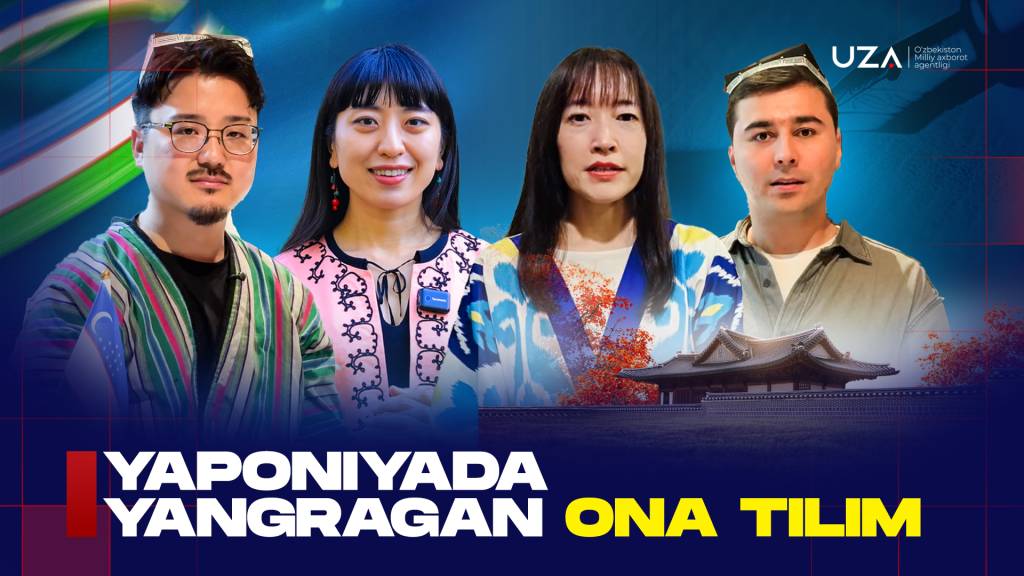
This article shares the stories of young people studying Uzbek in the Land of the Rising Sun, art enthusiasts promoting our national culture, and dedicated teachers passing our native language on to the next generation.
Sometimes, we need to be far from home to appreciate the value of our native language truly. Hearing familiar words we usually take for granted, spoken thousands of kilometers away, in a foreign land, makes our hearts beat differently. A heartfelt word, a familiar intonation, or even a simple sentence in our native language can take us back to childhood and to a homeland forever bound to a mother’s love.
Today, as an Uzbek student living and studying in Japan, I often feel this way. Being far from home makes you realize even more deeply that your homeland is more than a place on the map. It is your family and loved ones, childhood memories, a prayer spoken in your native language, and values rooted deep in your heart.
That’s why hearing someone speak Uzbek in Japan feels so special. It’s even more joyful to see people of other nationalities learn our language with affection, take an interest in our traditional music and songs, perform our dances, and work to promote our culture.
Ahead of Uzbek Language Day on October 21, I met people like this in Tokyo. Listening to them, I found myself thinking that perhaps you don’t have to be born in a country to love its language. The path to another nation’s language may begin with music, art, friendship, or travel. Over time, that interest can grow into a profound spiritual need that lasts a lifetime.
Truth emerges through comparison
Pursuing a master’s degree in Japan through a JDS scholarship would allow me not only to advance my education but also to gain valuable personal and spiritual experiences. I hope to learn more about Japanese society, deepen my understanding of the relationship between our countries, and ultimately help strengthen this cooperation.
This aspiration encourages me to talk with more people and compare different perspectives and approaches.
What is especially encouraging is how much Japanese and Uzbek people share. Admittedly, our histories, ways of life, and societies differ. Still, shared values, including respect for elders, devotion to family, hospitality, loyalty to national traditions, and preserving our cultural heritage, bring our two peoples closer together.
Many people in Japan speak fondly of Uzbekistan and are eager to learn more about our country. Some have visited, while others study Uzbek to understand our people’s worldview and culture better.
These are the people whose stories I’d like to share.
Learning Uzbek opens the door to Uzbekistan
A Japanese man who speaks Uzbek fluently caught my attention. He hasn’t stopped at learning a few basic words. He’s eager to discover our people, traditions, and way of life through the language.
Odiljon’s plans for our country are just as heartfelt. He hopes to live in Uzbekistan, plans to marry an Uzbek woman one day, and closely follows the President of Uzbekistan’s activities. One of his greatest dreams is to meet the Head of State.
Behind this wish, which may seem at first like a purely personal dream, lies a deeper meaning: when someone develops a genuine interest in a country, they naturally want to learn more about its language, people, and way of life, and begin imagining their own life and future there. Learning the language becomes a bridge to those aspirations.
Odiljon’s story reminded me of another important truth: sincere conversations, friendly relations, and language learning can sometimes do more to help people understand Uzbekistan than major events or official meetings.
Nasrin showcases Uzbekistan through dance
Art offers another elegant way to express interest in Uzbek culture. The leader of Nasrin, a Japan-based dance group devoted to Uzbek and Persian culture, has introduced Japanese audiences to our national culture through performances of traditional Uzbek dances.
Her congratulatory message for Uzbek Language Day also reflects her deep respect for our nation:
“Uzbek is a beautiful language that reflects the country’s rich history and culture, as well as the spirit of its unique people.
I’m delighted to promote Uzbek culture in Japan. I deeply respect Uzbekistan and hope its language and culture continue to thrive!”
These words show the unique power of art. Dance, in particular, needs no translation: through movement, music, and traditional costumes, it conveys a nation’s history and spirit. Still, knowing the language and understanding a people’s values and traditions are equally important for developing a deeper appreciation of their culture.
Artists like Nasrin help strengthen friendship between nations by promoting Uzbek culture in Japan. Their efforts show that cultural ties grow not only through official visits but also through performances, music, dance, and everyday communication.
Mashu Komazaki: a love sparked by the sound of the dutar
Mashu Komazaki’s dedication is equally noteworthy: while studying our language, Mashu has also developed a deep appreciation for Uzbek music. This interest in our culture is closely tied to art. The melodies of our traditional music and the distinctive sound of the dutar have drawn Mashu closer to the spiritual world of our people. Gradually, an interest in music has grown into a desire to learn Uzbek, understand the meaning of the songs, and explore the rich historical and cultural heritage behind them.
Today, Mashu Komazaki is a second-year master’s student specializing in dutar performance at the Institute of Uzbek National Musical Art named after Yunus Rajabi. In 2024, Mashu Komazaki placed third at the Sharq Taronalari International Music Festival.
This achievement shows that an interest in Uzbek music is more than a passing enthusiasm. It reflects consistent effort, serious study, and creative exploration.
Music also opens the door to learning a language. To understand song lyrics, grasp the meaning of melodies, and appreciate the national character of musical performances, one naturally turns to language. In this way, the sound of the dutar brings a young Japanese person closer to Uzbek, while the language itself opens the way to a deeper understanding of our people’s history and culture.
In Mashu Komazaki, I see a living example of cultural diplomacy: through art, one person has found a way into another nation’s heart. Now, through musical performances, creative activities, and personal interactions, Mashu shares this knowledge and experience with others.
Committed language teachers
Another group in Japan is made up of teachers who devote themselves to teaching our language, introducing it to people from other countries, and inspiring learners to stay interested over time.
Speaking with Uzbek teachers who have lived in the Land of the Rising Sun for nearly a decade and promoted Uzbek language and culture helped me appreciate the immense patience and dedication their work requires. By teaching people of different ages our language and introducing them to our country’s history and traditions, these educators have helped hundreds of foreigners become familiar with Uzbek language and culture.
Learning a language involves more than memorizing vocabulary and mastering grammar. Teachers also help students understand a particular way of life. Expressions of greeting, respect for elders, hospitality, and appreciation for family and friendship offer a window into another nation’s cultural world.
Teaching a foreign language abroad is no easy task. Students may have different motivations: some plan to travel, others pursue academic research, and still others are interested in music or literature. A teacher must turn each student’s initial curiosity into a lasting commitment to learning.
Ultimately, language teachers help their students become living bridges between nations, fostering trust and mutual understanding.
Ultimately, meeting people who dedicate their time and energy to teaching or learning our language abroad stirs a profound mix of homesickness, pride, and gratitude...
Education, science, economic cooperation, and official dialogue play an invaluable role in strengthening ties between Uzbekistan and Japan. Sincere personal connections also bring the two nations closer. Young Japanese people learning Uzbek, musicians inspired by our national music, performers showcasing our traditional dances, and teachers sharing our language all demonstrate the strength of this friendship in everyday life.
Uzbek Language Day is more than a celebration of our language’s beauty and richness. It also reminds us of our lasting responsibility to preserve our native language, pass it on to future generations, and promote it worldwide.
Today, seeing people in Tokyo speak Uzbek, discovering our culture through the sound of the two-stringed dutar, performing our traditional dances, and teaching our language has deepened a feeling within me: the sound of our native language transcends borders, brings people closer, opens the door to new friendships, and inspires warm feelings toward our homeland, even in distant lands.
The value of our native language is evident not only in how deeply we cherish it, but also in the place it holds in the hearts of those eager to learn Uzbek.
Wishing everyone a happy Uzbek Language Day once again!
Behruz Khudoyberdiyev, Mirhabib Sayfullayev, UzA
Tokyo, Japan