Italy hosts a discussion on Central Asia’s evolving role in the shifting world order
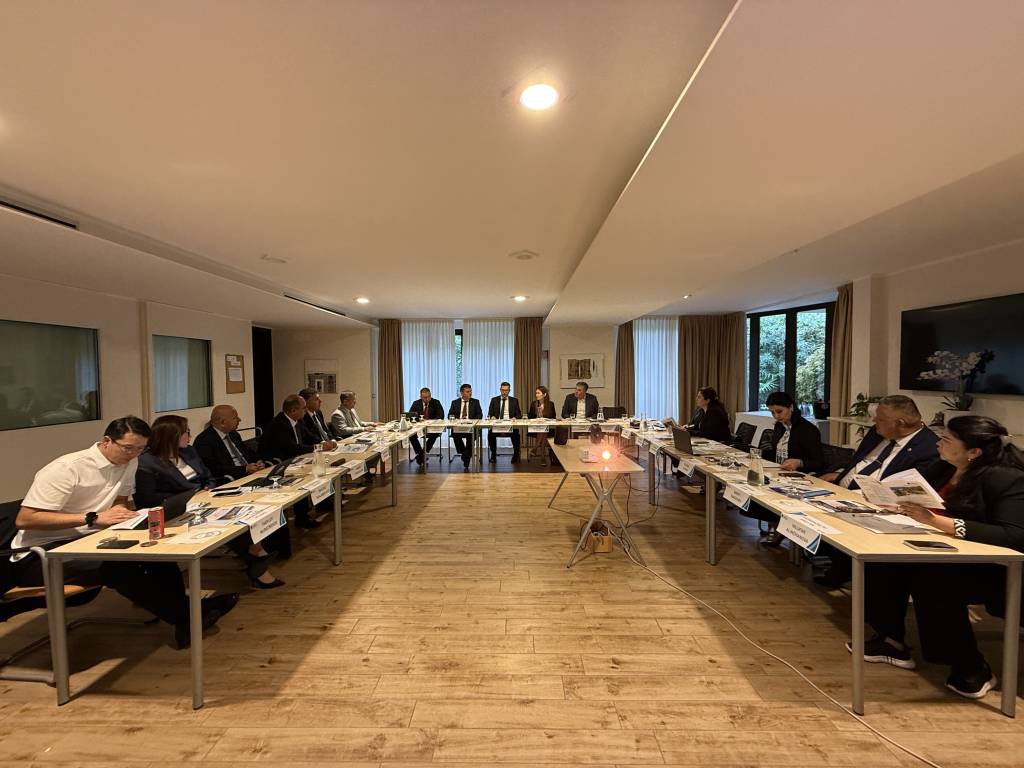
From September 17 to 19, the Italian town of Cadenabbia is hosting the international expert meeting “Central Asia amid global shifts: its own strategies, regional security and new forms of cooperation” at the Konrad Adenauer Foundation’s International Conference Centre for Politics, Economics and the Arts.
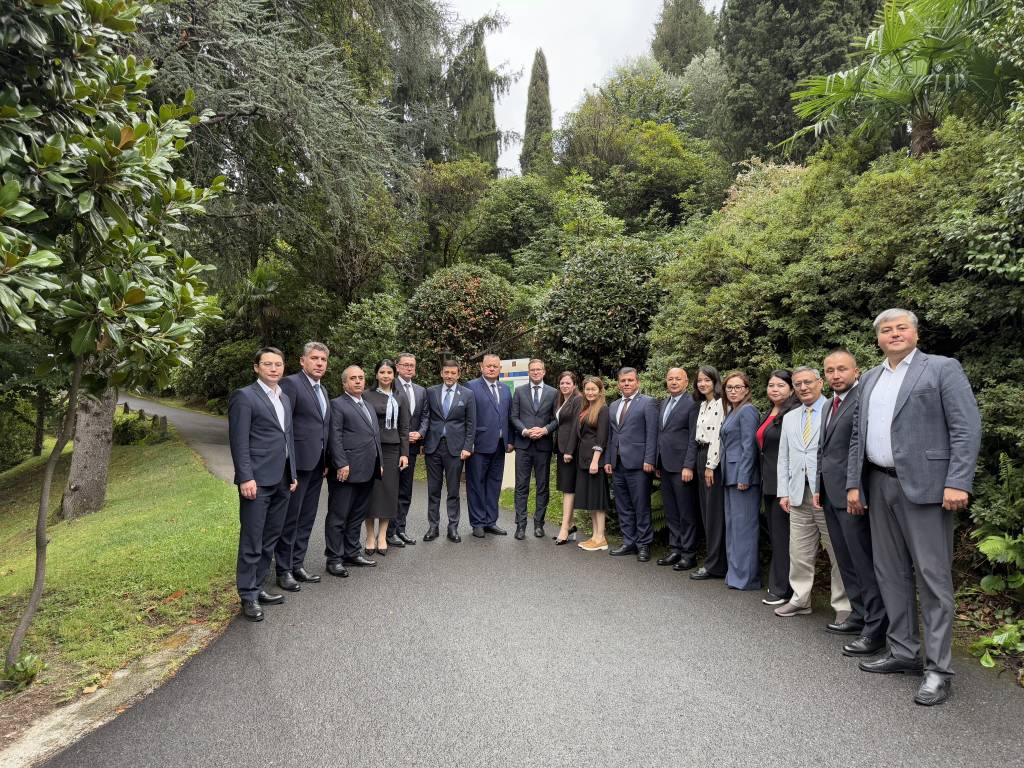
The meeting brings together delegations from Uzbekistan, Kyrgyzstan and Tajikistan, comprising representatives of parliaments, foreign policy institutions, expert communities and the media.
Discussions focus on the transformation of the international order and Central Asia’s growing role. Participants noted that stronger mutual trust and good-neighborly relations, along with expanding trade and greater transport, water and energy connectivity, are contributing to the emergence of an integrated area of shared development and enhancing the region’s agency, resilience and strategic autonomy.
Delivering a presentation titled “Central Asia as an emerging hub of Eurasian connectivity”, Akramjon Nematov, First Deputy Director of the Institute for Strategic and Regional Studies under the President of the Republic of Uzbekistan (ISRS), outlined a vision for the region’s new geo-economic role amid the restructuring of global value chains.
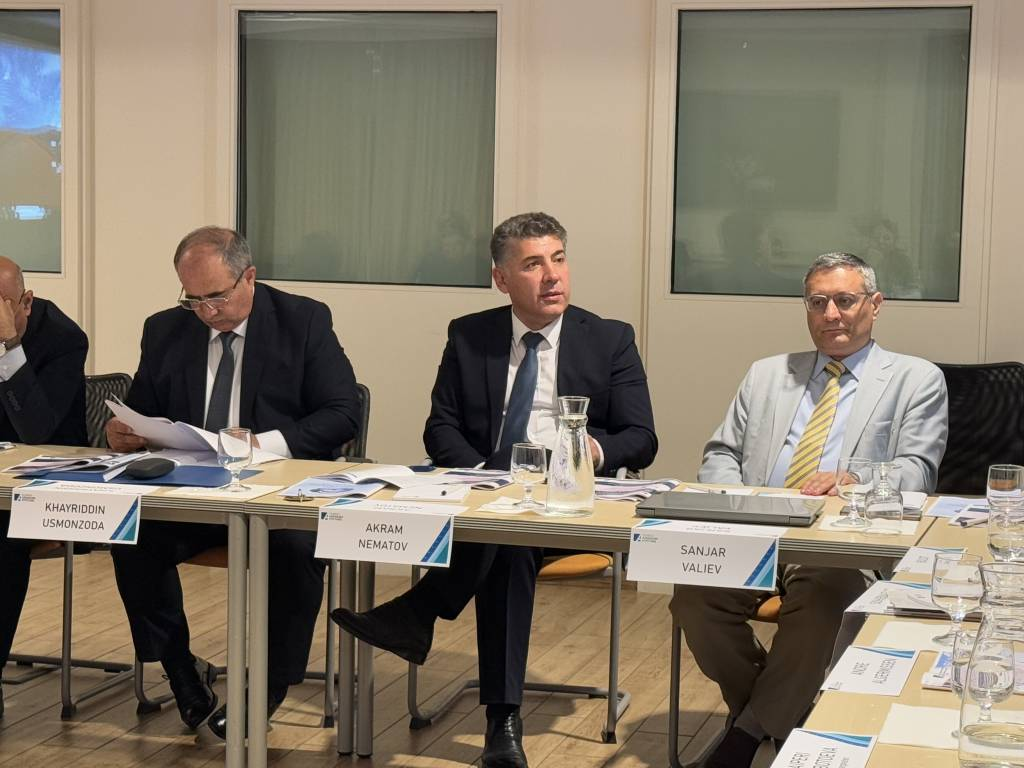
He noted that the changes underway in Central Asia – stronger trust, good-neighborly relations, connectivity and regional agency – fully reflect the policy pursued by President Shavkat Mirziyoyev. From the outset of his presidency, Central Asia was designated the foremost priority of Uzbekistan’s foreign policy, and relations with neighboring countries were grounded in open dialogue, mutual respect, reasonable compromise and joint search for solutions. This approach has become a key factor in shaping a new political atmosphere in the region.
Today, Central Asia is increasingly viewed not through the lens of geographical remoteness but as a region of transport connectivity, critical minerals, green energy, industrial production, digitalization, and a growing domestic market.
Central Asia’s combined economy could exceed $600 billion for the first time in 2026. Industrial output is growing by about 6 percent annually, the region’s population is approaching 85 million, and its median age is about 27 years. These indicators demonstrate Central Asia’s expanding industrial, labor, and consumer potential.
“Central Asia is no longer merely a territory situated between Eurasia’s largest markets. It is gradually emerging as an economic hub in its own right – one capable of connecting these markets while generating value added within the region”, Mr. Nematov said.
According to him, this is precisely the transformation that President Shavkat Mirziyoyev has consistently promoted in recent years by advocating the expansion of mutual trade, industrial cooperation, and transport corridors, as well as the creation of a common area of new economic opportunities.
In this context, the ISRS representative placed particular emphasis on the special resolution adopted by the UN General Assembly in May 2026, titled “Strengthening regional cooperation and economic integration for sustainable development in the Central Asian region”. The initiative to develop the resolution was proposed by the President of Uzbekistan at the 80th session of the UN General Assembly and received broad international support. Sixty-six states, including all Central Asian countries, co-sponsored the resolution.
According to the expert, the resolution is particularly significant because it not only supports deepening economic integration but also calls on entities across the UN system to promote innovation, job creation, and sustainable growth in the region in line with their own priorities.
“In essence, the international community has endorsed the course towards transforming Central Asia into a more interconnected and economically resilient region capable of shaping its own development agenda”, he noted.
Attention was given to expanding transport connectivity and diversifying Central Asia’s external routes. One of the fastest-growing routes is the Middle Corridor, where freight volumes have increased in recent years from about 1.5 million tons to more than 4 million tons, while container traffic has risen from 33,000 to 77,000 twenty-foot equivalent units (TEUs). At the same time, construction of the China – Kyrgyzstan – Uzbekistan railway, with a potential annual capacity of up to 15 million tons, is moving forward, while southern transport routes are also being developed.
Mr. Nematov stressed, however, that the region must move beyond a purely transit-based role. “If a container simply passes through the region, the economic benefit for our countries is limited to transit fees. Far greater returns are generated when industrial enterprises and logistics centers are established along transport corridors and when processing industries, services, financial instruments and digital solutions are developed. The region must become a hub for creating value added”, he emphasized.
According to him, this approach should underpin Central Asia’s future engagement with international partners. Such cooperation should involve not only importing equipment and capital, but also transferring technology and engineering expertise, establishing joint ventures, developing the workforce, and integrating Central Asian producers into global value chains.
Addressing Central Asia’s strategic autonomy, Mr. Nematov emphasized that it does not imply distancing the region from the outside world. “It means being as deeply integrated into the international economy as possible, expanding partnerships and avenues for cooperation, and developing new markets, routes, sources of investment and technologies. This will strengthen the region’s resilience and broaden its scope for independent decision-making”, he said.
In his assessment, amid the fragmentation of the global system and the reconfiguration of international economic ties, Central Asia has an opportunity to become an active part of global value chains – one that produces, processes and generates value added.
In a separate session on the parliamentary dimension of regional integration, Shakhlo Khamrakhodjaeva, Leading Research Fellow at ISRS, noted that Central Asia has already achieved significant results. Political trust has strengthened considerably, an extensive network of strategic partnerships and allied relations has taken shape, and trade, investment and transport connectivity have expanded. The next task is to make this rapprochement sustainable and irreversible.
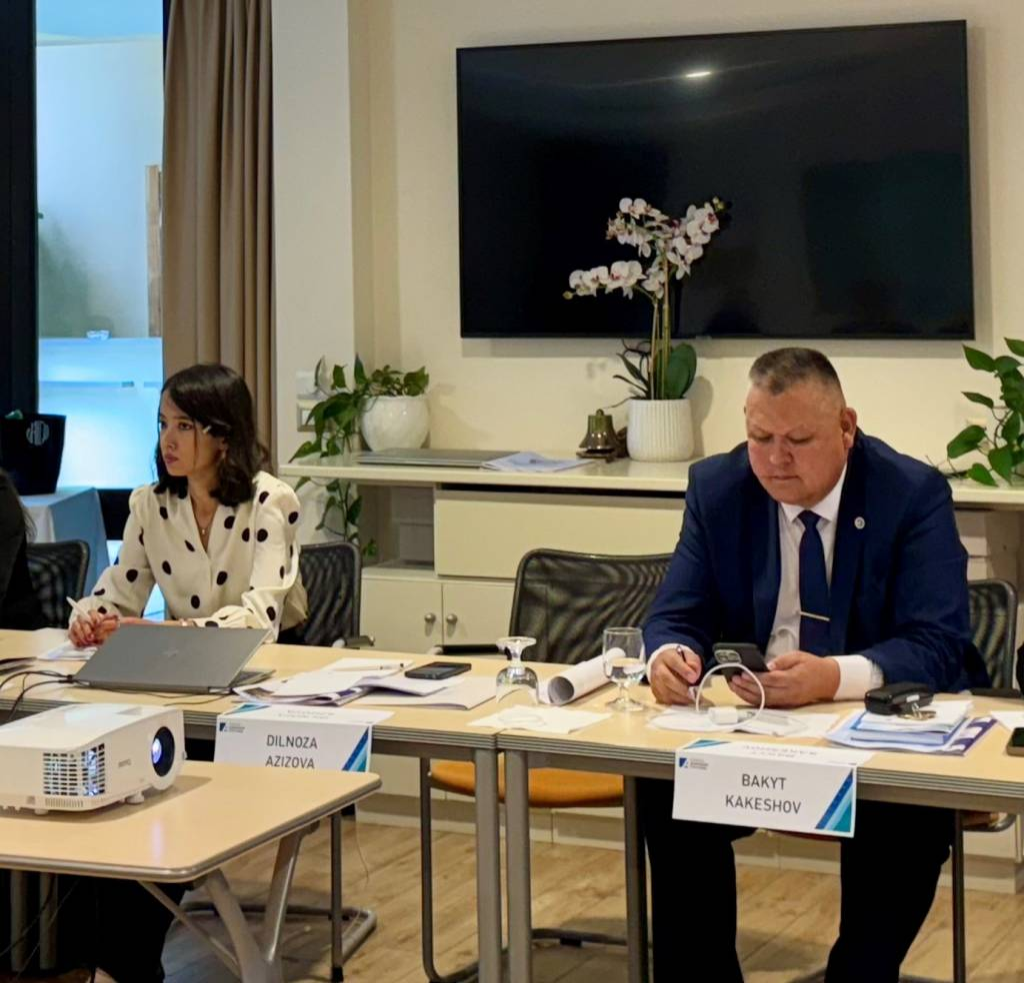
Ms. Khamrakhodjaeva stressed that regional cooperation should be assessed not only by the number of agreements, trade volumes or infrastructure projects, but also by the extent to which ordinary citizens experience its benefits: whether new jobs are being created, whether crossing borders, doing business and accessing education and healthcare are becoming easier, and whether living standards in border areas are improving.
In this regard, she highlighted parliaments’ role as institutions of popular representation and oversight, as well as a permanent channel of communication between the state and society.
The ISRS expert also noted that strengthening parliaments’ role in promoting sustainable and social development is among the areas covered by President Shavkat Mirziyoyev’s international initiatives. At Uzbekistan’s initiative, the UN General Assembly adopted a resolution in 2022 on enhancing the role of parliaments in accelerating the achievement of the Sustainable Development Goals. In July 2026, it adopted a new resolution on strengthening the role of parliaments in accelerating social development, supported by 167 states.
According to Ms. Khamrakhodjaeva, Central Asia has already established the necessary institutional framework for interparliamentary cooperation. The focus should therefore be placed on ensuring the practical effectiveness of existing mechanisms. This includes strengthening the socially oriented regional agenda, enhancing parliamentary oversight of the implementation of agreements and removing legal barriers to trade, transport, education, labor mobility and entrepreneurship.
As a further step, the expert proposed establishing a permanent interparliamentary coordinating body. Its functions could include supporting the implementation of regional agreements, assessing their social impact, holding joint hearings and facilitating solutions to issues directly affecting citizens’ interests.
In her view, such a mechanism would help reinforce the sustainability of the regional course, institutionalize decisions reached at the level of heads of state, and ensure continuity and public support for the process of regional rapprochement.
The discussions demonstrated complete alignment among Central Asian representatives in their assessments of international developments and the region’s future. There was a shared understanding that further strengthening Central Asia’s regional agency is directly linked to preserving the atmosphere of trust and good-neighborliness, deepening economic interdependence and transport connectivity, expanding people-to-people contacts and ensuring closer policy coordination.
Participants also underscored the importance of an open and diversified model of cooperation that expands the region’s opportunities while reinforcing its resilience and autonomy. European partners expressed particular interest in the prospects for transport connectivity, industrial cooperation, human capital development and the establishment of resilient value chains involving Central Asian countries.
The participants shared the view that, amid the emergence of a polycentric world, Central Asia has a historic opportunity to establish itself as an independent, stable, and open region of cooperation – a bridge between the major economic spaces of Europe and Asia.
UzA