How the New Legal Framework and Border Settlement Are Transforming the Architecture of Central Asia
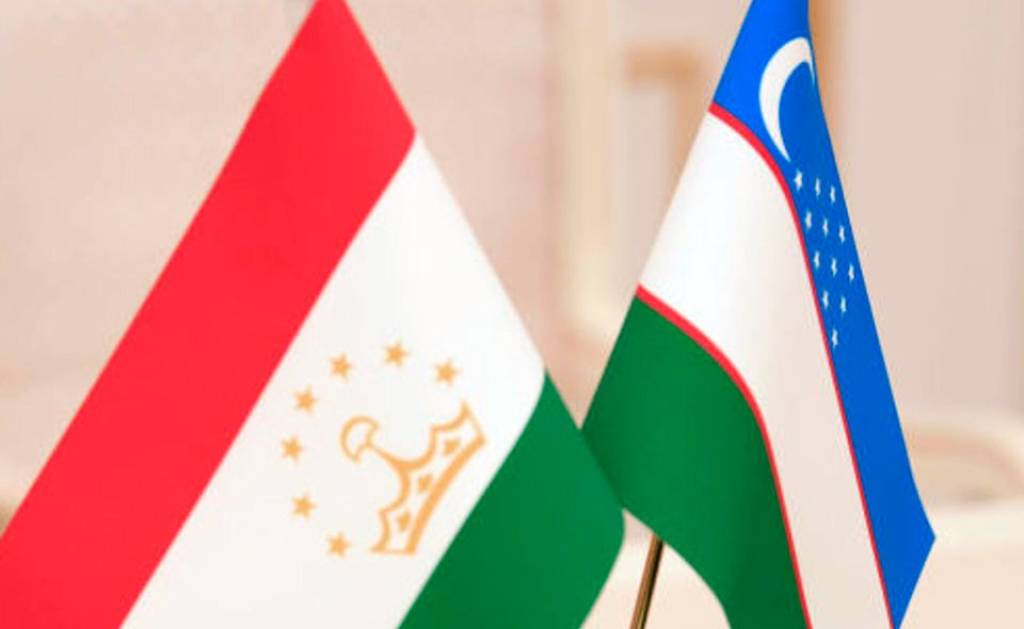
Against the backdrop of growing global geopolitical instability and the fragmentation of international economic ties, Central Asia is demonstrating a steady trend toward consolidation. The foundation of this process lies in the consistent development of bilateral relations among the region’s states. In this context, the Uzbekistan – Tajikistan tandem is a key factor in regional integration.
The events of 2024-2025 – from the signing of the Treaty on Allied Relations to the final settlement of border issues and the holding of the Seventh Consultative Meeting of the Heads of State in Tashkent – marked a qualitative transition. These steps elevated interstate cooperation to a fundamentally new level, creating a legal and institutional framework for the long-term development not only of the two countries but of Central Asia as a whole.
The Legal and Economic Dimension of Strategic Partnership
The evolution of Uzbekistan – Tajikistan relations represents a unique precedent in modern diplomacy. Strategic partnership implied close coordination of interests, while allied relations signify the highest level of trust, the principle of indivisible security, and deep economic integration.
The state visit of the President of the Republic of Uzbekistan, Shavkat Mirziyoyev, to Dushanbe on April 18-19, 2024, became a turning point: following high-level talks, the heads of state signed the Treaty on Allied Relations. “The signing of the historic Treaty on Allied Relations symbolizes a transition to a qualitatively new stage”, it was stated during the negotiations.
On March 31, 2025, the final legal act took place: the foreign ministers of the two countries signed the Protocol on the Exchange of Instruments of Ratification, after which the treaty officially entered into force. This consolidated an irreversible course toward closer ties between the two states.
The entry into force of the document is not a declaration but the launch of specific mechanisms for practical cooperation. As follows from the telephone conversation between the presidents on October 5, 2025, and the bilateral meeting in Dushanbe on October 9, 2025, the priority remains the formation of a new cooperation agenda covering trade, industrial cooperation, transport, energy, agriculture, tourism, and cultural and humanitarian exchange.
Economic Pragmatism as the Foundation of Alliance
The alliance’s legal framework rests on a solid economic foundation. According to figures announced during the talks in Dushanbe in April 2024, mutual trade turnover has increased fortyfold in recent years, while the number of joint ventures has grown fifteenfold. By the end of 2024, trade turnover exceeded $700 million. The governments of the two countries have set a target to raise this figure to $2 billion.
Achieving this goal is supported by instruments of industrial cooperation. The focus is on joint projects in mechanical engineering, electrical engineering, metallurgy, mining, textiles, the agro-industrial sector, and pharmaceuticals. For these purposes, the potential of the Joint Uzbekistan – Tajikistan Investment Company is being leveraged.
As particularly emphasized by President Shavkat Mirziyoyev on November 27, 2025, during the ceremony of accepting credentials from the newly appointed Ambassador of Tajikistan, border trade and logistics zones – in particular, the “Oybek – Fotekhobod” zone and the Andarkhon trade and logistics center – play a significant role in increasing trade turnover. These facilities are intended to ensure employment in border areas and create a favorable environment for small and medium-sized businesses.
A strategic area has also been identified as cooperation in water management. As a result of the expanded-format talks, the parties confirmed their intention to continue a constructive dialogue on this sensitive but fundamentally important issue.
If the Treaty on Allied Relations laid the bilateral legal foundation, then the events of March 31, 2025, in Khujand demonstrated how this high level of trust can be extrapolated to the entire region. The trilateral meeting of the Presidents of Uzbekistan (Shavkat Mirziyoyev), Tajikistan (Emomali Rahmon), and Kyrgyzstan (Sadyr Japarov) acquired significance extending far beyond the regional context.
On that day, the Treaty on the Junction Point of the State Borders of the three countries was signed, and the Khujand Declaration on Eternal Friendship was adopted. The ceremonial opening of the Friendship stele at the point where the three borders meet symbolized the end of an era of territorial disagreements.
Transformation of the Fergana Valley
The Fergana Valley is a densely populated region that concentrates a significant share of Central Asia’s economically active population. For decades, disputed sections of border territories have restrained investment, logistics, and infrastructure development. The signing of the Treaty on the Junction Point of the State Borders fully removes these barriers. From now on, borders are being transformed from dividing lines into corridors of cooperation.
The settlement of border issues opens the way for the creation of a “Golden Tourist Ring of Fergana Valley”, the launch of new international routes, the expansion of air connections, and the formation of a unified logistics corridor linking Uzbekistan, Tajikistan, and Kyrgyzstan. The Khujand model has demonstrated that even the most complex issues inherited from the past can be resolved solely through political and diplomatic means, grounded in mutual respect for international law.
International Resonance and the Leo Tolstoy Peace Prize
The Khujand agreements received broad international attention. Official statements supporting the signed documents were issued by the Organization of Islamic Cooperation (OIC) and the foreign ministries of Saudi Arabia, the United Arab Emirates, Iran, and the Russian Federation. The TASS news agency reported that Russia welcomed the agreement as a step toward long-term stability in the region. Foreign publications – including Pakistan in the World and Hungary’s Eurasia Magazine, among others – described the Khujand summit as an important milestone in the geopolitics of Central Asia.
The highest form of international recognition came with the ceremony held on December 21, 2025, in Saint Petersburg, where the Presidents of Uzbekistan, Tajikistan, and Kyrgyzstan were awarded the Leo Tolstoy International Peace Prize. The jury’s decision particularly emphasized that the signing of the Treaty on the Junction Point of the State Borders and the Khujand Declaration represented a significant contribution to ensuring universal security grounded in humanist ideals. The award affirmed Central Asia’s status as a space of peace.
The Tashkent Format: A New Regional Architecture
Achievements on the bilateral and trilateral tracks are organically integrated into the architecture of the Consultative Meetings of the Heads of State of Central Asia – a multilateral format initiated by Uzbekistan in 2018 that has proven its viability.
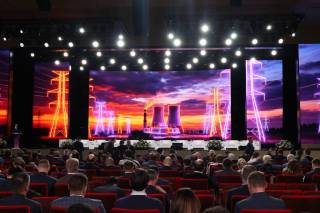
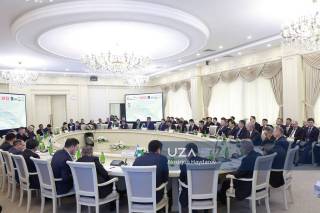
The culmination of this process was the Seventh Consultative Meeting held on November 15-16, 2025, in Tashkent under the chairmanship of President Shavkat Mirziyoyev. The key outcome of the summit was the decision to include the Republic of Azerbaijan as a full-fledged participant in the format, effectively expanding its geography to the Caucasus and strengthening the transit and logistics potential of the entire Eurasian space.
On the sidelines of the summit on November 15, a separate bilateral meeting was held between the leaders of Uzbekistan and Tajikistan. The parties aligned their positions on key aspects of regional security, the economy, and the implementation of previously reached agreements.
Consolidation of Positions on the Global Stage
The development of the Consultative Meetings directly influences the region’s dialogue with external partners. Central Asia is now acting in a consolidated manner within the “C5+1” format (with the United States), “Central Asia – China”, “Central Asia – EU”, and “Central Asia – Russia”. On November 7, 2025, the Presidents of all five Central Asian states, including Mirziyoyev and Rahmon, attended the C5+1 summit in Washington. The President of Uzbekistan proposed establishing a permanent secretariat for the format, an Investment and Coordination Council, and holding the next summit in Samarkand.
As follows from Uzbekistan – Tajikistan consultations, a consolidated regional position makes it possible to attract investment more effectively, address issues of rational water use, and counter transnational threats. This has become particularly relevant amid ongoing instability along the southern borders of the region: during talks in Dushanbe in April 2024, the leaders specifically emphasized the importance of “promoting socio-economic projects in Afghanistan”. Both sides regard the security of Central Asia as indivisible.
An important institutional dimension of the alliance remains parliamentary diplomacy. In February 2026, Tajikistan’s Ambassador Ismatullo Nasriddin visited the Senate of the Oliy Majlis of the Republic of Uzbekistan. During the meeting with Senate Chairperson Tanzila Narbayeva, it was noted that interparliamentary ties between the two countries had reached a new level, laying the foundation for the timely implementation of all agreements achieved in national legislation.
Conclusion
The chronology of events in 2024-2025 clearly demonstrates that Uzbekistan – Tajikistan relations have progressed from resolving basic issues to a full-fledged alliance. The entry into force of the Treaty on Allied Relations and the completion of border delimitation are not only diplomatic achievements but also a guarantee of predictability and stability for investors, the business community, and millions of citizens of both states.
The experience of Uzbekistan and Tajikistan shows that political will, supported by pragmatic economic calculation and respect for shared history and culture, can remove barriers that once seemed insurmountable within a short period. Integrated into the architecture of the Consultative Meetings, this allied tandem is becoming a stabilizing factor, transforming the region from an object of external pressure into an independent subject of international relations capable of formulating and promoting its own agenda.
Abduaziz Khidirov, UzA