Experts outlined the priorities of Uzbekistan – Russia cooperation
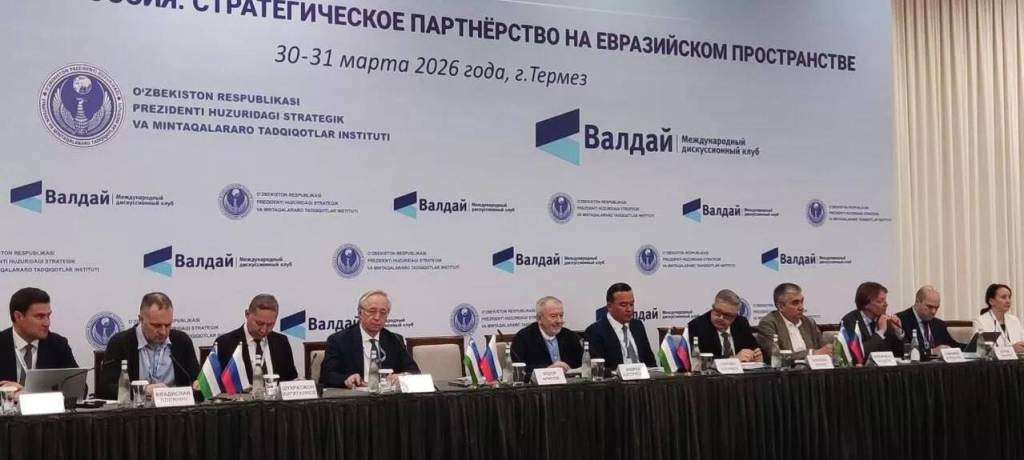
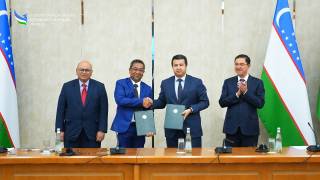
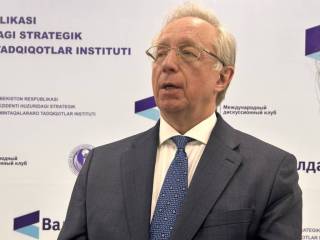
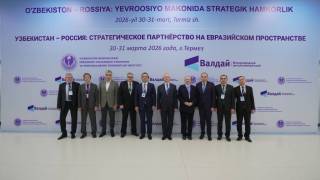
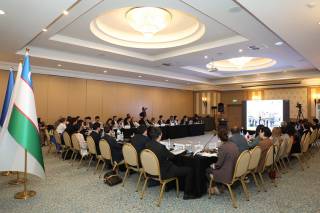
The “Uzbekistan – Russia: Strategic Partnership in the Eurasian Space” Conference has kicked off in Termez. The event is organized by the Institute for Strategic and Regional Studies under the President of the Republic of Uzbekistan in cooperation with the Valdai International Discussion Club.
During the conference, experts discussed key trends in the development of transport logistics, digitalization, and cooperation in artificial intelligence in the Eurasian space.
Head of the project “Strategy for the development of digitalization of transport corridors”, Adviser to the First Deputy Chairman of Uzbekistan Railways JSC, Umidulla Ibragimov, noted that in the context of the transformation of the global economy, the importance of continental connectivity is increasing. According to him, Eurasia is gradually becoming the core of a new transport architecture, where overland routes form the basic framework.
He stressed that Central Asia is gaining a strategic role in the development of international transport corridors, including those under the Belt and Road Initiative. At the same time, eastern destinations ensure stable cargo flows due to the region’s resource potential and proximity to key consumer markets, including Afghanistan. The expert also noted the importance of the North-South corridor and its continuation as the trans-Afghan route, as well as the role of the SCO space as a driver of transport infrastructure development. According to him, cooperation between Uzbekistan and Russia in this area has significant potential.
In turn, Anna Sytnik, a leading researcher at the Center for Comprehensive European and International Studies at the Higher School of Economics (Russia), drew attention to the peculiarities of artificial intelligence development in the two countries. She noted that in Russia, the emphasis is on technological sovereignty, whereas in Uzbekistan, AI is seen as a tool for accelerating the economy’s modernization.
“Uzbekistan can benefit from Russia’s experience in developing sovereign AI models and implementing them in critical areas. The potential for bilateral cooperation in AI, including technology education, needs to be further developed. I would also like to note that despite the lack of strict regulation within the CIS, cooperation is gradually developing through separate agreements and initiatives, including within the SCO”, she added.
The participants agreed that strengthening cooperation between Uzbekistan and Russia in the transport, technology, and science sectors will contribute to the formation of a new architecture for the Eurasian partnership.
Aziza Alimova, UzA