Central Asia and the Gulf States: Deepening partnership in the context of global transformation
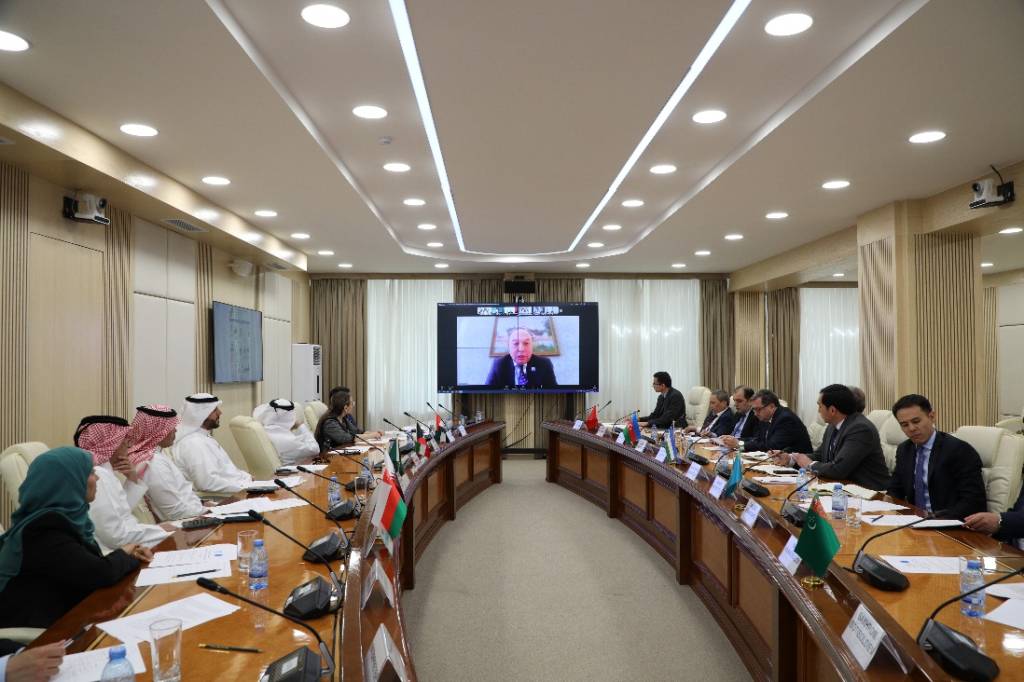
The Institute for Strategic and Regional Studies under the President of the Republic of Uzbekistan, in partnership with the Gulf Research Center of the Kingdom of Saudi Arabia, held the second think tank forum in the “Central Asia + Gulf Cooperation Council” (GCC) format, bringing together representatives of leading research institutes, diplomatic missions, and expert communities from the two regions.

Opening the forum, ISRS Director Eldor Aripov noted that Central Asian and Gulf countries have rapidly progressed beyond the development stage and are now reaching the level of a sustainable systemic partnership. Launched in 2023, the “CA+GCC” format is gradually transforming from a dialogue platform into a strategic platform for developing coordinated approaches and practical solutions.
Mr. Aripov stated that this was largely made possible by the consistent foreign policy of the President of the Republic of Uzbekistan, Shavkat Mirziyoyev, aimed at strengthening the openness of Central Asia, developing connectivity, and creating a sustainable system of interregional cooperation.

During the speech, special attention was paid to the current international situation, including developments in the Middle East and around Iran. The challenges facing not only the Gulf countries but also the Central Asian states today were analyzed.
Mr. Aripov’s speech focused on transport and communications connectivity. He emphasized that for landlocked Central Asian countries, access to sustainable and predictable logistics routes is becoming a key factor in economic security. Any changes to traditional transit routes inevitably impact shipping costs, delivery times, and the competitiveness of national economies.

In this regard, the development of a diversified system of transport corridors is viewed as a strategic objective, reducing vulnerability to external shocks and ensuring the stability of foreign economic relations. Such development of alternative routes and increased connectivity between regions is becoming an important element of the new geoeconomic reality.
Considerable attention was also given to the economic aspects of the current situation. The ISRS Director noted that ongoing global instability is affecting energy market dynamics, inflation, and overall economic growth. “Despite the continued macroeconomic stability of Central Asian countries, external factors continue to put pressure on domestic markets, requiring the development of additional adaptation mechanisms”, the Uzbek expert noted.
One of the key conclusions Mr. Aripov highlighted in his speech was that the global processes underway today reflect a profound transformation of the world system, in which the importance of flexibility, diversification, and states’ ability to adapt to conditions of increased uncertainty is growing.
The increasingly complex international environment is deepening regional interdependence and heightening the importance of sustainable partnerships. Under these circumstances, Central Asia is clearly at the intersection of various economic and geopolitical processes, requiring a balanced and pragmatic policy focused on long-term sustainability.
“We are talking about creating a more flexible and diversified system of economic and transport links, capable of functioning effectively in conditions of external turbulence”, explained the ISRS Director.
It was particularly emphasized that strengthening the strategic autonomy of states in modern conditions is achieved through expanding partnerships, diversifying foreign economic relations, and increasing internal stability, rather than through limiting interaction.
In this regard, Mr. Aripov noted the continued positive momentum in Central Asia’s interactions with the Gulf countries. According to the data provided, the volume of accumulated GCC investment in the region’s economy has exceeded $20 billion, and mutual trade has reached approximately $5 billion.
To further enhance cooperation, a transition to a more institutionalized model of interaction was identified, including the formation of long-term coordination mechanisms and the development of agreed-upon decisions.
In this context, the initiative of the President of Uzbekistan to develop a Multilateral Agreement on Friendship, Interconnectedness and Cooperation, which could lay the foundation for the systematic development of interregional ties, was highlighted.
Mr. Aripov also proposed prioritizing the development of a sustainable economic architecture to expand trade, deepen industrial cooperation, and improve the quality of mutual trade. Emphasis was placed on the need to diversify investment cooperation beyond traditional sectors and expand interaction in industry, infrastructure, agriculture, and the digital economy.
The ISRS Director specifically emphasized the importance of intensifying interaction between think tanks. “Expanding expert dialogue, developing joint research, and regularly exchanging assessments are essential for developing coordinated approaches and strengthening trust”, concluded Mr. Aripov.
Overall, the second “CA+GCC” think tank forum demonstrated that cooperation between Central Asia and the Gulf states is entering a stage of qualitative deepening. Against the backdrop of global transformation, a sustainable platform for interaction is emerging, focused not only on adapting to external changes but also on jointly shaping a long-term development agenda.
UzA