Uzbekistan’s role in building trust within CICA
The seventh summit of the Conference on Interaction and Confidence Building Measures in Asia (CICA) will take place in Baku on 15 October. The meeting comes at a time when states’ ability to sustain dialogue and find common ground is particularly important. In an increasingly complex international environment, CICA’s relevance stems primarily from its role as a multilateral platform that brings together countries with diverse political positions and national interests.
The framework’s principal strength is its inclusive character. CICA is not a military or political bloc and does not constrain members’ foreign-policy independence. Its work rests on consensus, voluntary participation, equality and mutual respect, enabling states with differing interests to maintain regular dialogue.
These principles underpin Uzbekistan’s consistent approach to engagement within CICA. Tashkent advocates strengthening the forum’s role in implementing confidence-building measures and expanding practical cooperation among Asian states.
President Shavkat Mirziyoyev’s approach to CICA encompasses several interrelated priorities. Together, they seek to preserve trust between states, turn that trust into practical cooperation and strengthen the capacity of multilateral mechanisms to address shared challenges. His addresses at the Dushanbe summit in 2019 and the Astana summit in 2022 developed this approach along three main lines.
First, a comprehensive approach to security.
Uzbekistan recognizes that contemporary threats cannot be overcome through political measures and force alone.
States’ resilience also depends on human capital, opportunities for young people to fulfill their potential, the development of education and culture, and the ability to counter radicalization.
Cooperation in education, culture and youth affairs therefore features prominently in the President’s summit addresses. Uzbekistan’s substantial contribution to advancing CICA’s youth agenda demonstrates this approach in practice. In particular, Uzbekistan’s Youth Affairs Agency served as co-chair of the CICA Youth Council.
Tashkent also assumed a coordinating role in implementing confidence-building measures, reflecting its commitment to turning political initiatives into action through established cooperation mechanisms.
Second, a focus on practical outcomes in multilateral cooperation.
A distinctive feature of Uzbekistan’s approach has been turning broad principles of trust into specific areas of joint action. In 2019, this was reflected in proposals to expand trade, support small and medium-sized enterprises, develop transport links and jointly address environmental challenges, including the consequences of the Aral Sea disaster. In 2022, the agenda became more operational, focusing on food security, digitalization, innovation, and resilient production and logistics networks. These initiatives share a common premise: states’ shared interest in economic and social progress provides a tangible foundation for stronger mutual trust.
Third, joint responses to regional challenges.
The third priority reflects Tashkent’s commitment to making multilateral mechanisms more effective in addressing problems that no country can resolve on its own.
Afghanistan provides a clear example. The President proposed establishing a high-level international negotiating group under United Nations auspices.
On environmental issues, Uzbekistan put forward the “Green Asia” initiative, aimed at expanding cooperation among experts on greening efforts and protecting vulnerable ecosystems.
Both proposals seek to keep pressing regional challenges on the international agenda despite deepening disagreements among major powers.
Together, these priorities capture the central purpose of Uzbekistan’s policy within CICA: to preserve trust between states, reinforce it through practical cooperation and use multilateral mechanisms to address specific challenges facing Asia.
The forthcoming seventh CICA summit in Baku will mark the next stage in advancing this agenda. CICA faces an important task: to build on its achievements while delivering more tangible benefits from cooperation. Transport and economic connectivity, digitalization, sustainable development, food security and environmental protection will be particularly important.
In this context, CICA’s effectiveness will depend largely on progress in three interrelated areas.
The first is stronger political trust. As geopolitical competition intensifies, it is essential to preserve CICA as an open platform for dialogue among states with differing interests and positions.
Economic connectivity is equally important. Transport, trade, energy, investment and digital infrastructure can create lasting links between states, providing additional incentives to maintain stable relations.
Finally, CICA must continue to strengthen its human dimension. Education, youth exchanges, culture, and cooperation among researchers and experts build a foundation of trust that develops over time and retains its value despite changes in the political environment.
Uzbekistan brings practical experience and specific initiatives to all three areas. It consistently promotes an approach within CICA that connects security with economic development and dialogue between societies.
Amid growing uncertainty, Asia’s task is to find mechanisms that help states identify common ground even when their interests diverge, rather than allowing new divisions to emerge. CICA can serve this purpose by preserving space for political dialogue and creating opportunities for practical cooperation.
Uzbekistan’s contribution lies in sustaining initiatives that strengthen trust and help shape a secure and prosperous future for the region.
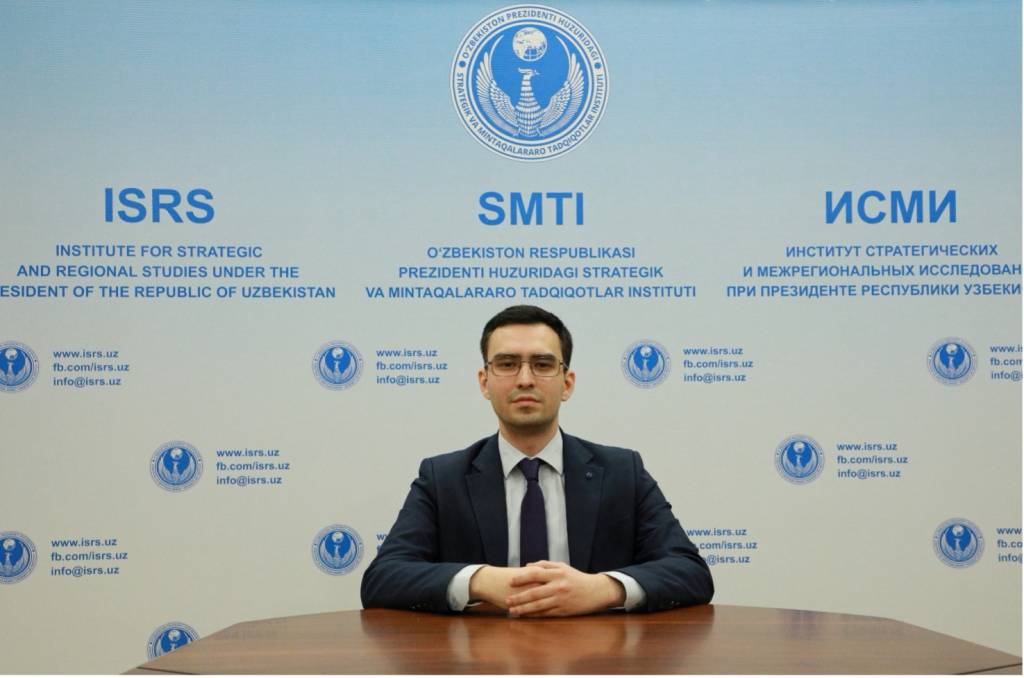
Bekzod Normatov,
Leading Research Fellow,
Institute for Strategic and Regional Studies under the President of the Republic of Uzbekistan