
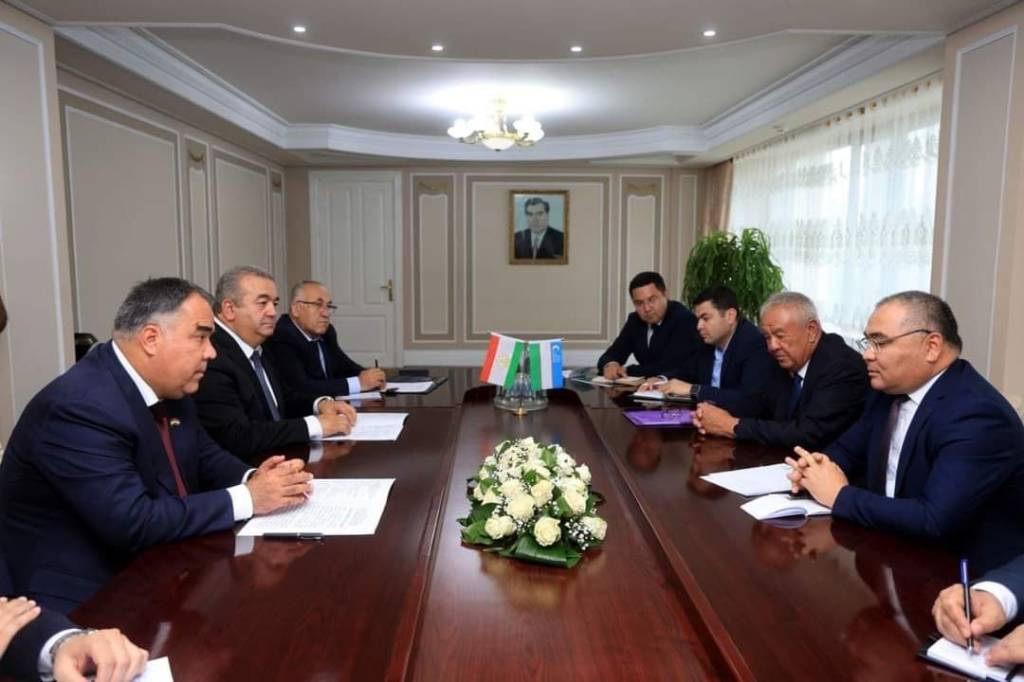
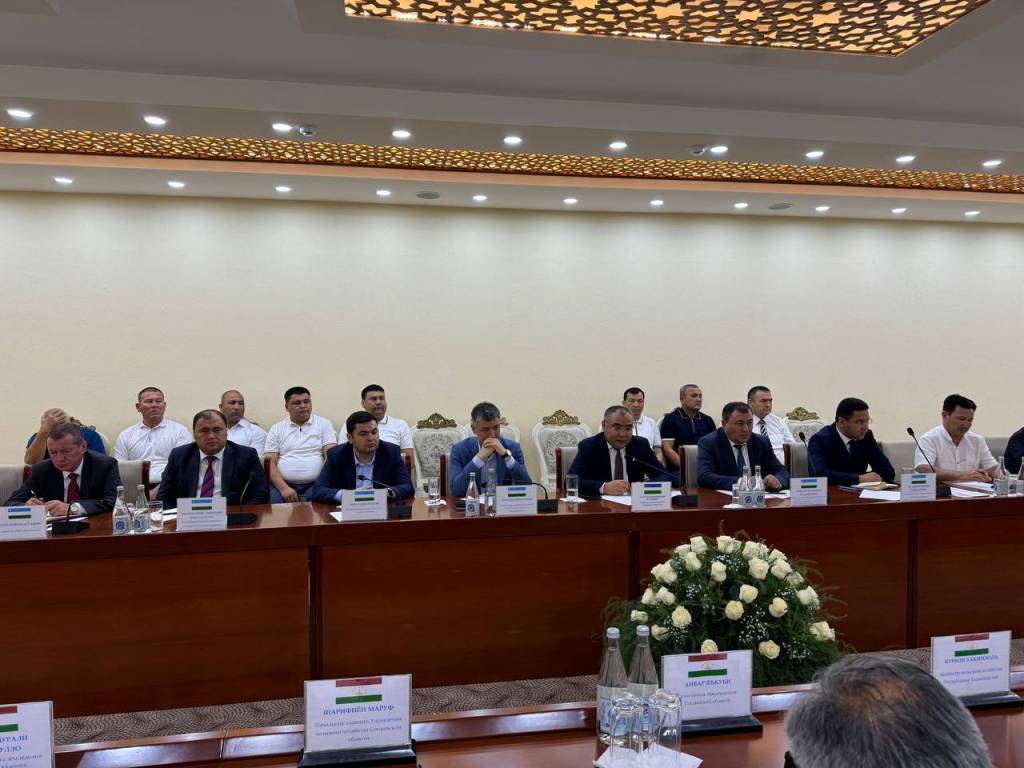
During the Uzbekistan delegation’s visit to Sughd region, led by the Minister of Agriculture Ibrahim Abdurakhmanov, negotiations were held with the region’s governor, Rajabboy Ahmadzade, and the Minister of Agriculture Kurban Hakimzade on the production of wheat, grain, development of rice growing, sericulture, and gardening.

The parties’ responsibilities to allocate 113 hectares on the territory of the Academy of Sciences of Tajikistan and adjacent regions and prepare land for sowing and cultivation of crops were determined. Ten hectares are planned to be allocated for the introduction of modern irrigation technologies and the creation of an experimental field at the Research Institute of Grain and Leguminous Crops.
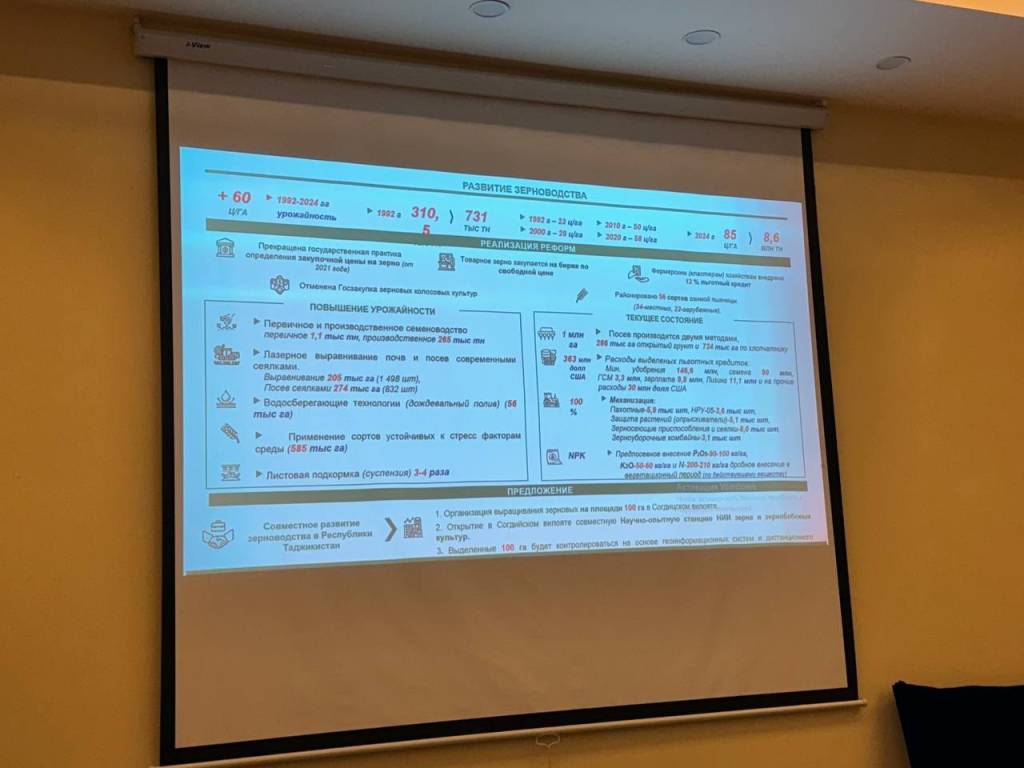
Following the agreement, considering Uzbekistan’s experience, rice will be planted on 1,000 hectares, 25 hectares of unproductive gardens will be transformed into intensive gardens on a public basis, and 14 thousand hectares in Khatlon region will be developed for growing rice.
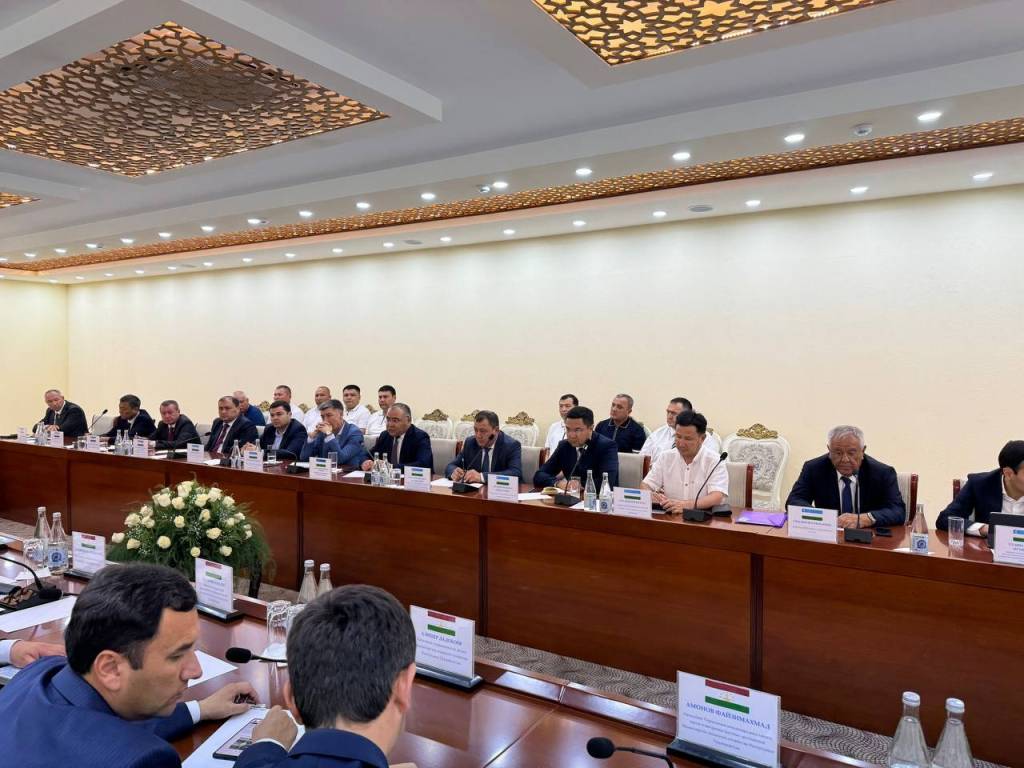
The parties discussed the delivery of 17 units of modern weaving equipment to Tajikistan, 500 thousand mulberry seedlings, and a project to create a joint silkworm complex based on Khujand Atlas enterprise by November 1. Plans have been outlined for the sale of Uzbek seeds and seedlings and the export of mineral fertilizers.
M. Pirmatova, UzA

English
Chinese
Turkish
Tajik
Kyrgyz
Turkmen
Japanese
Arabic
English
French
Spanish
Русский
German
Ўзбек
Oʻzbek
Қазақ
Uzbekistan, Tajikistan enhance collaboration

During the Uzbekistan delegation’s visit to Sughd region, led by the Minister of Agriculture Ibrahim Abdurakhmanov, negotiations were held with the region’s governor, Rajabboy Ahmadzade, and the Minister of Agriculture Kurban Hakimzade on the production of wheat, grain, development of rice growing, sericulture, and gardening.

The parties’ responsibilities to allocate 113 hectares on the territory of the Academy of Sciences of Tajikistan and adjacent regions and prepare land for sowing and cultivation of crops were determined. Ten hectares are planned to be allocated for the introduction of modern irrigation technologies and the creation of an experimental field at the Research Institute of Grain and Leguminous Crops.

Following the agreement, considering Uzbekistan’s experience, rice will be planted on 1,000 hectares, 25 hectares of unproductive gardens will be transformed into intensive gardens on a public basis, and 14 thousand hectares in Khatlon region will be developed for growing rice.

The parties discussed the delivery of 17 units of modern weaving equipment to Tajikistan, 500 thousand mulberry seedlings, and a project to create a joint silkworm complex based on Khujand Atlas enterprise by November 1. Plans have been outlined for the sale of Uzbek seeds and seedlings and the export of mineral fertilizers.

M. Pirmatova, UzA