Uzbekistan-Serbia: From Political Dialogue to Comprehensive Practical Partnership
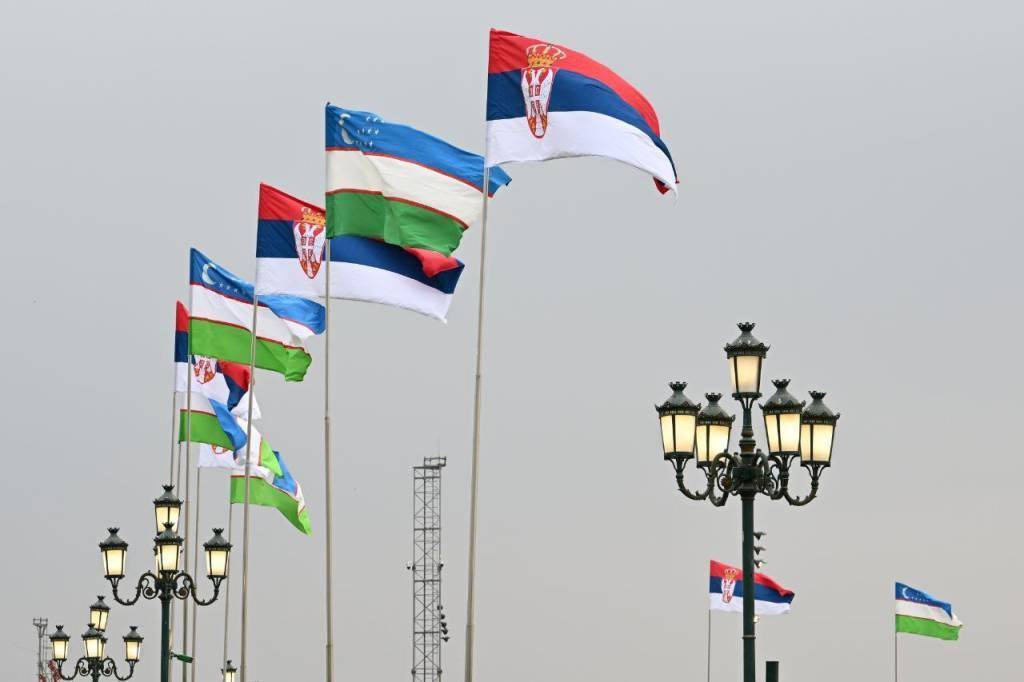
In international relations, some visits are significant not merely as another meeting on the diplomatic calendar, but as a political event that defines the future course of relations between two states.
The official visit of the President of the Republic of Uzbekistan, Shavkat Mirziyoyev, to the Republic of Serbia on September 7-8, at the invitation of the President of the Republic of Serbia, Aleksandar Vučić, holds a similar significance.
It should be noted that in recent years, a significant revitalization has been observed in the relations between Tashkent and Belgrade. Political dialogue has intensified, the legal framework for cooperation has expanded, and contacts between business circles have gradually become more regular. Now, the main task on the agenda is to transform the existing political trust into tangible economic results—in trade, investment, industrial cooperation, transport and logistics, and stable people-to-people ties.
In this sense, the upcoming negotiations in Belgrade are expected to be a crucial stage in the transition from political rapprochement to practical partnership in Uzbek-Serbian relations.
"Diplomatic relations between Uzbekistan and Serbia were established on January 18, 1995, and while relations have been steadily maintained over the past period, qualitatively new changes in their pace and substance have become apparent, especially in recent years," says Mashhura Normayeva, a lecturer at Tashkent State University of Oriental Studies. "Focusing on the political dialogue, the first official visit of the Serbian Minister of Foreign Affairs to our country took place in 2023. Then, in October 2024, Serbian President Aleksandar Vučić paid an official visit to our country."
This visit, coinciding with the 30th anniversary of the establishment of diplomatic relations, took on special significance as the first high-level summit in the history of cooperation between the two countries. Following the negotiations in Tashkent, the heads of state signed a Joint Declaration. At the same time, a number of documents were adopted covering the mutual promotion and protection of investments, economic cooperation, medical services, tourism, education, science and culture, engineering, advanced technologies and artificial intelligence, diplomatic personnel training, labor migration, and sports.
The establishment of partnership ties between Tashkent and Belgrade has created additional opportunities to elevate bilateral relations from the level of central governments to the stage of interregional cooperation.
In fact, the documents signed in 2024 formed the necessary legal foundation for today's cooperation. In 2025, the main focus shifted to supplementing these agreements with practical projects. The business forum held in our capital in February, which brought together more than 80 entrepreneurs from both countries, the visit of Serbian Foreign Minister Marko Đurić to our country in May, and the meeting between President Shavkat Mirziyoyev and President Aleksandar Vučić in Baku that same month all indicate that Uzbek-Serbian relations are no longer just episodic diplomatic contacts but are evolving into a form of regular political dialogue. In this respect, the upcoming visit is a natural and logical continuation of the political rapprochement that has taken shape over the last two years.
New opportunities for economic cooperation
According to M. Normayeva, the intensification of political dialogue between Uzbekistan and Serbia in recent years has created a solid foundation for enriching trade, economic, and investment cooperation with new substance. Now, one of the key tasks in bilateral relations is to align this political trust and the established legal opportunities with specific economic projects, new trade routes, and industrial cooperation.
According to the Statistical Office of the Republic of Serbia, the trade turnover between the two countries in 2024 amounted to 37.7 million euros. Of this, Serbia's exports to Uzbekistan totaled 23.6 million euros, while its imports from Uzbekistan were 14.1 million euros. These figures not only show that economic ties between the two countries are already established but also indicate that significant potential exists for their further expansion. Indeed, both Uzbekistan and Serbia are countries actively diversifying their foreign trade relations, seeking new markets and new areas of cooperation.
The fact that Uzbekistan's total foreign trade turnover exceeded $81 billion in 2025, while Serbia's surpassed $84 billion, clearly demonstrates the potential of both economies within the international trade system. This potential creates an additional opportunity to elevate Uzbek-Serbian trade and economic cooperation to a new level. The issue here is not limited to merely increasing the volume of mutual trade. The future of this cooperation lies in diversifying the trade structure, increasing the share of high-value-added products, developing industrial cooperation between enterprises, implementing joint investment projects, and expanding opportunities for companies from both countries to operate in third markets.
The necessary groundwork for this has already been laid. It was noted that as of autumn 2025, nine enterprises with Serbian capital were operating in Uzbekistan. More than 100 entrepreneurs from the two republics participated in a business forum held in Tashkent in October of that same year. Over 50 of our country's companies showcased their capabilities in the pharmaceutical, chemical, mining, construction, agricultural, automotive, textile, and leather industries.
Now, this cooperation can be enriched not only through the trade of finished goods but also through areas such as joint production, technological exchange, investment, and joint entry into the markets of third countries.
In this sense, the main task today is to more effectively utilize the existing economic potential, strengthen ties between business communities, and complement the high level of political dialogue achieved with a long-term, practical partnership.
New Opportunities Bringing Two Regions Closer
As we consider the prospects for cooperation between Uzbekistan and Serbia, it is insufficient to assess them solely within the framework of bilateral trade or individual economic projects. Although they may seem distant at first glance, there is a crucial factor bringing these two nations—located in Central Asia and the Balkans, respectively—ever closer: their geographical positions, economic development trajectories, and aspirations to expand foreign relations are mutually complementary in many respects.
Serbia is located in the central part of the Balkan Peninsula, at the crossroads of important routes connecting various regions of Europe. The country is currently a candidate for EU membership and is conducting accession negotiations. Meanwhile, Serbia's ties with the European economic space are already well-established: in 2024, EU countries accounted for 58.3% of the nation's total foreign trade.
Considering our country's consistent expansion of trade and economic ties with European nations, a partnership with Serbia can enrich this process with new dimensions. From this perspective, close ties with Serbia open up additional opportunities for Uzbek enterprises to become acquainted with European manufacturing culture and technological expertise, establish new business contacts, work with distribution networks, and expand their economic footprint in the Balkan region.
Our republic's geographical location also merits special attention. As the only country bordering all Central Asian states as well as Afghanistan, Uzbekistan is situated at a natural crossroads of intra-regional trade, production, and transport links. In recent years, the strengthening of a good-neighborly atmosphere in Central Asia, along with the revitalization of mutual trade and transport connections, has given this geographical advantage new economic significance. It is precisely these aspects that allow for a broader geographical perspective on the cooperation between Uzbekistan and Serbia. While Serbia's integration with the Balkans and the European economic space enriches Uzbekistan's westward connections, Uzbekistan's position in Central Asia serves to help Serbian business circles establish new ties with our dynamically developing region.
Therefore, the partnership between Tashkent and Belgrade manifests not as a simple convergence of two separate markets, but as the rapprochement of two economic spaces whose capabilities and experiences are mutually complementary.
At this point, another aspect that brings our countries closer is of particular importance. Both Uzbekistan and Serbia are landlocked countries. This situation, which at first glance seems to be a geographical limitation, actually creates a shared need to diversify transport routes, establish new logistics hubs, and seek new directions for economic ties between East and West.
What new stage might the visit to Belgrade usher in?
"It should be noted that the program of this visit, taking place on September 7-8, includes high-level negotiations and a business forum with the participation of representatives from official and business circles of the two countries," says M. Normayeva. "The official agenda includes expanding trade, economic, and investment cooperation; joint projects in the fields of transport, mechanical engineering, light and food industries, agriculture, pharmaceuticals, and information technology; organized labor migration; and interregional and cultural-humanitarian ties. At the conclusion of the summit, a substantial package of intergovernmental and interdepartmental agreements is expected to be adopted. The agenda itself shows the main spirit of the visit."
In modern international relations, the main criterion that brings states closer is not kilometers. The convergence of interests, the connection of routes, the mutual trust of businesses, and the transformation of political agreements into daily economic benefits are more important than geographical distance.
In this sense, President Shavkat Mirziyoyev's visit to Serbia will not only open the next chapter in bilateral relations but will also create a new opportunity to transform the political closeness formed in recent years into a long-term, practical, and mutually beneficial partnership. This opportunity will undoubtedly enable Uzbekistan-Serbia cooperation to become one of the new bridges of partnership, connecting not only Tashkent and Belgrade but also the economic spaces of Central Asia and the Balkans on the basis of concrete projects in the future.
Guzal Sattorova,
UzA